


The history of Colonel Sanders and KFC is a bizarre and unlikely success story with humble beginnings and many twists and turns.
Before it exploded into the popular fried chicken chain, Kentucky Fried Chicken was the ambitious project and livelihood of a hardworking man named Harland Sanders.
We all know Colonel Sanders, but who is the man behind the white suit and goatee and carefully protected chicken recipe? Below are some facts about Colonel Sanders and how he transformed what started as a food takeout in a Kentucky gas station into the $2 billion fast food empire it is today.
He opened his first restaurant inside a gas station
The colonel's first food foray began humbly. It was in 1930 that he first served meals to tired truck drivers at his service station in Corbin, Kentucky. His country ham and steak dinners became such a hit that he opened up Sanders' Cafe across the street, where he served chicken fried in an iron skillet. The restaurant was included a popular 1935 road guide. In 1939, the colonel perfected his method, using pressure cookers to make quick-frying chicken coated in 11 secret recipes.
He was a serial entrepreneur before the gig economy was a thing
And some might say, not the savviest of businessmen. Before he became a fried chicken guru, Colonel Sanders hustled in a range of different professions. His odd jobs included working as an Arkansas lawyer until a courtroom brawl derailed his career, operating a steamboat between Kentucky and Indiana, and even delivering babies in Corbin because "there was nobody else to do it," as he explained in his autobiography. "The husbands couldn't afford a doctor when their wives were pregnant."
He was 65 years old when he started KFC
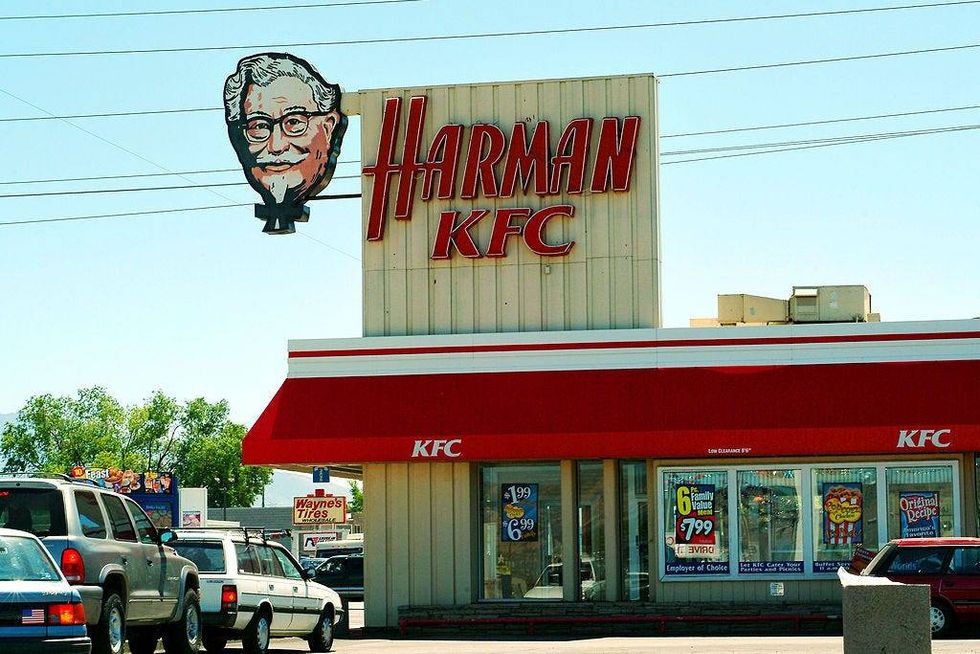 First KFC site in Salt Lake City, Utah
Getty Images
First KFC site in Salt Lake City, Utah
Getty Images
In 1952, the Colonel franchised his first KFC in Salt Lake City, Utah. His friend, restaurant owner Pete Harman, was the first one to come on board. Harman sold the chicken out of his popular restaurant using the "Kentucky Fried Chicken" moniker and serving the chicken in the now-famous to-go bucket. After road changes led to a sharp decrease in sales at Sanders Cafe, the Colonel sold the Corbin location and hit the road with a portable pressure cooker and bags of the proprietary seasoning to sign on new franchisees at a price of four cents for every chicken cooked with his recipe. The Colonel was 65 and living on a $105-a-month Social Security check when he incorporated Kentucky Fried Chicken and took his recipe around the country.
He served in the military, but isn't a military colonel
While Colonel Sanders did serve in the military, he didn't get the designation until the governor of Kentucky issued a ceremonial decree that commissioned Sanders as an honorary colonel in 1935. Sanders rolled with it after a second honorary commission in 1949, which led him to adopt his signature white suit (to hide those flour stains) and dyed his facial hair white to match his hair.
He shot a competitor with a gun
The popularity of Sanders' first gas station food spot drew the ire of the owner of a nearby competing gas station named Matt Stewart. When Sanders and two of the managers of his Shell station caught Stewart painting over a highway sign they had put up advertising their location, things escalated to a gunfight, in which a Shell manager was killed and Sanders shot Stewart in the shoulder. This was the second time they caught Stewart painting over the time — the first time, the colonel threatened to "blow [his] g-ddamn head off."
He sold KFC for $2 million
 Getty Images
Unable to keep up with the demands of his rapidly-growing franchise, Sanders sold KFC in 1964 at the age of 75. The sale was for the amount of $2 million, as well as an ongoing salary to remain the face of the company.
He had beef with KFC until his death at the age of 90
 Getty Images
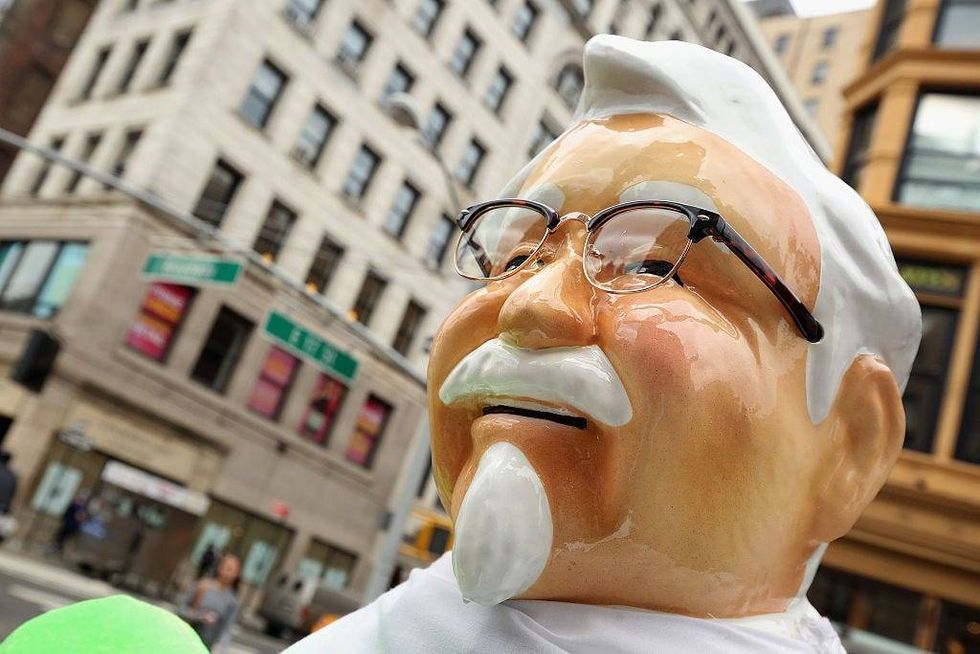
After Sanders sold KFC, he maintained a contentious relationship with new owners. He sued the company in 1971 for a whopping $122 million when they denied him the right to open a new restaurant using the Original Chicken recipe. He would also frequently bad mouth KFC, claiming that they stopped using his original recipe and, in 1970, quoted by the New Yorker as saying that their new gravy recipe "ain't fit for my dogs." The Colonel's relationship with new ownership wasn't great until he died on Dec. 16, 1980, at the age of 90.