

CEBU, Philippines (AP) — Southeast Asian leaders adopted a contingency plan Friday to mitigate the impact of the Iran war on their people and economies but acknowledged it will be difficult to enforce complex steps like establishing a regional fuel reserve to ensure a steady supply.
The Philippines, among the worst affected by fuel price spikes caused by the Iran war, hosted the group's annual summit on the central island province of Cebu. President Ferdinand Marcos Jr. ordered the summit stripped of the traditional pomp and pageantry in keeping with the economic headwinds worldwide.
ASEAN’s contingency plan calls for actions including the ratification possibly this year of an agreement that will pave the way for coordinated emergency fuel sharing, planning a regional power grid and fuel stockpile and diversifying the region’s sources of crude oil.
Promoting the use of electric vehicles and studying the use of new technologies, including civilian nuclear energy, were also part of the crisis plan.
The contingency steps will be implemented immediately but the establishment of a regional fuel stockpile and power grid is a complex matter and may take a long time, Marcos said.
“Let’s talk about the fuel reserve. Is it going to be in one single place? Is it going to be scattered through the whole of ASEAN?” he asked.
A regional power grid that allows countries to trade electricity has been considered for years but has only been realized “at a fairly small level,” Marcos said, but added the leaders were unfazed.
“They are committed to making this succeed because everyone is suffering and everyone wants to get out of this situation,” he said.
Warnings of long-term impact from Iran war
A key dilemma of the ASEAN leaders was how to carry out large-scale evacuations from the Middle East, where more than a million of their citizens work and live, if widespread hostilities flared up again.
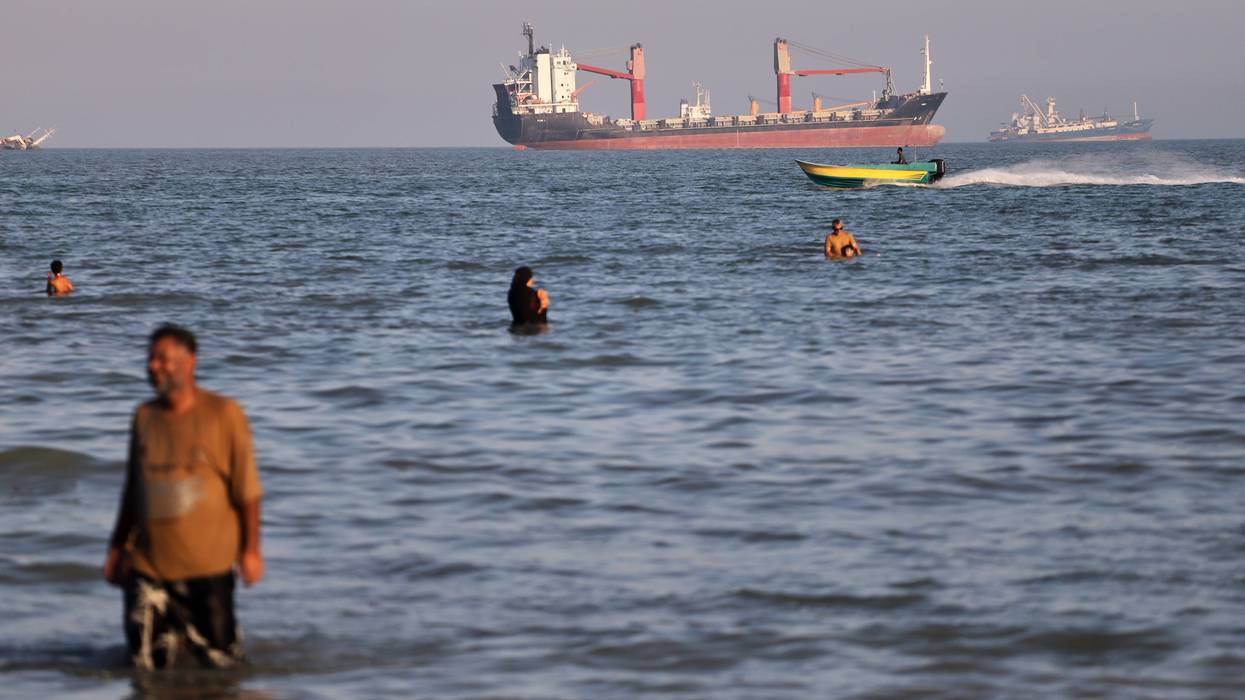
Several Southeast Asian citizens have been killed since the United States and Israel launched military strikes on Feb. 28 against Iran. The hostilities have continued sporadically despite a month-old ceasefire, especially in the strategic Strait of Hormuz.
A joint declaration issued by the leaders called on the regional bloc’s 11 state members to share information and strengthen coordination with international organizations “to ensure the safety and welfare of ASEAN nationals in affected areas.”
Marcos told fellow leaders during their summit that the Iran war exposed the weaknesses of Southeast Asian nations to external shocks and warned that recovery could take years even if the war ends now.
“Even if the tensions de-escalate in time, the damage to critical infrastructure, to vital systems and trust in general will continue to be felt for years to come,” Marcos said.
War has alarmed ASEAN states, Thai minister says
Known for their conservative and careful rhetoric, top delegates to the ASEAN summit avoided blunt expressions of their disappointment over the continuing hostilities. Thailand’s Foreign Minister Sihasak Phuangketkeow was more emphatic, calling for the current ceasefire between the U.S. and Iran to be extended and assurances for the safe passage of ships through the Strait of Hormuz.
“This war should not have occurred in the first place,” Sihasak told AP in a brief interview and added that all ASEAN states were alarmed. “We don’t know what the objectives are right?”
Southeast Asia will remain “in this limbo situation” until the Iran war ends, Marcos said.
“Until the fighting ends, until the bombing ends, then it is very difficult to put together any kind of solution,” he said.
Despite the focus on the Middle East, the leaders took up major regional flash points, including the South China Sea territorial disputes involving Beijing, a five-year civil war in Myanmar and a recent border conflict between Thailand and Cambodia.
Aside from the Philippines, ASEAN consists of Brunei, Cambodia, Indonesia, Laos, Malaysia, Myanmar, Singapore, Thailand and Vietnam. East Timor was accepted as a full member in October last year.
___
AP writers Aaron Favila and Syawall Zain in Cebu, Philippines contributed to this report.