


GENEVA (AP) — Almost every World Cup matchup has a storyline of a player who could have represented another country.
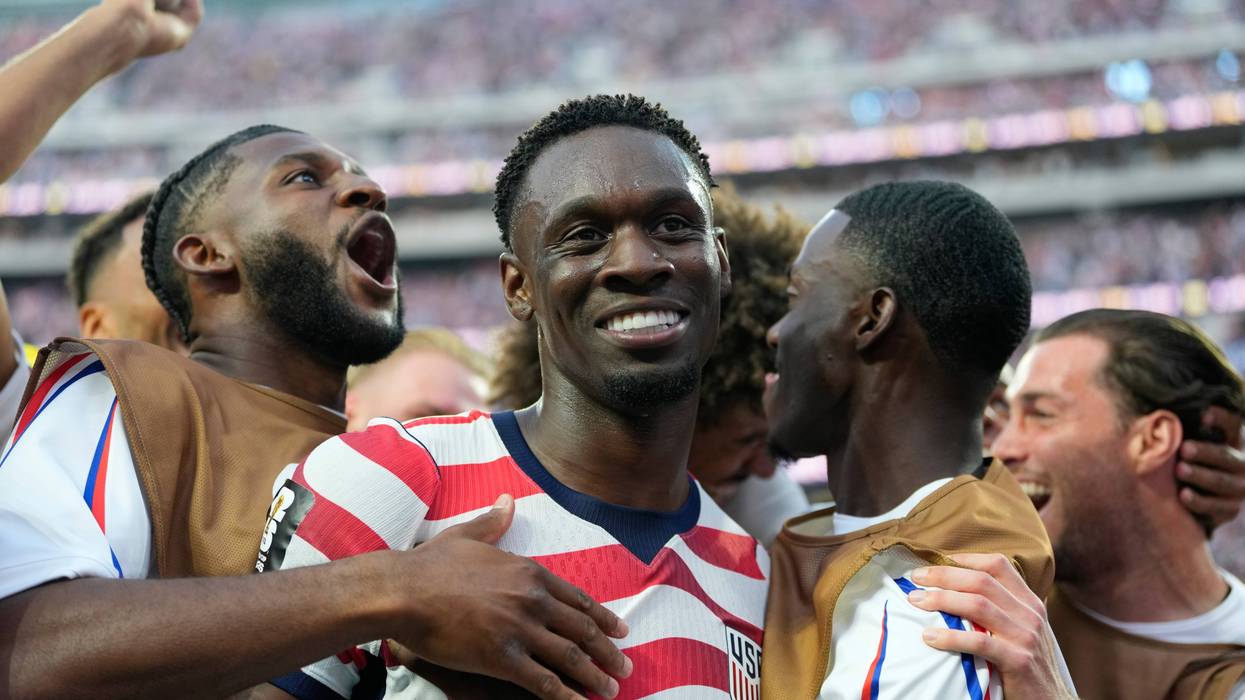
Take Folarin Balogun who scored twice in the United States’ opening win over Paraguay. He chose to play for the U.S. where he was born instead of England where he grew up or Nigeria where his parents came from.
Or Yasin Ayari, who picked Sweden over his father’s native Tunisia, a decision that came into focus as Sweden defeated the North African team 5-1 with two goals from Ayari.
And there’s Ayyoub Bouaddi, an 18-year-old standout who switched national teams from France to Morocco just weeks before the tournament kicked off.
The World Cup in the U.S., Mexico and Canada is the biggest melting pot in the tournament’s history. Decades of migration are reflected in the rosters of major European teams like France, England and Germany. Meanwhile, many teams in Africa and the Caribbean rely heavily on their diaspora, made easier by a relaxation of FIFA’s eligibility rules.
Dozens, if not hundreds, of players at this World Cup are playing for a country other than the one in which they were born. Many with mixed backgrounds switched allegiances when turning senior, following their heart – or their ambition.
Players from France are everywhere
Nearly 100 players at this World Cup were born in France, but only 23 of them play for the French national team. The others – France-born players with family ties worldwide – make up significant parts of the squads of Algeria, Cape Verde, Congo, Ghana, Haiti, Ivory Coast, Morocco and Tunisia.
Bouaddi, one of the top performers in Morocco’s 1-1 draw with Brazil, was born in France and nurtured at top-tier club Lille. He played for France at the youth level and was captain of France’s under-21 team as recently as March, but switched to Morocco, where his family came from, just in time for the World Cup.
"I’m very proud of my decision and very happy to represent my country, Morocco,” he said before the tournament. “My family is happy and I hope great things will come in the upcoming competitions.”
Moroccan soccer federation president Faouzi Lekjaa personally visited Bouaddi at his home and met with the president of Lille to outline the North African kingdom’s soccer ambitions and the professional environment it offers, according to Moroccan state television.
Morocco, which in 2022 became the first African country to reach the World Cup semifinals, relies heavily on players from its diaspora in Spain, France, Belgium and the Netherlands. It has 19 foreign-born players in its 26-man squad.
Defender Achraf Hakimi was born in Madrid and Real Madrid forward Brahim Diaz played one game for Spain before his FIFA switch to Morocco was processed in 2024.
A complex choice for the children of immigrants
Some of the biggest profiles of soccer had to make a choice. Kylian Mbappé was eligible to play for Cameroon or Algeria because of his family background but chose France where he was born and raised. Spain’s Lamine Yamal could have played for Morocco, his father’s homeland.
Brothers Désiré and Guéla Doué took separate paths. Both were born in France but Désiré plays for France while Guéla chose to represent Ivory Coast, where their father is from.
They’re not the only brothers who have ended up on separate World Cup teams. John Souttar represents Scotland while his brother Harry plays for Australia. Nico and Iñaki Williams were born in Spain to Ghanaian parents and while Nico chose to play for Spain, Iñaki picked Ghana.
Tunisia tried to recruit Ayari, the Sweden midfielder who plays for Brighton in the Premier League, for its national team based on his father’s Tunisian background. However, his father, Azzouz Ayari, pushed back. He told Swedish media that he felt his son should represent the country in which he was born and raised.
“I am an immigrant, but my children, no. Yasin is a Swede, with Tunisian background,” Azzouz Ayari told newspaper Aftonbladet. “I want him to play for Sweden because I want him to feel that he is giving back to the country that really took care of him.”
Sweden fans won’t argue with that decision. Ayari scored twice in the team’s opener against Tunisia but muted his celebrations out of respect for his father’s home country.
Birthright citizen Balogun chose the US over England
Balogun’s two goals in the 4-1 win against Paraguay made him – and his background – more widely known to the American public. He played for England at youth level, except for a brief stint with the U.S. under-18 team, but switched to represent the United States in 2023.
That was possible because of birthright citizenship rules in the U.S. – Balogun was born in New York, while his Nigerian parents were visiting.
Balogun has cited the passion of U.S. soccer fans that he experienced while visiting a training camp in Florida in March 2023 as part of the reason why he decided to represent the United States. When they found out he was in Florida, many fans urged him to play for the U.S. national team. He also met with U.S. team officials.
“I’ve always said the fans gave me so much motivation and showed me so much support. The most important thing has always been to be able to repay that,” Balogun said after the Paraguay game last week. “I just want to continue to show the fans I made the right decision."
Whether he could have gotten a place in the highly competitive England squad is unclear. At the time, then-England coach Gareth Southgate said they were monitoring his progress but couldn't promise anything.
FIFA sets the rules
Switching nationalities is nothing new in soccer. Some of the sport’s biggest stars represented multiple countries, including Ferenc Puskás, who was the leader of Hungary’s “Mighty Magyars” in the 1950s but played for Spain at the 1962 World Cup.
That Spain squad also included Puskás’s Real Madrid teammate Alfredo Di Stéfano, whose international career started with his native Argentina.
In modern soccer, FIFA intervened in 2004 amid concern Brazilian players were being naturalized with a passport too easily by other countries, including Qatar.
A “clear connection” with the country was insisted on, which could be two years of residence or a grandparent born there.
FIFA’s then-president Sepp Blatter later aimed to “stop this farce” warning that at a 32-team World Cup “you will have 16 full of Brazilian players.”
The residence demand on players aged 18 or over became five years in 2008, and a proposal at the 2011 FIFA Congress by the United Arab Emirates to cut it to three was rejected.
Dual- or multiple-national players have been “cap-tied” by FIFA to any team they represented in a senior competitive game. Those who played only in friendlies or at youth level could apply to switch.
FIFA eased its rules in 2020 to allow more eligibility changes, but players are locked to a nation if they play at a finals tournament of the World Cup or continental championship.
__
AP reporter Akram Oubachir in Casablanca, Morocco, contributed to this report.
___
AP World Cup: https://apnews.com/fifa-world-cup