


LONDON (AP) — A ceasefire sounds straightforward: Fighting stops. Negotiations ensue. Ordinary citizens get a break from fighting — and some time to rebuild.
That's not what's happening in the volatile Mideast, where ongoing fighting still resembles a war long after ceasefire agreements were announced and President Donald Trump declared victory.
Israel is lately carrying out daily attacks on Gaza. The deal in Lebanon is a ceasefire in name only. As for Iran, low-level talks are continuing in Qatar this week under a 60-day deadline — a long way from a peace deal. People on the ground in the region, as well as some analysts and journalists, are increasingly objecting to anyone describing the state of the conflict as a “ceasefire.”
The shooting and periodic closures of the Strait of Hormuz, they point out, have never stopped for long.
“There is no ceasefire between the United States and Iran," said Fawaz A. Gerges, professor of international relations at the London School of Economics and Political Science, “Iran has zero trust in the Trump administration, so they are making the U.S. fulfill its obligations step by step. This tells me we are living in a new era where the ceasefire no longer really means what it used to.”
Ceasefires don't necessarily mean the shooting stops
Ceasefires are almost as old as conflict, an ancient way of formally calling a halt to hostilities. Also known as a truce, such an agreement is commonly understood to be a period between war and peace, in which the combatants agree to pause fighting while negotiations take place.
Beyond that, a truce means whatever the negotiators will tolerate as long as none backs out of talks. Breaches are common and have been used strategically to set a standard, tit-for-tat style, of acceptable lower-level hostilities during the sensitive period. The idea is to allow for accidents, miscommunications or misunderstandings that the participants agree should not scuttle talks.
Some ceasefires end up operating as long-term peace deals that can withstand violations in the absence of a formal treaty. Exhibit A: the Korean Armistice Agreement, which halted the fighting of the Korean War on July 27, 1953.
No formal treaty was ever signed, so the peninsula technically remains at war. Nonetheless, the deal halted hostilities and established the DMZ, a 4,000-meter (2.5-mile) buffer zone between North and South Korea. Breaches over the years have been commonplace.
In contrast, negotiators in the Mideast are still getting started, with the midterm U.S. elections looming and Trump eager to end the unpopular war.
Two U.S. envoys arrived in Qatar on Tuesday for talks with mediators about the an initial deal to end the war in Iran. The visit by Steve Witkoff, Trump’s special Mideast envoy, and Jared Kushner, his son-in-law, comes after a weekend of crossfire in the Persian Gulf over efforts to reopen the Strait of Hormuz to shipping traffic.
Defining a ceasefire in 2026 is complex
The terms of ceasefires can be vague or highly specific. They can cover troop withdrawals, cessation of hostilities, limits on where fighting can happen, humanitarian aid, buffer zones and timing. Violence levels have a good chance of dropping during a declared ceasefire.
Technically, ceasefires of varying durability exist between Israel and Hamas in the Gaza Strip, between Israel and Hezbollah in Lebanon and between the United States and Iran. But that has not meant an end to fighting.
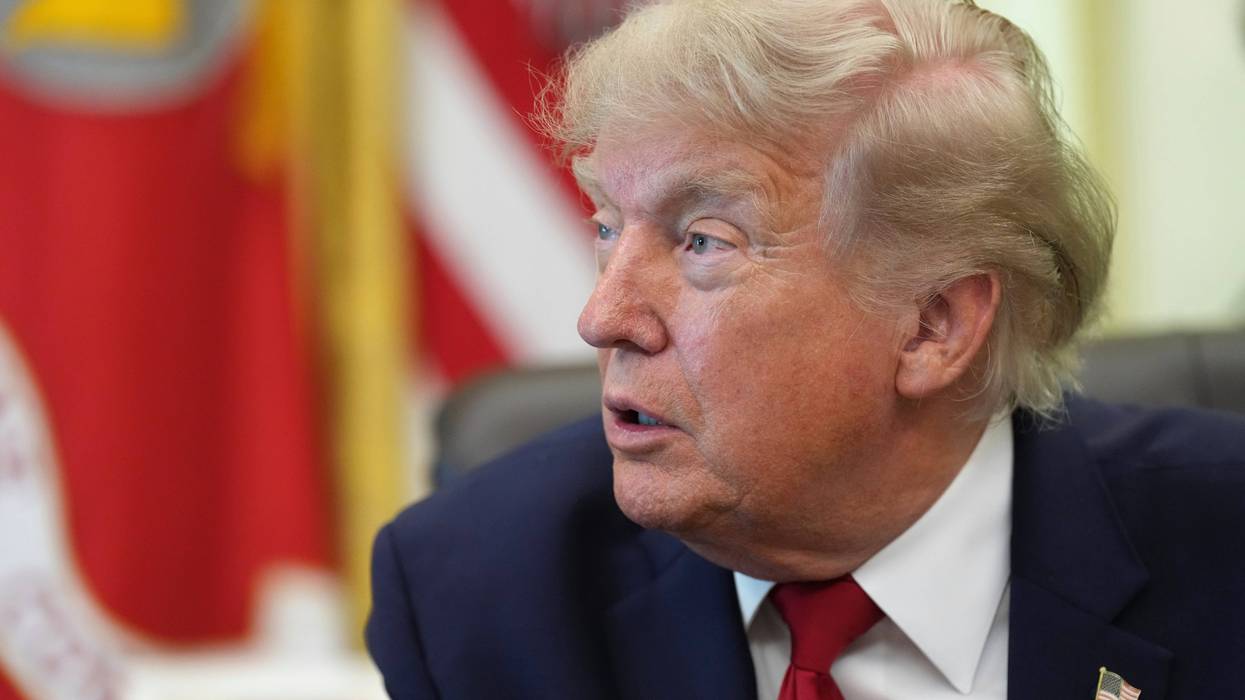
Trump said it's all relative. “It’s a different part of the world, you know," he told reporters last month. "I’d say in that part, a ceasefire is when you’re shooting in a more moderate manner.”
Instead of halting fighting, the agreements have “paved the way for a new conflict in which the various parties are fighting over the postwar strategic reality and the acceptable rules of the game,” according to analyst Daniel Sobelman of Hebrew University in Jerusalem.
In the Mideast, “so-called 'rules' emerge through a process of violent bargaining over what is acceptable and what is a violation," said Sobelman, director of the graduate program in international security and diplomacy. Thus, the dissonance between the calm many people expect from a ceasefire and near-daily reports of ongoing fighting.
Does it work? Consider, Sobelman said in an email, that the U.S. and Iran have exchanged fire several times since the ceasefire went into effect, “and nonetheless the war has not erupted again because these upticks in violence are limited in time and scope.”
Institutions, from the United Nations to the U.S. Department of Defense and many news outlets like The Associated Press have broadly defined ceasefires as political instruments designed to take the pressure off the conflict as long as the sides consent to talking.
On the U.S.-Iran conflict, the AP advised its writers June 10 to include details about what’s happening on the ground, consider qualifying the deal with such terms as “tenuous” and referring to a "‘ceasefire deal,’ which speaks to the political process and not just the military/security dynamic.”
Over the weekend as fighting in the region flared again, Sen. Roger Marshall, R-Kan., tried more colorful imagery. Asked on NBC's “Meet the Press” whether the war is really over, he described the ceasefire talks as “almost just a mop-up operation." Then he described some of the terms. “We have to press them if they strike us. We have to strike them back by 10.”
He added: “This is a ceasefire, and yeah, they broke the ceasefire.”
‘Ceasefires are changing character’
On the ground in the region it can feel like a war, and there's a rising resistance in some quarters to calling this period anything else.
“It is not a ceasefire when it applies only to Hezbollah, Hamas or Iran, but not to Israel and the United States,” Kathy Gannon, who reported from Pakistan and Afghanistan for the AP for 35 years before retiring, wrote on Substack June 7.
Much of the objection to using the term comes from Israel's ongoing attacks in Lebanon and Gaza despite ceasefires. Israeli leaders make references to deals and agreements. But they stress the country’s freedom to operate against what they say are violations and existential threats.
“Continued Israeli strikes are treated as compatible with the truce; comparable actions by others are treated as its collapse,” said H.A. Hellyer, senior associate fellow of Middle Eastern studies and geopolitics at the Royal United Services Institute and the Center for American Progress. “A word that once implied mutual restraint now serves to legitimize profoundly unequal restraint."
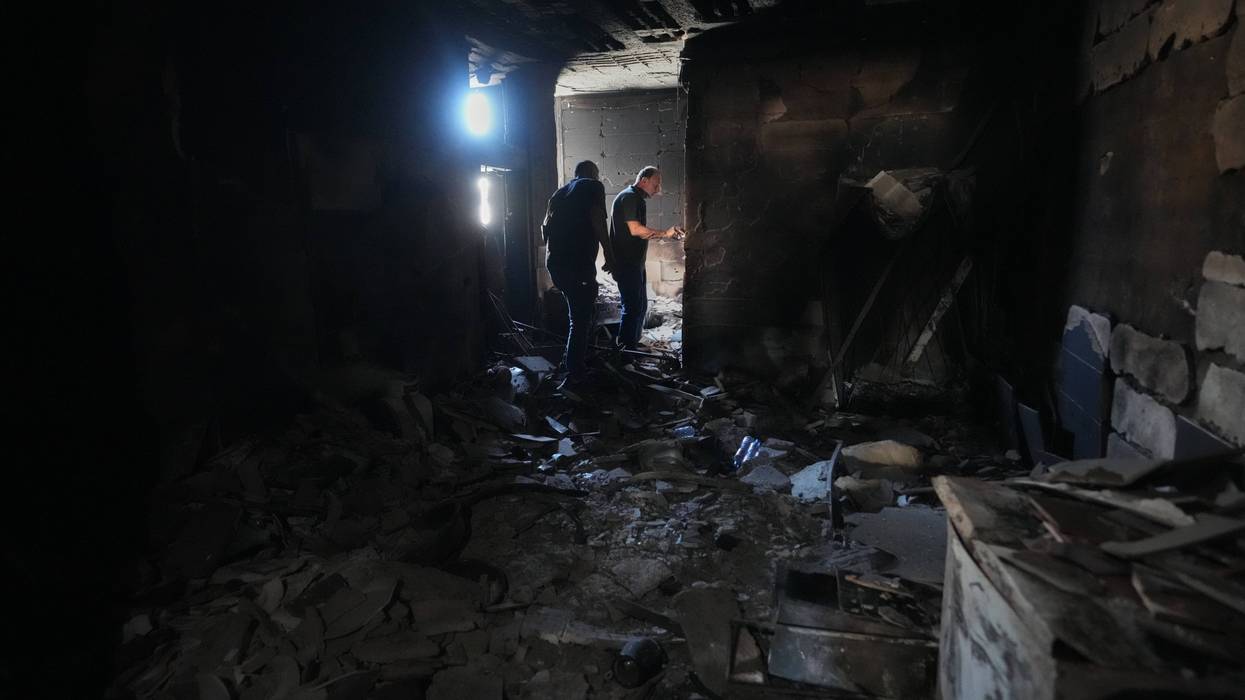
Israel continues to occupy large swaths of Lebanon's south while battling Hezbollah fighters, causing civilian casualties and damage to infrastructure. More than 4,000 people in Lebanon have been killed in Israeli strikes since March, when Hezbollah fired at Israel two days after the Iran war began. Thirty-eight soldiers and three civilians have died on the Israeli side.
Here's what a ceasefire looks like in Gaza, where Israeli strikes have never really ended after the ceasefire agreement with Hamas in October. On Monday, Israeli strikes in southern and central Gaza killed at least eight people, including two children, and wounded at least 20 others, according to health officials and emergency services.
More than 1,000 people in Gaza have been killed since the Israel-Hamas ceasefire in October, Palestinian authorities say.