

The Ranger makes its strongest argument by giving buyers plenty of traditional truck capability
without requiring them to live with a full-size pickup every day.
The most important question I came away with after driving the 2026 Ford Ranger Lariat wasn't whether it's a good truck.
It was whether many buyers actually need anything bigger.
That's an important distinction.
The Ranger doesn't try to make the pickup truck feel like something else. It still has the upright stance, body-on-frame construction, usable bed, towing capability, and available four-wheel drive that traditional truck buyers expect. It looks like the kind of truck that truck people should like.
But it's easier to maneuver, park, and generally less cumbersome than moving up to a full-size pickup.
If you like the idea of an F-150 but don't need that much truck, this Ranger deserves a serious look.
PRICING AND VALUE
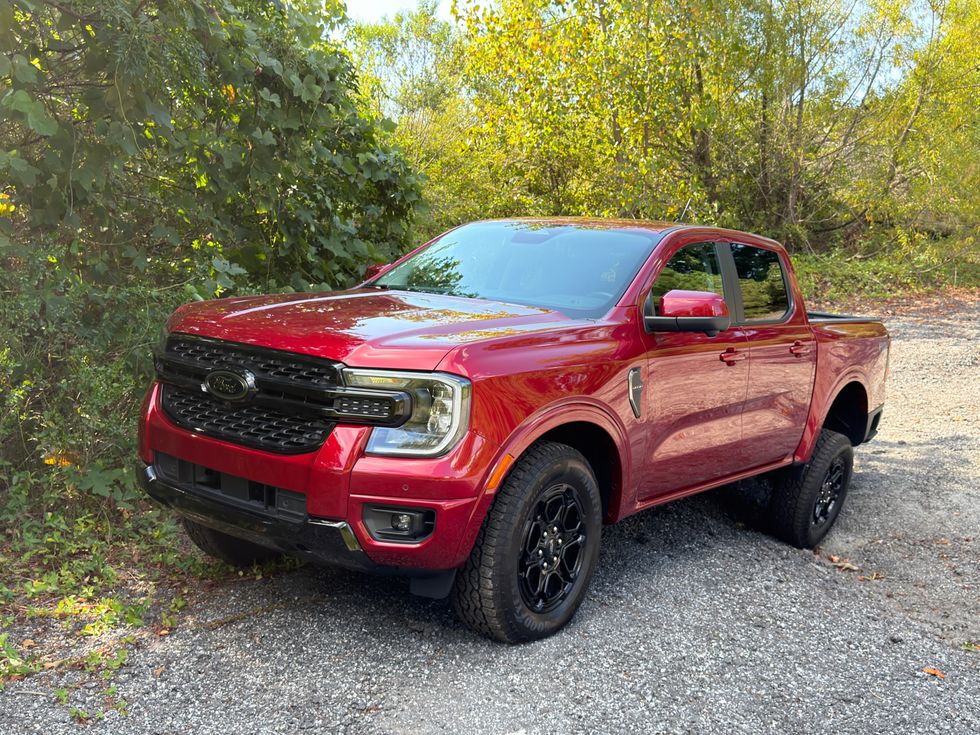
I tested a 2026 Ranger Lariat SuperCrew 4x4 with a $56,705 total MSRP, including $1,895 destination.
Its Monroney lists a $47,255 base price for this configuration and $7,555 in options. Major additions include the $2,295 2.7-liter EcoBoost V6, $1,195 FX4 Off-Road Package, $895 Black Appearance Package, and $865 Advanced Tow and Technology Package.
Ruby Red Metallic Tinted Clearcoat adds $495. The truck also has the Convenience Package, an integrated box side step, all-weather floor liners, a spray-in bedliner, and an extended SiriusXM plan.
 Daryl Killian
That's a lot of truck, but $56,705 also changes the conversation.
Once a midsize pickup reaches this price range, the buyer should stop comparing it only with other Ranger Lariats. Full-size pickups, the Ranger Raptor and well-equipped versions of the Tacoma, Colorado and Ridgeline all become part of the shopping exercise.
WHAT CHANGED FOR 2026?
Ford didn't substantially reinvent the Ranger for 2026.
Ford added Avalanche as an exterior color, made a power moonroof with a power-sliding rear window available on XLT and Lariat, added optional Black Appearance graphics, and expanded availability of the FX4 Off-Road Package to the XL. Ford dropped Azure Gray from the color palette.
That means the bigger story for this particular Ranger isn't a dramatic model-year change. It's the way the available 2.7-liter V6 changes the character and capability equation of Ford's midsize truck.
EXTERIOR DESIGN
This may be one of the Ranger's biggest strengths with traditional truck buyers.
It doesn't look like Ford was trying to soften the pickup formula.
 Daryl Killian
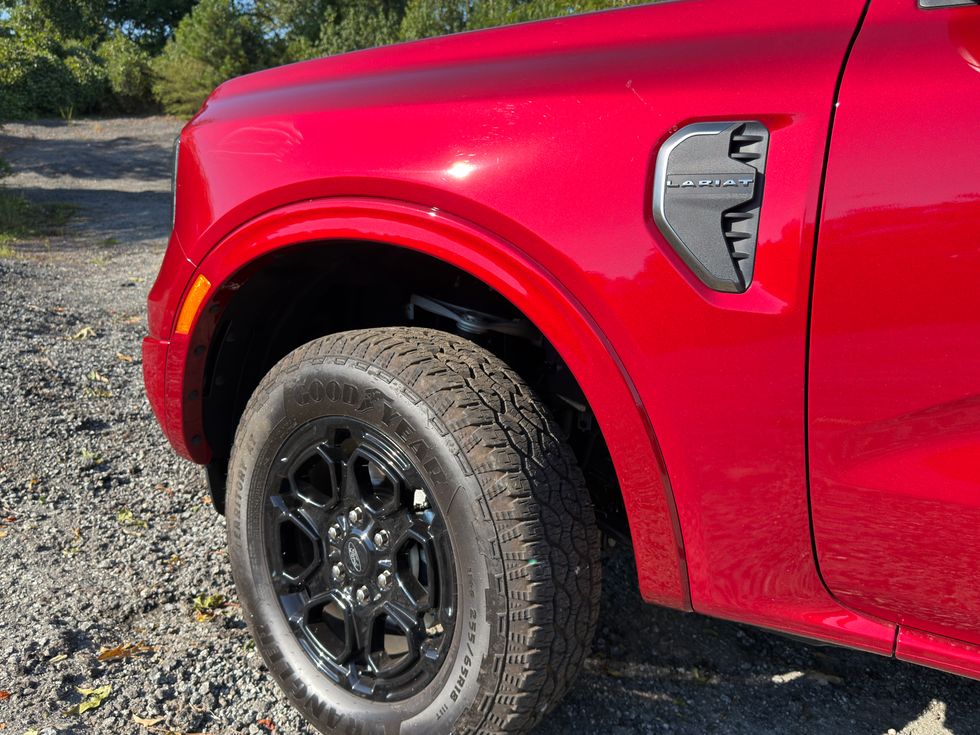
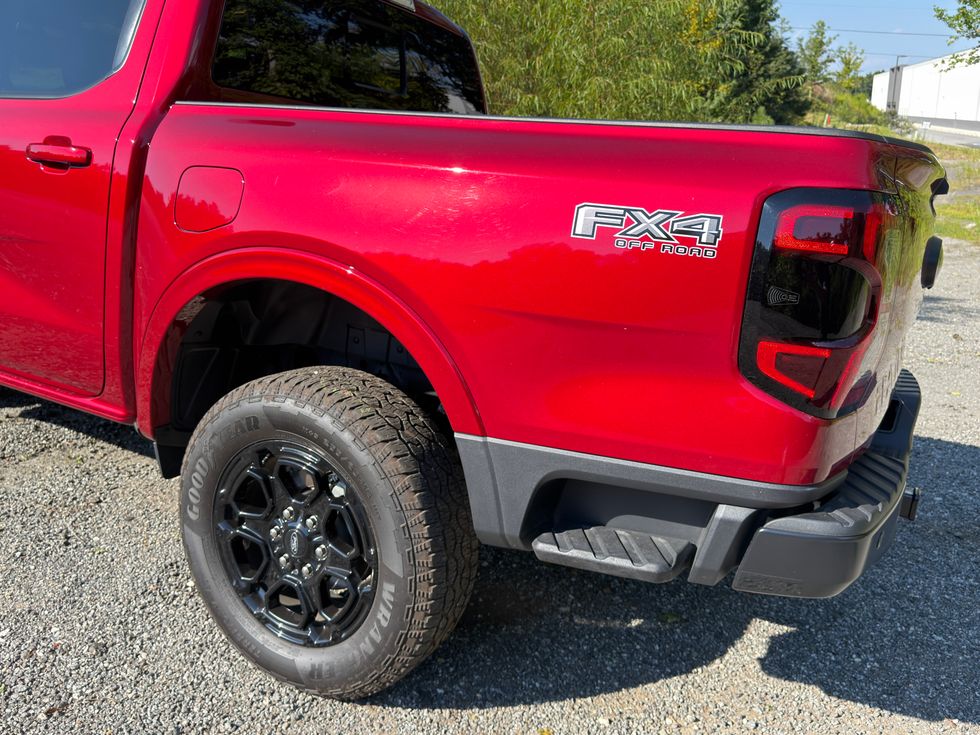
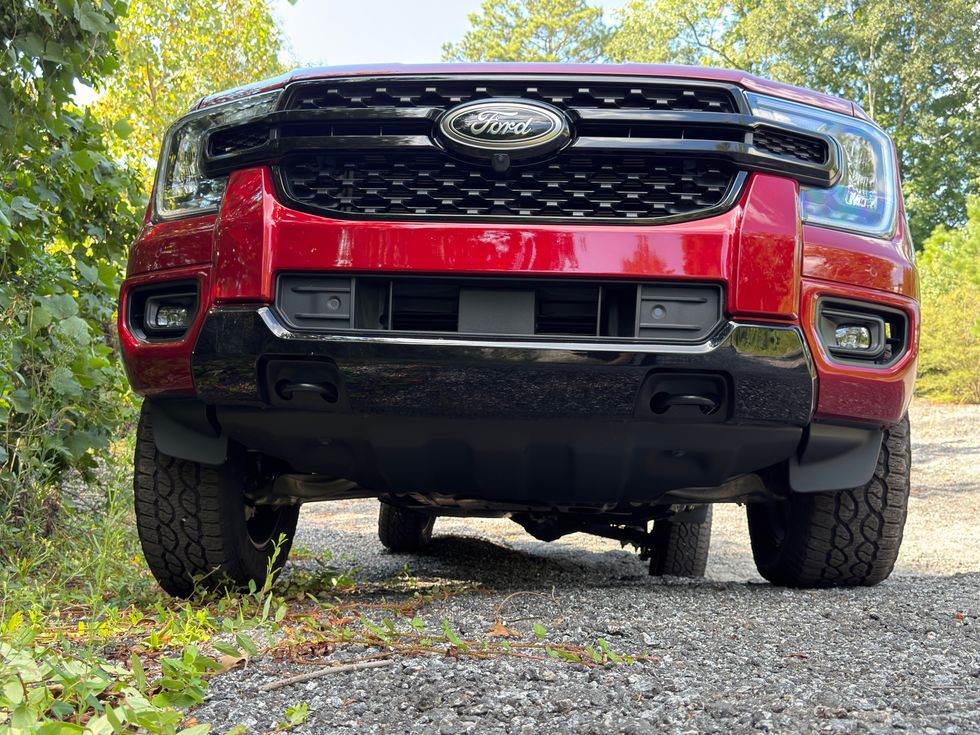
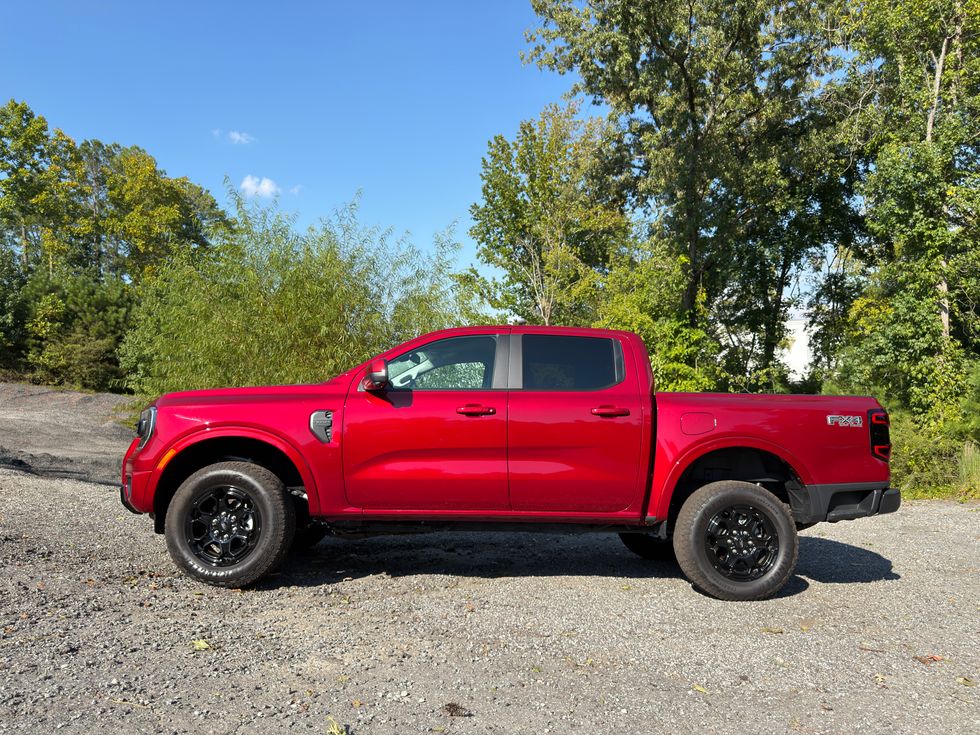
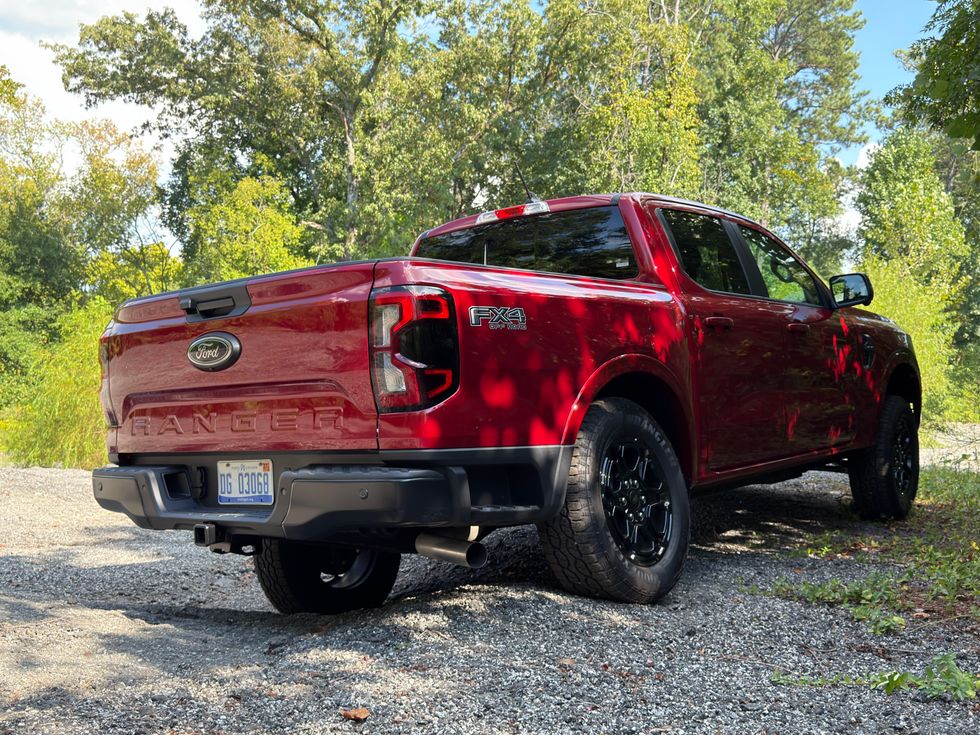
The proportions are conventional, the nose is substantial without being oversized, and this Ruby Red truck's Black Appearance Package adds 18-inch black-painted wheels and a black grille that work well with the FX4 treatment.
 Daryl Killian
The result is a midsize truck that doesn't look like somebody bought the smaller truck because they couldn't get the larger one.
It has its own presence.
POWERTRAIN AND DRIVING IMPRESSIONS
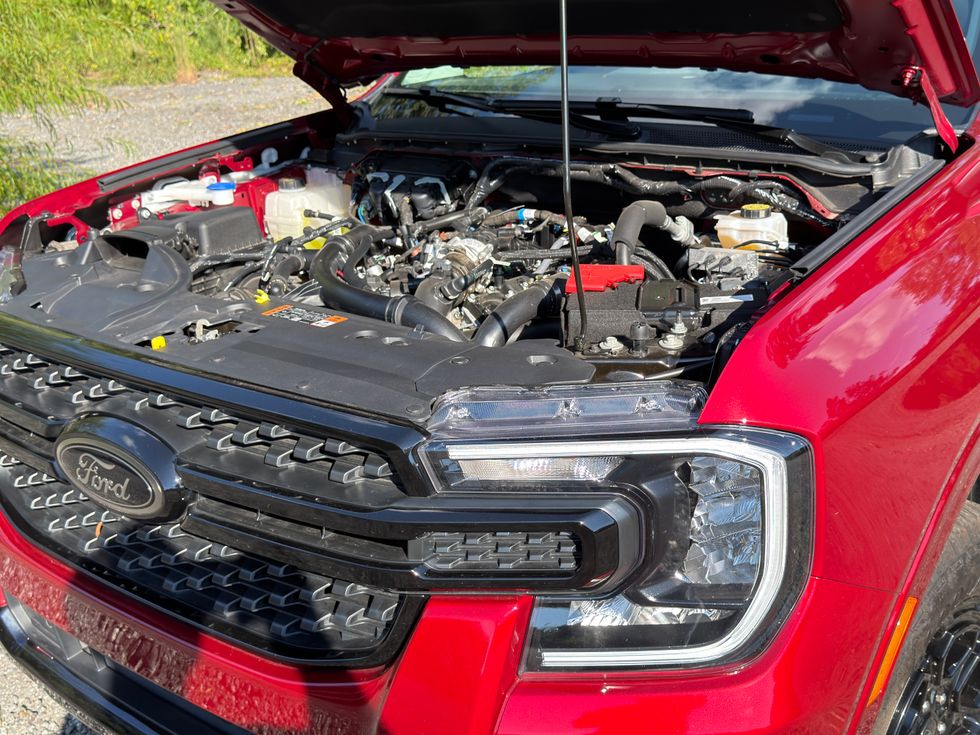
The optional 2.7-liter EcoBoost V6 produces 315 horsepower and 400 lb-ft of torque and is paired with a 10-speed automatic transmission. Ford offers the engine on both XLT and Lariat models.
That's an important number because Ford's 2.7-liter EcoBoost in the F-150 also produces 400 lb-ft of torque, although the F-150 version is rated at 325 horsepower.
 Daryl Killian
The Ranger doesn't feel underpowered.
Acceleration is strong; merging onto the highway doesn't require much planning, and the transmission works with the engine without constantly drawing attention to itself.
But outright acceleration wasn't what stood out most during my time in the Ranger.
What stood out most was how easy this truck was to live with.
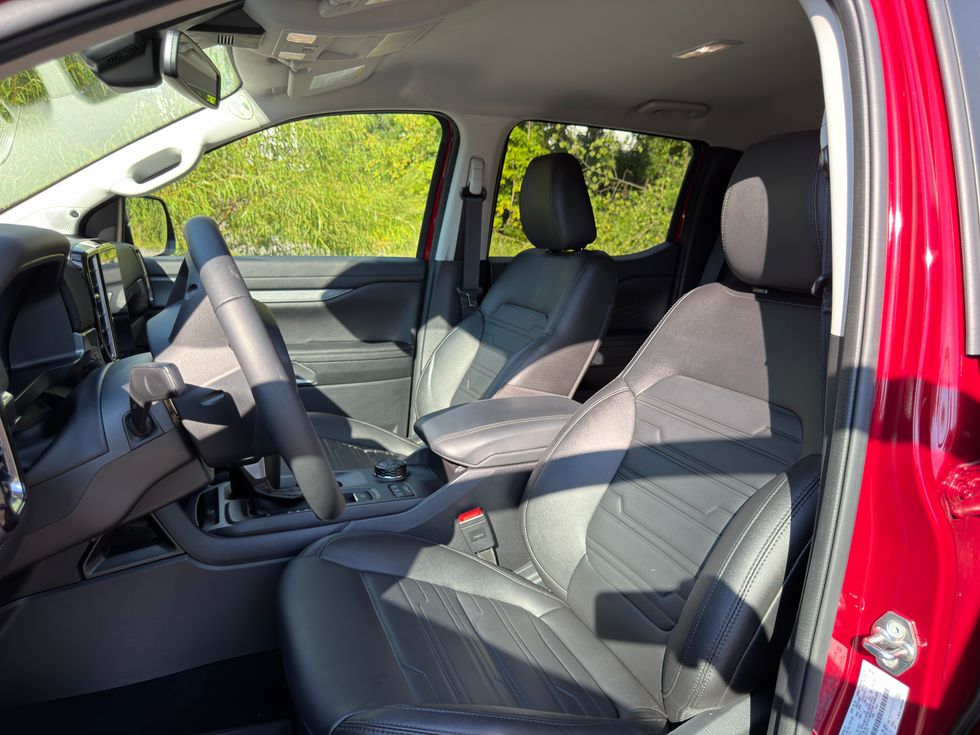
The ride is smooth and enjoyable, especially for a body-on-frame pickup with the FX4 Off-Road Package. More importantly, the seats are extremely comfortable.
That matters because most owners will spend considerably more time commuting, running errands, and sitting on the highway than climbing over rocks.
INTERIOR COMFORT AND TECHNOLOGY
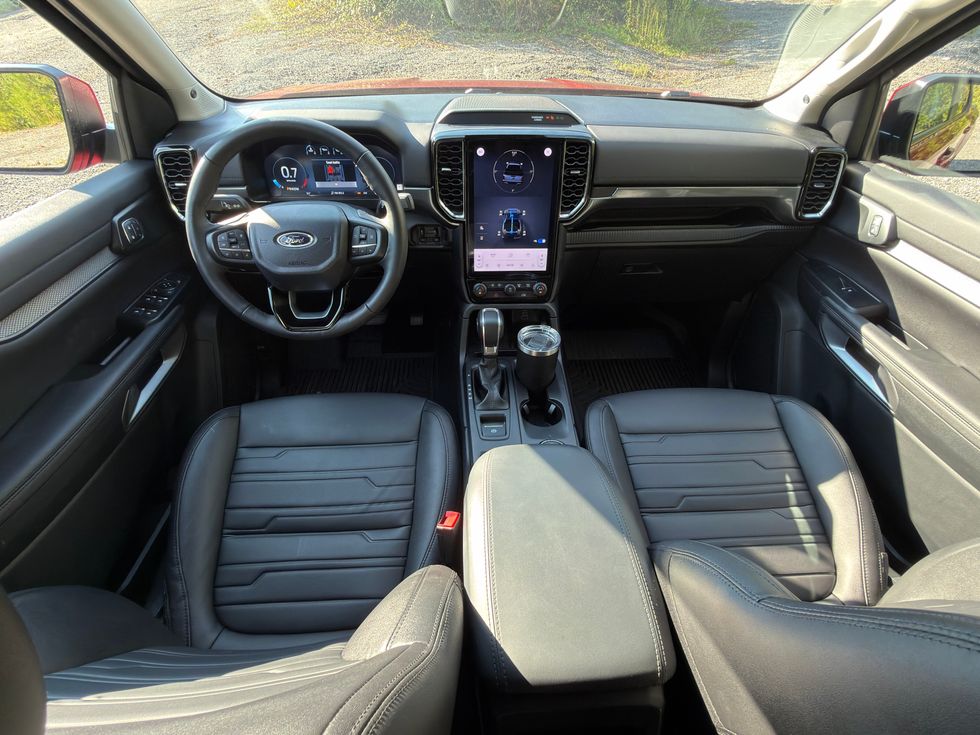
The Lariat pushes the Ranger well beyond basic work-truck territory.
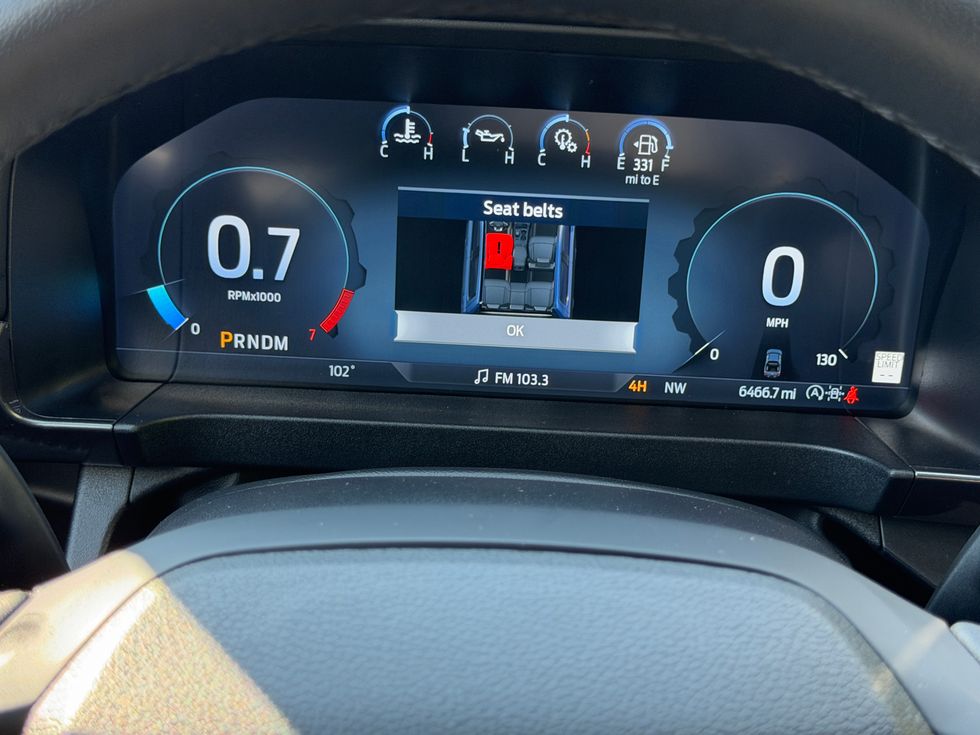
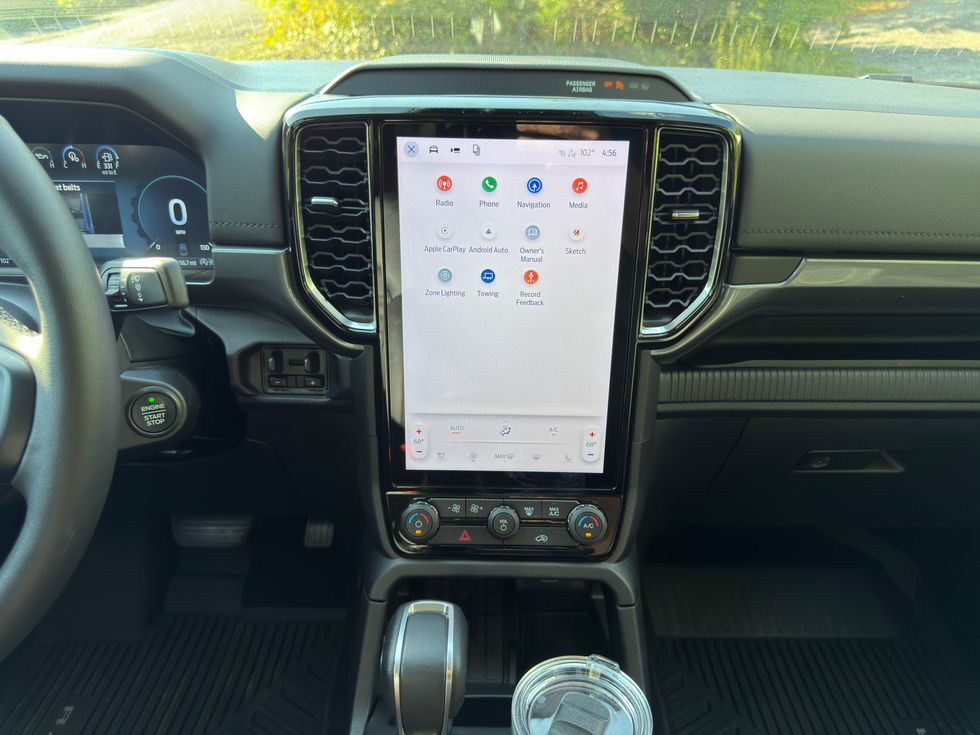
Standard Lariat equipment includes a 12-inch center display, 12-inch digital instrument cluster, heated ActiveX-trimmed front seats, driver memory, heated steering wheel, dual-zone climate control, and a B&O audio system. Ford also equips the Lariat with a 360-degree camera and other driver-assistance technology.
 Daryl Killian
 Daryl Killian
The technology makes sense in a truck like this.
A 360-degree camera isn't just a showroom demo. It becomes genuinely useful when navigating parking spaces, positioning the truck near obstacles or lining up around a trailer.
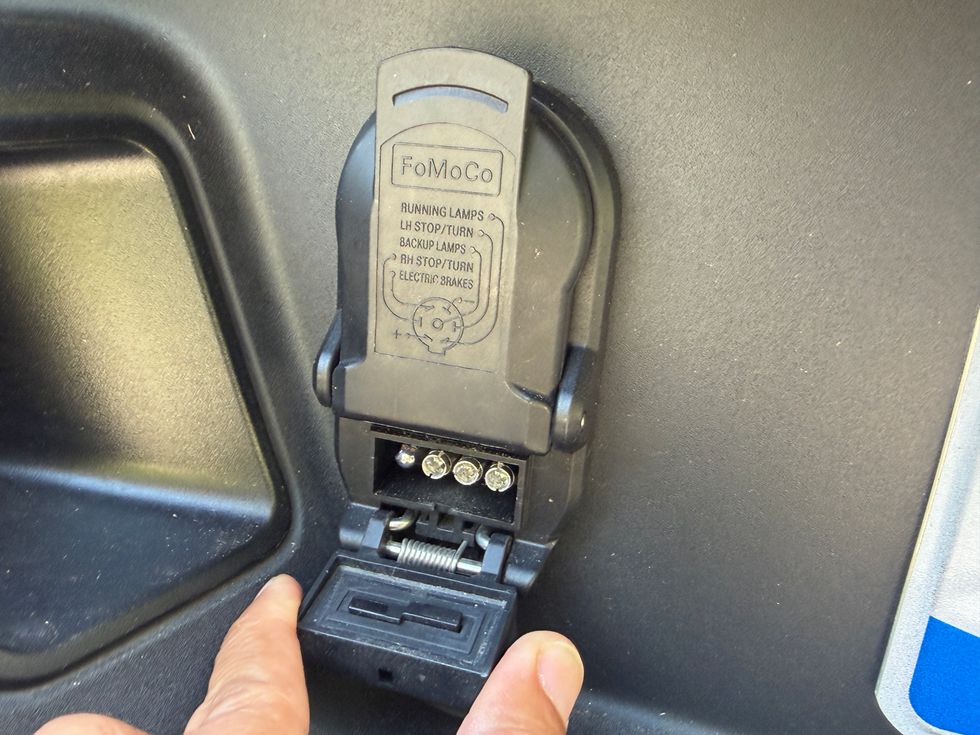
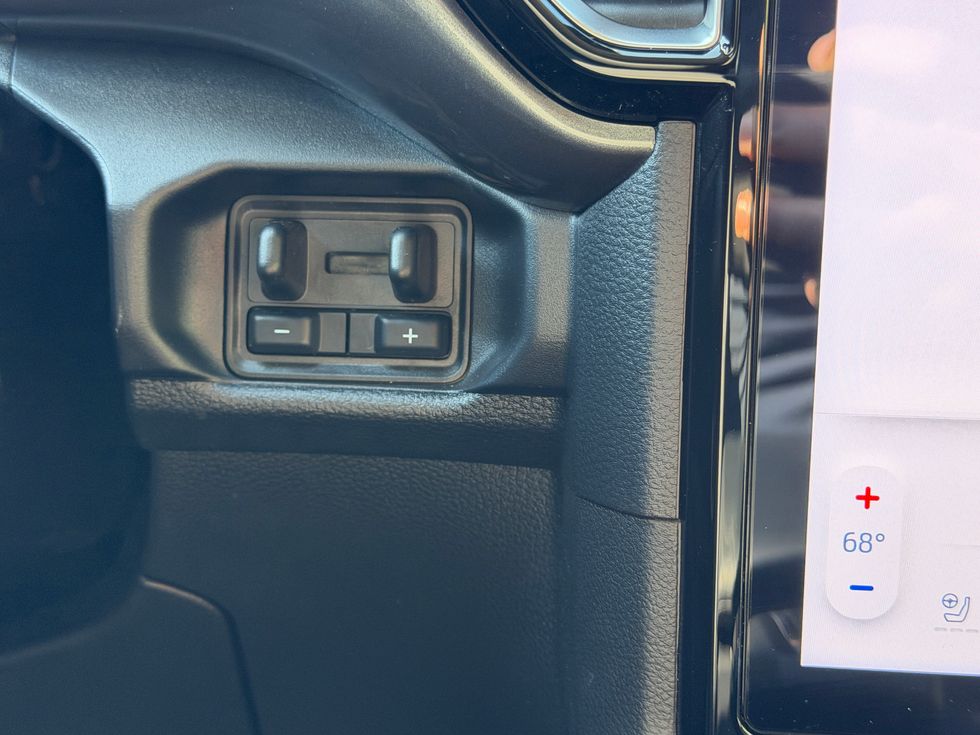
The same applies to the available towing technology on this tester, including Pro Trailer Backup Assist and the trailer brake controller.
PASSENGER AND CARGO UTILITY
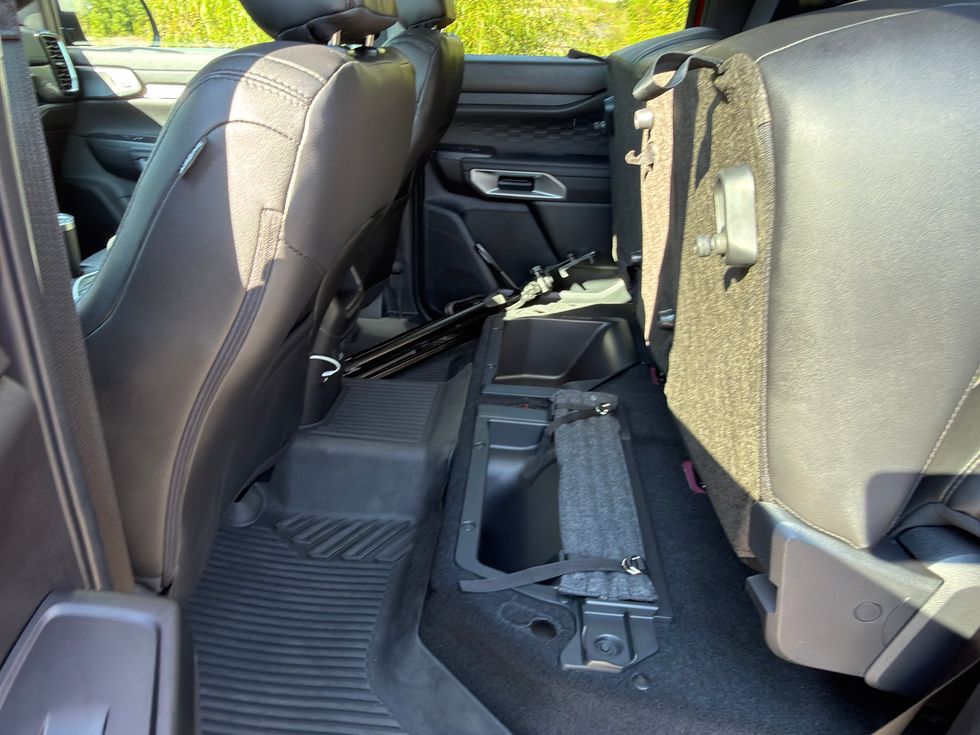
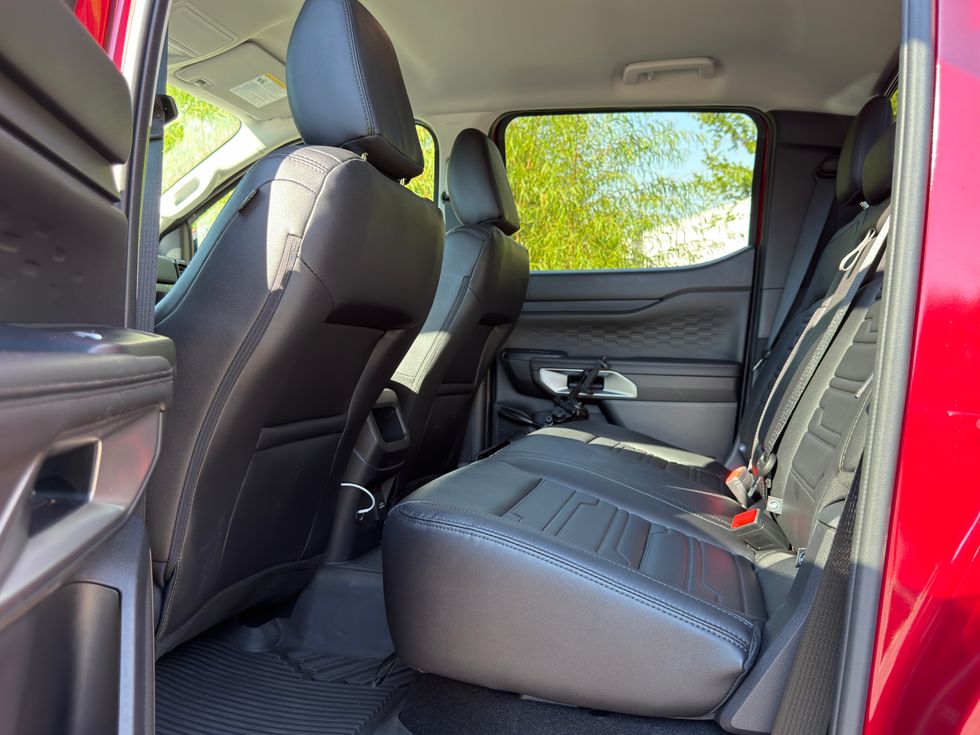
The SuperCrew gives the Ranger a usable second row and seating for five, but buyers should compare it directly with how they intend to use the truck.
 Daryl Killian
The rear seat works, but an F-150 SuperCrew provides considerably more passenger space.
If adults or growing teenagers regularly occupy the rear seats, sit in the Ranger's back before buying it. Don't assume that because it has four full doors, it provides full-size-truck passenger space.
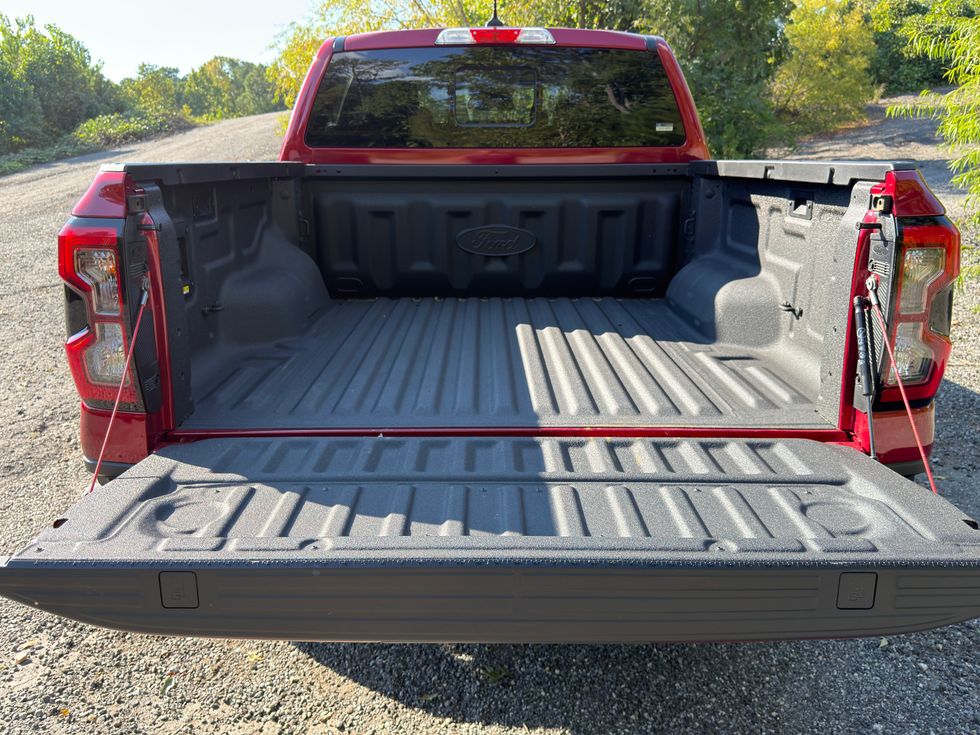
The bed measures 59.6 inches long and provides 43.5 cubic feet of cargo volume. Ford lists 48.2 inches of width between the wheel wells.
 Daryl Killian
The integrated box side step on my test truck is another feature that sounds minor until you start using the bed. Sometimes the best truck features aren't the most technologically complicated ones.
TOWING AND TRUCK CAPABILITY
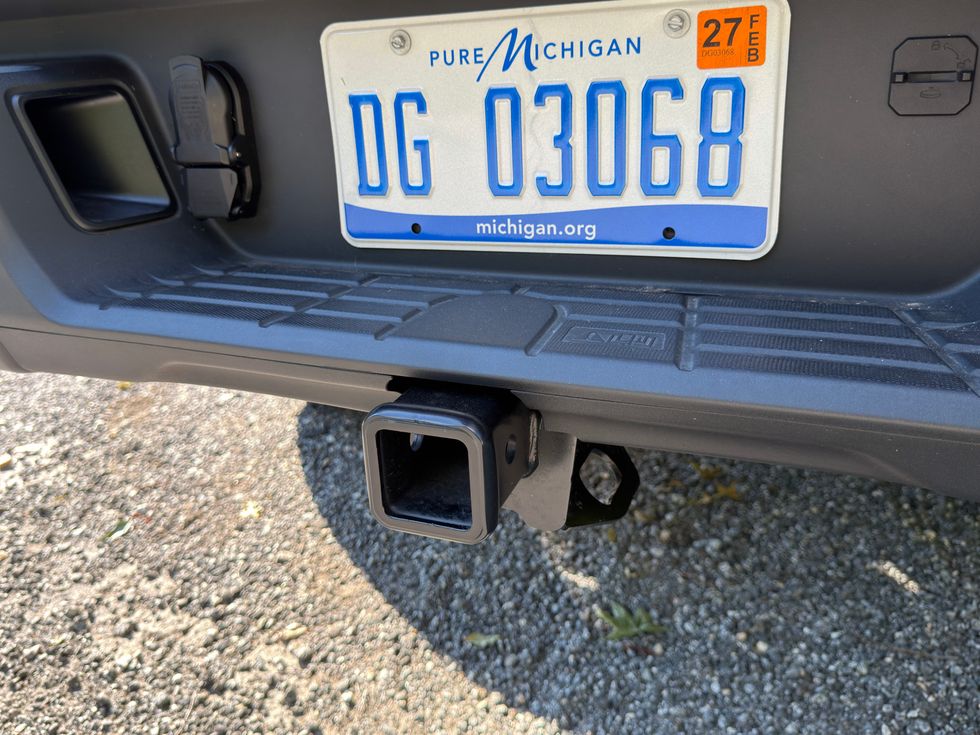
Properly equipped Ranger XL, XLT, and Lariat models can tow up to 7,500 pounds. The 2.7-liter Ranger uses a 3.73 axle ratio in Ford's towing configuration.
That puts the Ranger in legitimate towing territory for many recreational users.
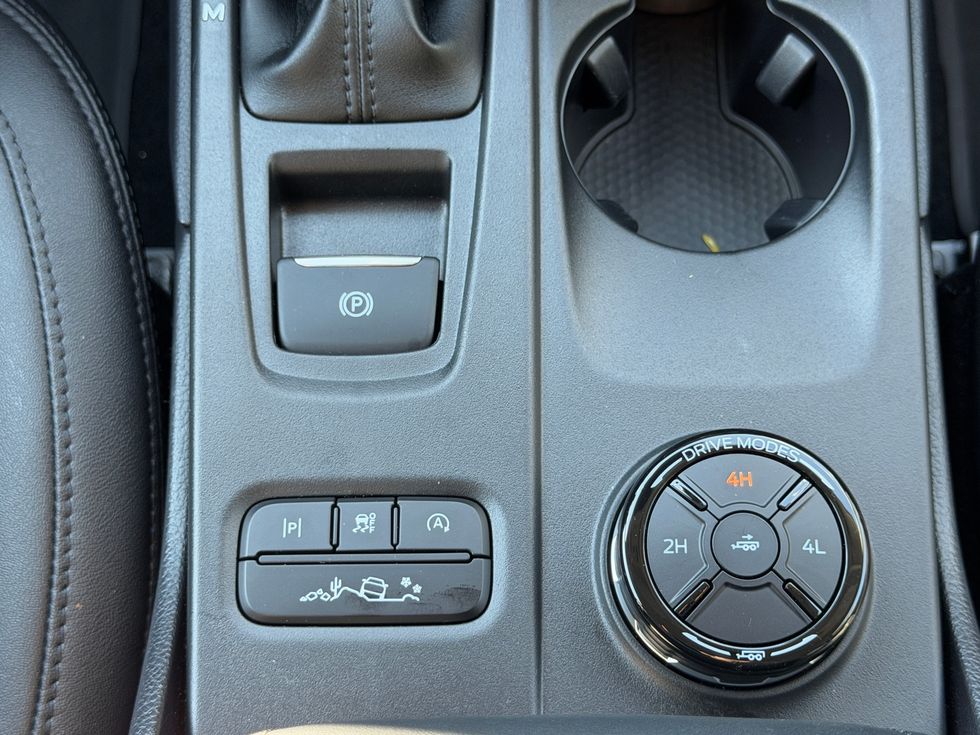
The FX4 Off-Road Package adds off-road-tuned shocks and, on this particular truck, a 3.73 locking rear differential.
But towing and payload are two different measurements, and this is where shoppers need to pay attention.
Ford lists the maximum available payload for a 2.7-liter Ranger 4x4 at 1,513 pounds. The 2.3-liter 4x4 configuration can be rated as high as 1,763 pounds. Actual capacity varies with configuration and equipment, so the payload label on the individual truck is the number buyers should ultimately use.
In other words, buying the more powerful engine doesn't automatically give you the most useful configuration for every type of work.
 Daryl Killian
FUEL ECONOMY
The EPA label rates this Ranger at 18 mpg city, 23 mpg highway, and 20 mpg combined.
That's another reason buyers should be honest about how much truck they need.
Downsizing from an F-150 to a Ranger gives you a physically more manageable pickup, but it doesn't turn the Ranger into a fuel-economy vehicle.
If your truck duties are mostly commuting and occasional trips to the home-improvement store, the Ford Maverick is worth considering, too.
THE DEALER SECRET
Don't shop the Ranger by trim badge alone.
If the 2.7-liter V6 is what attracts you to this Lariat, remember Ford also offers that engine on the XLT.
A buyer who cares more about the V6, four-wheel drive and towing capability than leather-like seating surfaces, premium audio and some of the Lariat's comfort equipment should price an XLT with the equipment they actually need.
You may find that the smartest Ranger is somewhere between a basic truck and this $56,705 Lariat.
BUYER ALERT: DON'T AUTOMATICALLY STEP UP TO THE RAPTOR
At this price, the Ranger Raptor will inevitably enter the conversation.
That's fair.
Ford currently prices the Raptor in the upper-$57,000 range before additional options, putting it very close to the price of this loaded Lariat.
But the Raptor isn't simply a better Lariat.
It's a different tool.
The Raptor gets a 3.0-liter EcoBoost V6, specialized FOX suspension, locking front and rear differentials, and hardware intended for considerably more aggressive off-road use.
It also has a maximum available tow rating of 5,510 pounds, compared with up to 7,500 pounds for a properly equipped Lariat.
If towing and everyday comfort matter more than high-speed off-road performance, spending more on the Raptor may move you farther from the truck you need.
HOW IT COMPARES
The midsize-truck market gives buyers several very different interpretations of what a pickup should be.
The Toyota Tacoma remains the obvious traditional rival and offers one of the segment's widest ranges, from basic work-oriented models to hybrid TRD Pro and Trailhunter versions. Toyota currently lists the TRD Off-Road from $42,815 and the hybrid TRD Off-Road i-FORCE MAX from $47,635.
The Chevrolet Colorado is another serious body-on-frame competitor. The 2026 Colorado's 2.7-liter TurboMax produces 310 horsepower and 430 lb.-ft of torque, and Chevrolet lists up to 7,700 pounds of available towing. The Z71 starts at $44,600.
The Honda Ridgeline takes a different approach. Its unibody construction emphasizes everyday comfort and versatility. Honda's 2026 Ridgeline uses a 280-horsepower 3.5-liter V6, standard all-wheel drive, and is rated to tow up to 5,000 pounds. The TrailSport starts at $45,995.
Then there's Ford's Maverick, which should be on the list for anyone whose idea of truck duty is mostly commuting, weekend projects, and light hauling.
The Ranger's position is straightforward: it feels more like a traditional truck than the Ridgeline or Maverick, without forcing the buyer into an F-150's physical footprint.
WOULD I SPEND MY MONEY?
I wouldn't automatically spend $56,705 on this particular configuration.
I'd first determine which parts of this truck I actually needed.
The 2.7-liter V6 would be high on my list. So would the towing equipment if I planned to use it. The comfortable seats and smooth ride make the Lariat an easy recommendation as a daily driver.
But packages and appearance options add up quickly.
That's why I'd price an XLT with the V6 and the equipment I need before committing to the Lariat.
If I regularly carried adults in the back seat, needed significantly more bed versatility or planned to tow beyond the Ranger's limits, I'd move to an F-150.
And if my truck use were mostly commuting and occasional light hauling, I'd spend less and look hard at the Maverick or Ridgeline.
THE AUTONSIDER DECISION
The 2026 Ford Ranger Lariat succeeds because it doesn't try to convince buyers a midsize pickup can do everything a full-size truck can.
It can't.
Instead, it gives buyers a useful portion of the traditional pickup formula in a package that's easier to live with every day.
The V6 provides strong power. The seats are excellent. The ride is surprisingly comfortable. It can tow a meaningful load when properly equipped, and the FX4 package gives it legitimate off-pavement hardware.
Its biggest weakness isn't capability
.It's how quickly the price climbs when you start checking option boxes.
The smartest Ranger buyer will decide how much truck they actually need first and build the truck around that answer.
For plenty of people who think they want an F-150, the Ranger may turn out to be enough truck after all.
ONE FOR THE ROAD
The Ranger doesn't replace the F-150. It simply makes a convincing argument that not everyone needs one.
TEST VEHICLE SPECIFICATIONS
| Specification | 2026 Ford Ranger Lariat Test Vehicle |
| Configuration | SuperCrew 4x4 Lariat |
| Exterior | Ruby Red Metallic Tinted Clearcoat |
| Interior | Ebony ActiveX-trimmed seats |
| Engine | 2.7L EcoBoost V6 |
| Horsepower | 315 hp |
| Torque | 400 lb-ft |
| Transmission | 10-speed automatic |
| Drivetrain | 4x4 |
| Axle | 3.73 locking rear differential |
| Off-road package | FX4 |
| Maximum available towing | 7,500 lbs when properly equipped |
| Maximum published payload, 2.7L 4x4 | 1,513 lbs, configuration dependent |
| Bed length | 59.6 inches |
| Bed volume | 43.5 cu. ft. |
| EPA city | 18 mpg |
| EPA highway | 23 mpg |
| EPA combined | 20 mpg |
| Test vehicle base price | $47,255 |
| Options | $7,555 |
| Destination | $1,895 |
| As-tested MSRP | $56,705 |
| Basic warranty | 3 years / 36,000 miles |
| Powertrain warranty | 5 years / 60,000 miles |
Test-vehicle pricing, equipment, fuel economy, and warranty information are taken from the Monroney label supplied with the vehicle. We cross-checked power, towing, payload, and bed specifications against Ford's current 2026 Ranger information.
THE AUTONSIDER BUYER'S GUIDE
- Best Buyer: Someone who wants a traditional body-on-frame pickup with real towing and off-road capability but doesn't need the size, cabin space, or maximum capability of a full-size truck.
- Probably Not For: Drivers who regularly need maximum passenger room, heavier towing, significantly greater payload flexibility, or multiple bed and cab configurations.
- Best Reason to Buy: The Ranger provides convincing traditional truck capability while remaining considerably easier to maneuver and live with than a full-size pickup.
- Biggest Surprise: Ride and seat comfort. This FX4-equipped body-on-frame pickup is comfortable enough to serve as a daily vehicle without constantly penalizing the driver for choosing a truck.
- Biggest Concern: Price. A heavily optioned Lariat moves quickly into territory occupied by the Ranger Raptor and full-size pickups.
- Engine Recommendation: The 2.7-liter EcoBoost V6 is compelling for buyers who prioritize torque and effortless everyday performance. Buyers focused on maximum payload should compare it carefully with the lighter 2.3-liter configuration.
- Value Configuration to Investigate: Ranger XLT 4x4 with the 2.7-liter EcoBoost and the towing equipment you actually need.
- Lariat Makes More Sense If: Heated premium seating, 12-inch displays, a 360-degree camera, premium audio, and extra comfort tech will improve how you use the truck every day.
- Raptor Makes More Sense If: High-performance off-road driving matters more than maximizing Ranger towing capability.
- F-150 Makes More Sense If: You regularly need substantially more passenger room, additional bed configurations, heavier towing, or greater full-size-truck capability.
- Maverick Makes More Sense If: Your typical week consists mostly of commuting and light-duty hauling.
- Ridgeline Makes More Sense If: Road comfort, interior versatility, and everyday usability matter more than traditional body-on-frame construction or maximum towing.
- Strongest Direct Competitors: Toyota Tacoma and Chevrolet Colorado.
| Vehicle | Representative Trim | Published Price | Primary Buyer Advantage |
| 2026 Ford Ranger | Lariat test vehicle | $56,705 as tested | V6 power, towing, traditional truck feel, daily usability |
| 2026 Toyota Tacoma | TRD Off-Road | From $42,815 | Off-road reputation, broad trim and powertrain range |
| 2026 Chevrolet Colorado | Z71 | From $44,600 | 430 lb-ft standard torque, up to 7,700-lb towing |
| 2026 Honda Ridgeline | TrailSport | From $45,995 | Everyday comfort, AWD, in-bed trunk, versatile unibody layout |
| 2026 Ford Ranger Raptor | Raptor | Upper-$57K starting range | Specialized high-performance off-road capability |
2026 Ford Ranger Lariat
Daryl Killian