

Volkswagen’s redesigned three-row SUV brings a more upscale cabin, bolder styling, and useful family features. Here is what impressed me, what gave me pause, and what shoppers should compare before buying.
If you are shopping for a three-row midsize SUV, the Volkswagen Atlas deserves a place on your list. After spending time with the updated vehicle during Volkswagen’s media drive in Huntsville, Alabama, I came away thinking it is a formidable player in a field where buyers have plenty of familiar choices.
In my opinion, it is a shame more people aren't familiar with how competitive this SUV is. For buyers who want something different from what their neighbors are driving, the Atlas provides another reason to take a closer look. But standing out only matters if the vehicle also works for your household.
The 2027 changes give shoppers more to investigate, from the appearance and cabin presentation to the controls, passenger comfort, and updated engine. Maybe this new Atlas will finally let the cat out of the bag.
 Daryl Killian
What is new for the 2027 Volkswagen Atlas?
This is a new-generation Atlas, not a small cosmetic refresh. Volkswagen introduces revised exterior styling, a redesigned interior, and an updated turbocharged engine. New paint choices include Blackberry, Sacramento Green and Sandstone. The powertrain produces 282 horsepower and 258 pound-feet of torque, compared with 269 horsepower and 273 pound-feet previously. That is a gain of 13 horsepower and a reduction of 15 pound-feet. Source: Volkswagen 2027 Atlas media information, October 6, 2026
The significance, for shoppers, is the combination of changes. Compare the actual 2027 model with any remaining previous-generation vehicle you are considering. A discounted outgoing Atlas may still be worth evaluating, but assess the interior, feature packages, and driving experience individually.
A stronger presence, with wheels that change the personality
The supplied Volkswagen one-sheet lists a length of 203.1 inches, width of 78.3 inches, height of 70.3 inches, and wheelbase of 117.3 inches. Check those measurements against your garage and parking spaces.
Source: Volkswagen 2027 Atlas media information, October 6, 2026
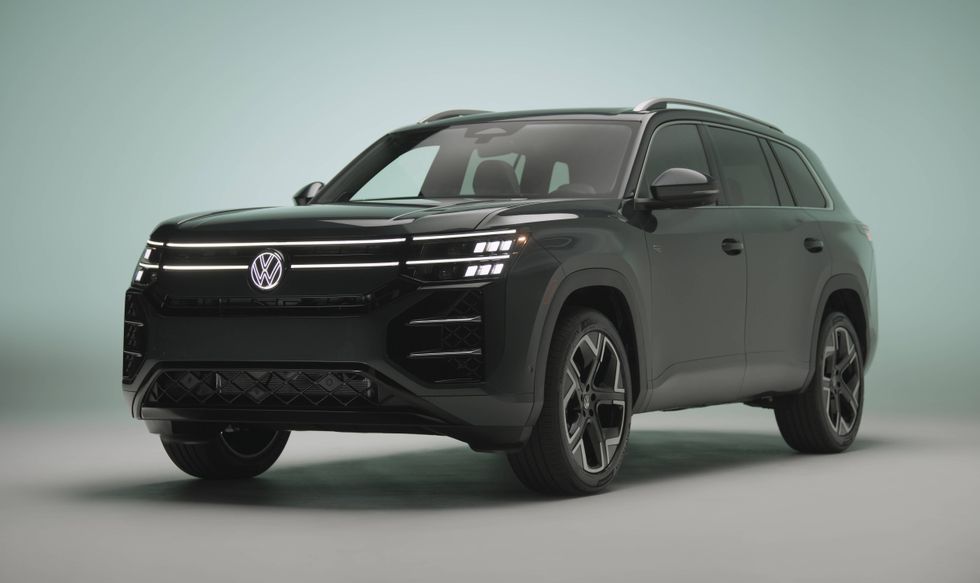
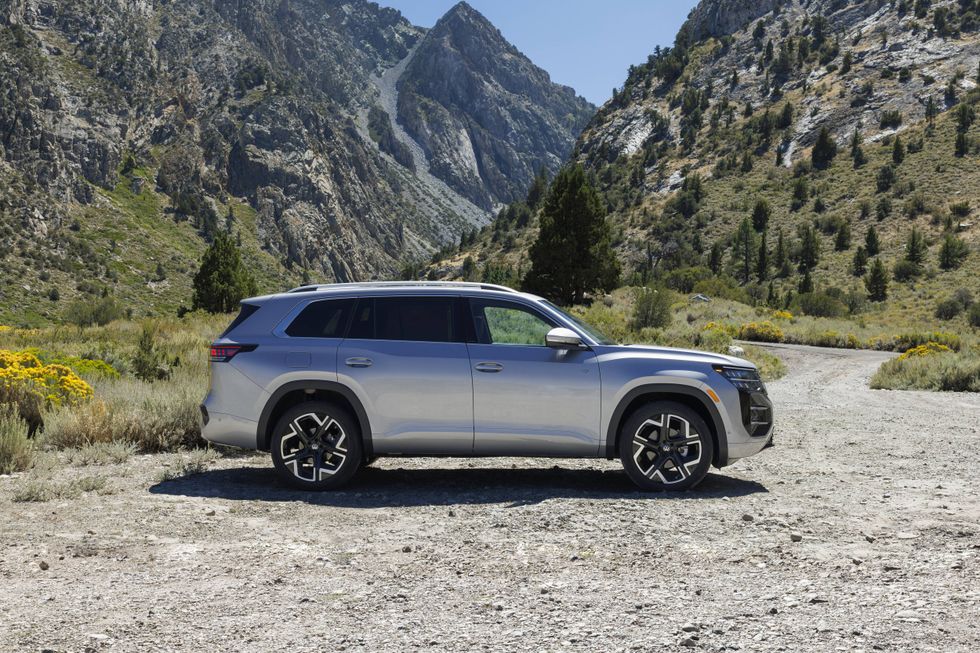
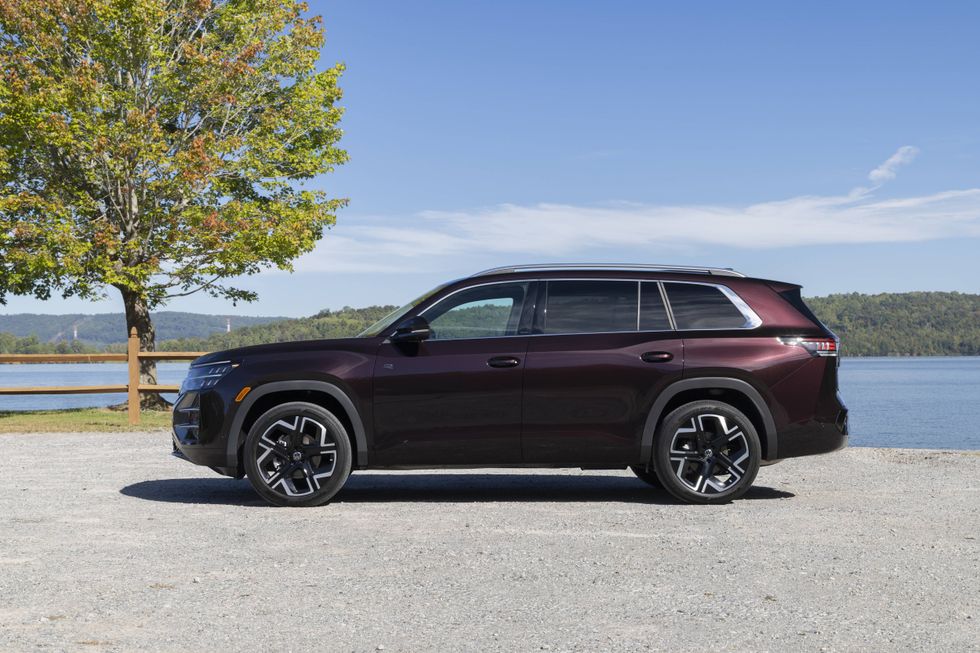
To my eye, the Atlas looks more athletic. The front end, lighting, and body lines give it more personality without losing the substantial presence I associate with this vehicle. It has the visual confidence I want in an SUV this size.
 2026 Volkswagen of America, Inc.
The lighting deserves attention during a walkaround. Check the exact trim you are shopping, because the illuminated details you see in promotional photos may not appear on the entry model.
 2026 Volkswagen of America, Inc.
 2026 Volkswagen of America, Inc.
Wheel selection changes the look substantially. I like the sporty, muscular appearance of the larger wheels. They make the vehicle look more planted and create a stronger visual connection to the road.
But the appearance is only part of the decision. Smaller wheels with taller tire sidewalls can offer more cushioning over imperfections, although tire construction, pressure, and suspension tuning also matter. I would drive the wheel-and-tire combination you intend to purchase rather than assume every Atlas rides the same.
 2026 Volkswagen of America, Inc.
For reference, the SE has 18-inch wheels, the SE with Technology moves to 20-inch wheels, and the SEL Premium R-Line has 21-inch wheels. Source: Volkswagen trim guide
Also check the step-up into the cabin. I observed a shorter journalist struggling to climb in. That experience reminded me that generous interior space does not automatically mean easy entry for every passenger. Bring the family members who will use it most often.
The cabin makes a case for near luxury
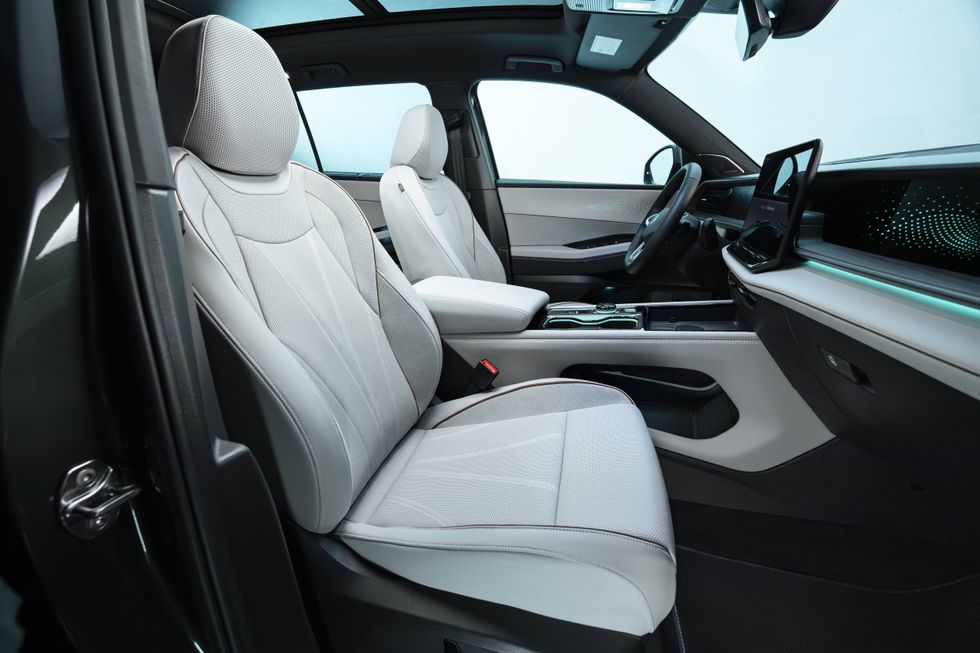
Standard equipment includes real wood trim, heated and ventilated front seats, a heated steering wheel, three-zone automatic climate control, rear sunshades, and B pillar vents. The SE and SE with Technology use leatherette seating; the SEL R-Line moves to Varenna leather, and SEL Premium R-Line adds Nappa leather. Source: Volkswagen 2027 Atlas media information, October 6, 2026
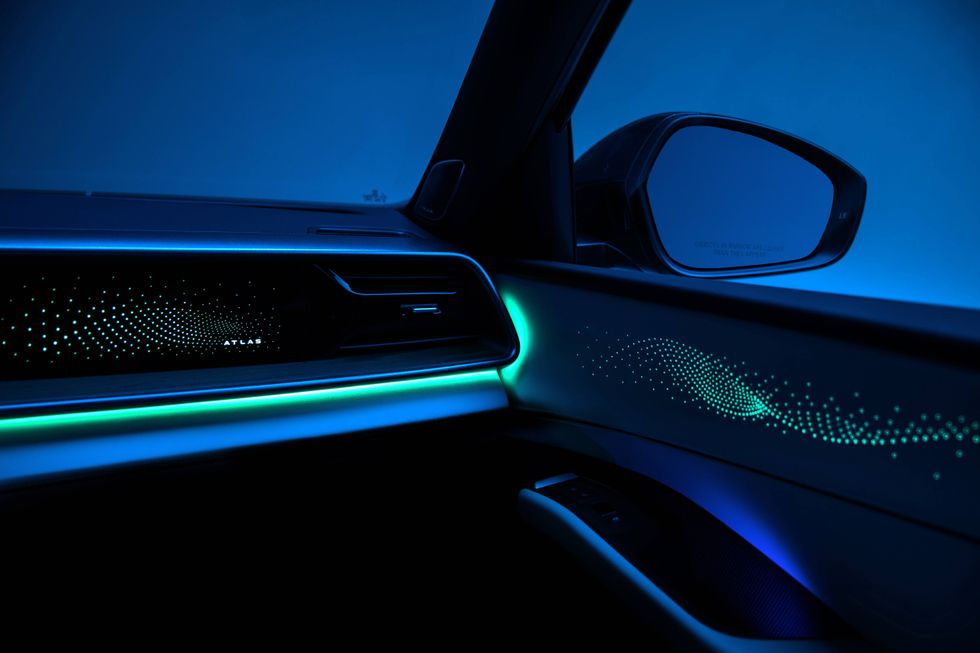
The interior presentation impressed me. The materials, ambient lighting, and overall atmosphere give the Atlas an upscale feel. I would describe it as approaching luxury in how it presents itself, especially in the upper trims.
What matters to me is whether that nicer environment serves both the passengers and the driver. Families should not have to judge an SUV entirely from the front seat.
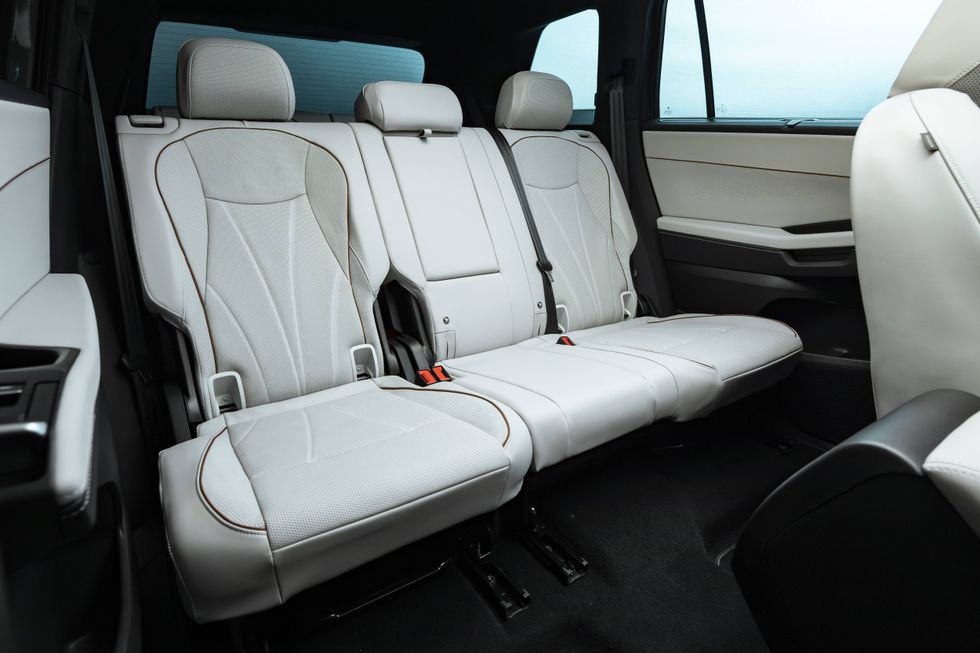
The available heated and ventilated second-row seating stood out, as did the added airflow from the B-pillar vents and center vents. These are features I would pay attention to when shopping in Georgia, where rear passenger comfort can be a daily concern.
The front seats felt firm to me. Some buyers may appreciate that support; others may prefer a softer cushion. Sit in the vehicle long enough to evaluate the seat rather than deciding from a quick showroom visit.
Volkswagen’s published trim information identifies heated and ventilated outboard second-row seats on the SEL R-Line. The SEL Premium R-Line adds amenities including Nappa leather, front seat massage, and a 14-speaker Harman Kardon audio system.
Source: Volkswagen trim guide
 2026 Volkswagen of America, Inc.
Rear climate operation is another detail to check in person. Volkswagen’s quick start guide identifies a top-trim Rear Climatronic control arrangement that lets rear passengers adjust temperature and heated seats. Ask the salesperson to demonstrate the controls on the specific vehicle you are considering. Source: Volkswagen’s 2027 Atlas quick start guide
Family space: child seats change the conversation
Volkswagen lists 41.7 inches of front legroom, 37.6 inches in the second row, and 34.1 inches in the third row. The second-row bench slides 7.7 inches and reclines up to 14 degrees. Source: Volkswagen 2027 Atlas media information, October 6, 2026
 2026 Volkswagen of America, Inc.
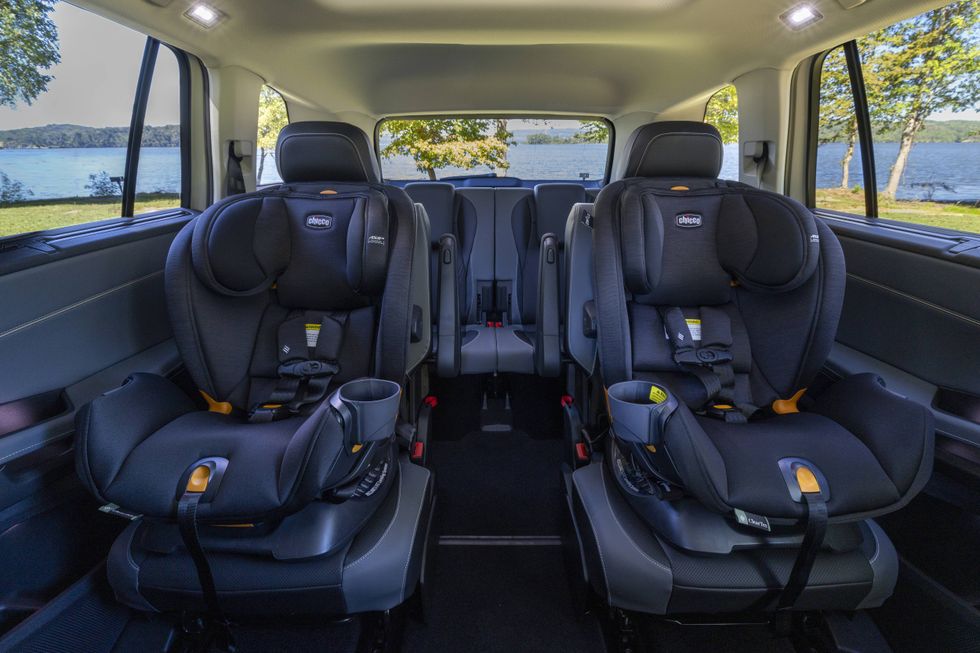
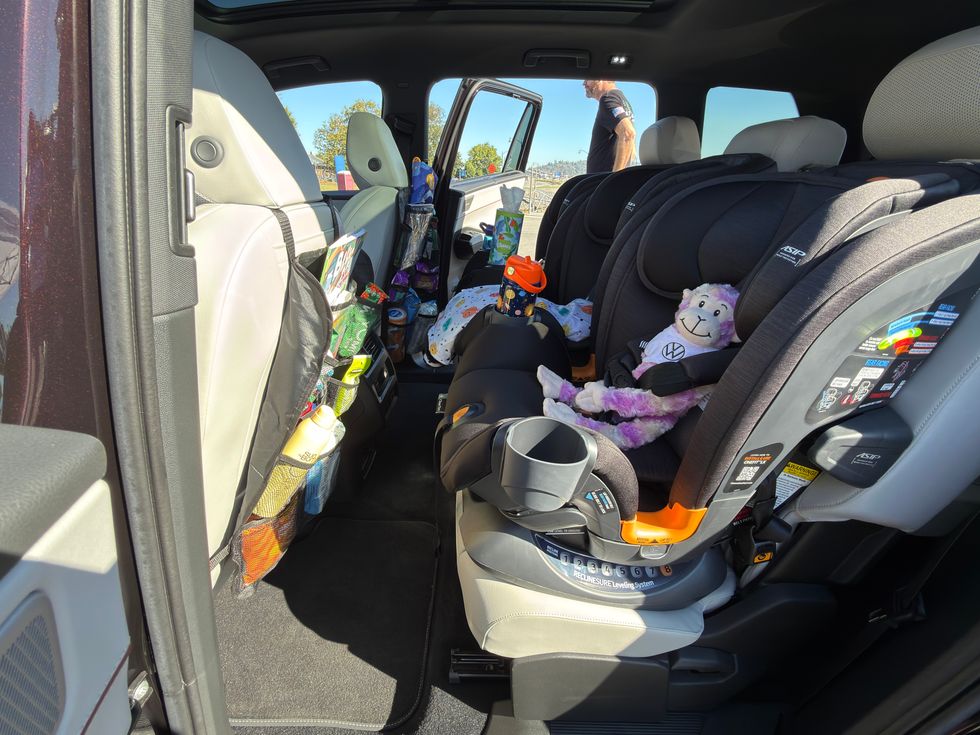
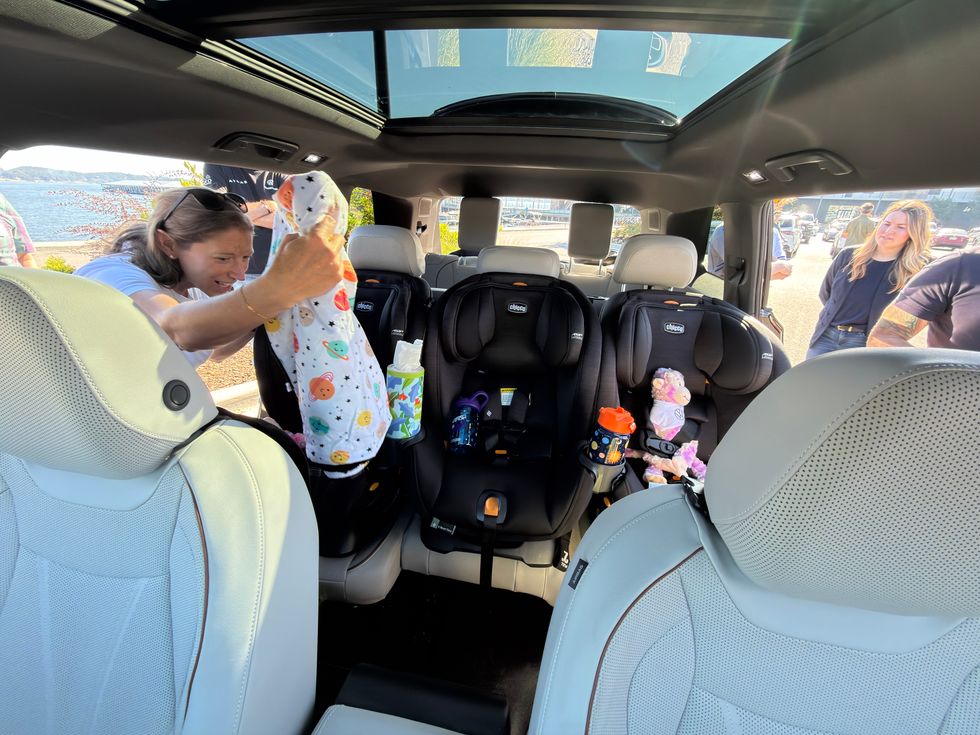
An empty second row tells only part of the story. Add child seats and the questions become more practical: Where do they fit? Can another passenger sit alongside them? How does someone reach the third row?
 Daryl Killian
In the configuration I tried, third row access with child seats installed was tight. That is my observation of that arrangement, not a conclusion that every child seat installation will create the same result.
 Daryl Killian
My advice is to bring your actual child seats to the dealership. Follow the vehicle and child seat instructions, then evaluate access with that installation. A demonstration using a different seat does not settle whether your own setup will work.
Have someone get into the third row, sit down, and get back out. Where appropriate, have a qualified child passenger safety technician check the installation. Do not assume that moving a seat with a child restraint attached is permitted for every restraint or installation method.
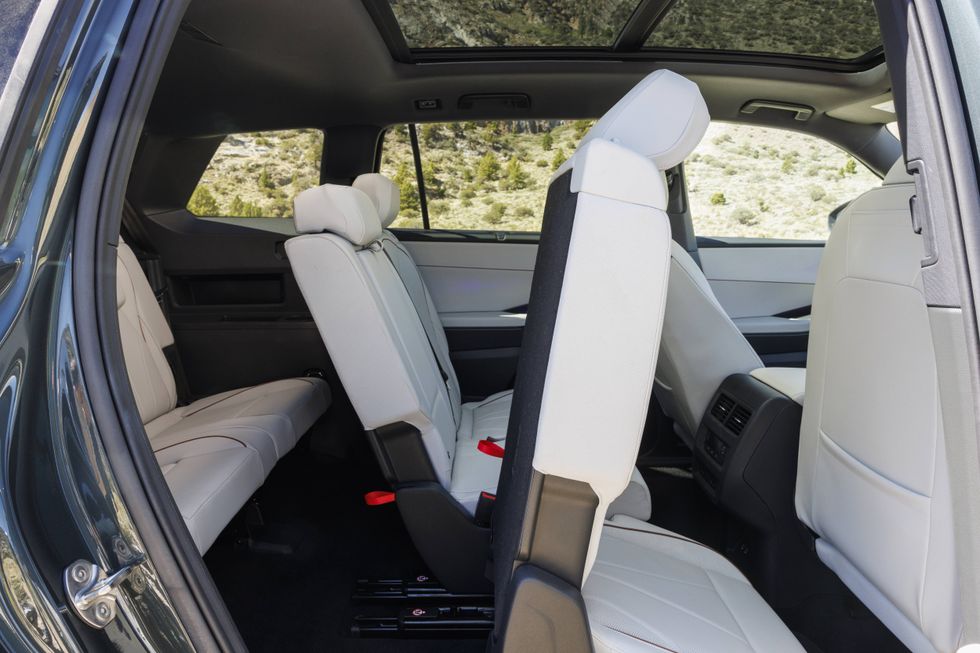
Once seated in the third row, I thought the space could work for an adult on a shorter trip. I'd evaluate a longer journey differently. Passenger height, legroom preferences, and the second row's position affect comfort.
 Daryl Killian
If your family uses the third row regularly, captain’s chairs may be worth exploring. They change the seating arrangement and access, but they also reduce the total passenger count. Decide whether your household needs the extra seating position before choosing a layout.
Cargo room: compare it with every seat in use
Volkswagen lists 21.2 cubic feet of cargo space behind the third row, 55.9 with the third row folded and 95.4 with both rear rows folded. The standard bench configuration seats seven; available second-row captain’s chairs provide six passenger seats.
Source: Volkswagen 2027 Atlas media information, October 6, 2026
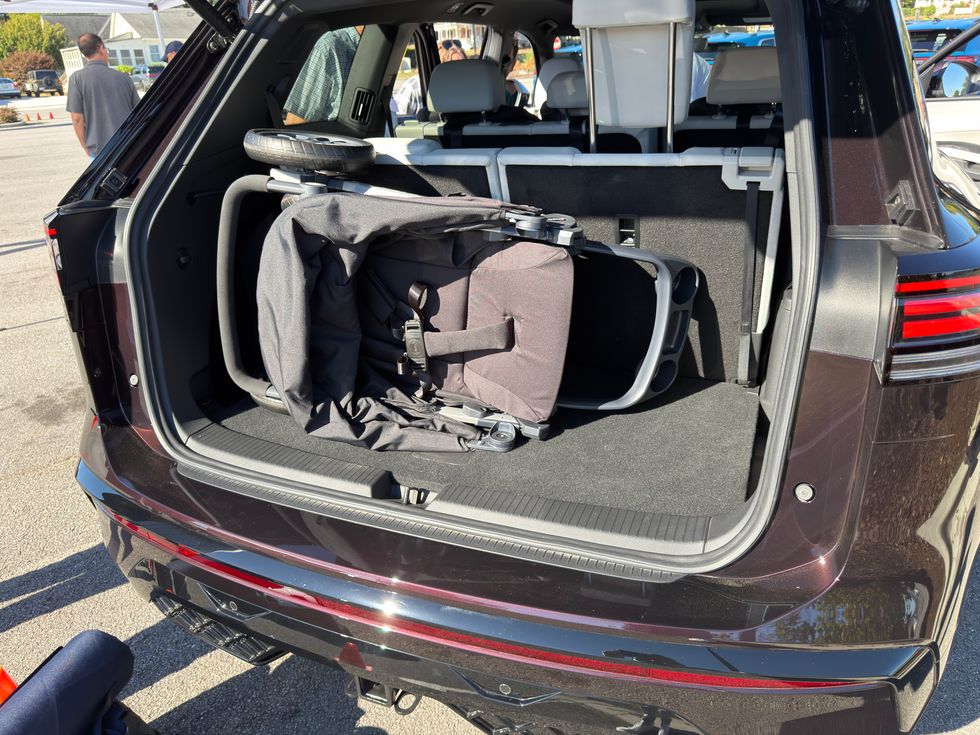
Maximum cargo volume is useful, but it is not the first number I would check if the family uses all three rows. Look at what fits behind the third row with everyone seated. Try the stroller, suitcases, sports bags, or other items you routinely carry.
Then evaluate how readily the seats fold and how the resulting space works for your larger loads. Practical flexibility is more useful than a big number that only applies when most passengers stay home.
 Daryl Killian
Technology: an impressive display still needs easy controls
The Atlas makes a strong visual statement with its infotainment system. The SE has a 12.9-inch center display, while the SE with Technology and higher trims use a 15-inch display. Source: Volkswagen 2027 Atlas media information, October 6, 2026
During my drive, I found some controls more buried than I wanted. Selecting a radio station was not as straightforward as I would have preferred. A large screen is appealing, but my standard is how readily I can reach the functions I use most.
Spend time with the system while parked. Connect your phone, select audio sources, adjust the climate settings, and find the controls you expect to use regularly. Those few minutes can tell you whether the interface suits you.
The column shifter felt intuitive to me, and I appreciated the storage beneath the center console. These details can make a difference after the showroom excitement wears off.
AirConsole gaming also lets occupants use compatible smartphones as controllers for games on the infotainment display while parked. Eligible In-Vehicle Premium enrollment is required. Volkswagen includes a three-month trial; after the included plan expires, continued use of the premium connected services requires a paid subscription.
Source: Volkswagen 2027 Atlas media information, October 6, 2026
I had fun trying the gaming feature, but I question how frequently most families will use it. It is an interesting extra. Passenger comfort, useful storage, and everyday ease of operation would carry more weight in my purchase decision.
More horsepower, less torque: how it felt on the road
The Atlas pairs its turbocharged 2.0-liter four-cylinder with an eight-speed automatic. It offers Front Wheel Drive and 4Motion All Wheel Drive configurations. The base SE is rated for 2,000 pounds with an aftermarket hitch and a braked trailer. SE with Technology and higher trims include a factory hitch and carry a 5,000-pound maximum rating for a braked trailer when properly equipped. Volkswagen specifies an appropriate third-party trailer brake controller for the maximum rating.
Source: Volkswagen 2027 Atlas media information, October 6, 2026
Don't treat the horsepower gain as proof of stronger acceleration in every situation. Torque delivery, transmission behavior, and vehicle weight all shape the driver's experience.
I noticed some hesitation getting away from a stop. Once moving, the Atlas handled the inclines on our drive without giving me concern. My stronger impression was its quiet, composed character.
For a family SUV, that composure matters. I want buyers to assess merging, stop-and-go response, ride quality, and cabin noise on a route that resembles their normal driving. A brief loop around the dealership may not answer all those questions.
If towing is part of the plan, verify the equipment and limits of the actual vehicle. A maximum advertised tow rating doesn't tell you how much payload remains once you add passengers, cargo, and trailer tongue weight.
2027 Volkswagen Atlas fuel economy
| Drivetrain | City MPG | Highway MPG | Combined MPG |
| Front Wheel Drive | 22 | 29 | 25 |
| 4Motion All Wheel Drive | 20 | 27 | 23 |
These are EPA estimates, not fuel economy results from my drive. Actual mileage varies.
Source: Volkswagen 2027 Atlas media information, October 6, 2026
Compare the drivetrain you plan to buy. Using a Front Wheel Drive fuel economy figure to assess an All Wheel Drive purchase can distort the cost comparison.
The current Atlas lineup has no hybrid. Buyers prioritizing a hybrid should compare available alternatives alongside the Atlas rather than treating an anticipated future model as something they can purchase today.
Source: Cars.com’s Atlas overview and competitor comparison
2027 Volkswagen Atlas prices by trim
| Trim | Drivetrain | Starting MSRP including destination |
| SE | FWD | $43,135 |
| SE | 4Motion AWD | $45,135 |
| SE with Technology | FWD | $47,135 |
| SE with Technology | 4Motion AWD | $49,135 |
| SEL R-Line | 4Motion AWD | $53,635 |
| SEL Premium R-Line | 4Motion AWD | $58,135 |
Prices include the $1,525 destination charge and exclude options, taxes, title, registration, and dealer charges. Dealers set actual selling prices. Source: Volkswagen trim guide
For example, the SE FWD base MSRP of $41,610 plus $1,525 destination equals $43,135. Adding AWD to the SE or SE with Technology increases the starting price by $2,000.
Equipment differences worth comparing
| Trim | Selected equipment |
| SE | 18-inch wheels, 12.9-inch display, heated and ventilated front seats, real wood, dual wireless charging and power tailgate |
| SE with Technology | 20-inch wheels, 15-inch display, illuminated exterior details, remote start, 115 volt outlet and factory hitch |
| SEL R-Line | Standard AWD, panoramic roof, Varenna leather, head-up display, 30-color ambient lighting and heated and ventilated outboard second-row seats |
| SEL Premium R-Line | 21-inch wheels, Nappa leather, front seat massage, Harman Kardon audio, Area View and Park Assist Plus |
Each higher trim builds on the equipment below it. Captain’s chairs are a $695 option on SE with Technology and above. A panoramic roof is a $1,200 option on SE with Technology and standard on the SEL trims. Source: Volkswagen trim guide
How I would approach the trim decision- Start with the SE if your priorities are the basic space and powertrain. Evaluate the equipment you actually need before deciding that the entry model is insufficient.
- Examine the SE with Technology if the larger screen and added conveniences appeal to you. The $4,000 step from SE to SE with Technology, at the same drivetrain, deserves a close look at the window sticker.
- Compare the SEL R-Line if rear passenger comfort and a more upscale atmosphere are priorities. This is where the available comfort discussion becomes particularly relevant.
- Consider the SEL Premium R-Line if you specifically want the top model’s additional luxury amenities. At $58,135 before further charges and options, I would also compare similarly equipped competitors rather than judge value by the Volkswagen badge alone.
Safety features: compare the equipment and understand its limits
Volkswagen adds a front center airbag for 2027 and lists seven standard airbags. Standard IQ.DRIVE includes forward collision warning and automatic emergency braking, blind spot monitoring, rear traffic alert, adaptive cruise control, and lane assistance. Travel Assist provides hands-on assistance, including assisted lane changes within its operating conditions.
Source: Volkswagen 2027 Atlas media information, October 6, 2026
Emergency Assist Plus is designed to stop the vehicle if the driver becomes unresponsive. Volkswagen says it can move toward an available right shoulder or the farthest right lane, within system limits, with Lane Assist or Travel Assist active. This is a manufacturer-described capability; I did not conduct an emergency intervention test.
Do not mistake a feature list for a crash test result or a guarantee of protection. When shopping, check current independent crash test results for the 2027 model. Area View and Park Assist Plus are top trim features, a relevant distinction if parking visibility is a priority.
Warranty, maintenance and ownership costs
Volkswagen lists a four-year or 50,000-mile New Vehicle Limited Warranty, three years or 36,000 miles of roadside assistance, and scheduled maintenance at one year or 10,000 miles and two years or 20,000 miles. The applicable time or mileage limit is whichever occurs first; exclusions and program terms apply. Source: Volkswagen 2027 Atlas media information, October 6, 2026
Include insurance quotes, tire replacement prices, and any connected service subscriptions in your comparison. The highest trim’s larger wheels and additional features may suit your preferences, but the purchase price is only part of the ownership budget.
What to compare against the Atlas
I would compare the Atlas with vehicles such as the Toyota Grand Highlander, Honda Pilot, Hyundai Palisade, Kia Telluride, and Chevrolet Traverse. The useful question is which vehicle best meets the same household needs at a comparable equipped price.
| Your priority | What to compare in each SUV |
| Frequent third-row use | Entry with your child seats installed, adult seating comfort, second-row position, and rear airflow |
| Fuel costs | The exact engine and drivetrain, combined MPG, and whether an available hybrid fits your budget |
| Carpools and large households | Actual passenger count, bench versus captain’s chairs, and usable space with every seat occupied |
| Road trips | Cargo space behind the third row, seat comfort, cabin noise, and the controls passengers can use |
| Premium features | The price of matching seat materials, rear seat comfort equipment, cameras, audio, and other desired amenities |
| Towing | Required equipment, payload label, tongue weight limits, and the loaded trailer’s actual weight |
My verdict: put the Atlas on your shopping list
The 2027 Volkswagen Atlas is a formidable competitor in the midsize SUV field. The updated styling catches my attention, the interior feels more upscale, and the quiet, composed drive supports its family mission.
My reservations are practical. I would want buyers to try the infotainment controls, assess the firm seats, check entry height, and test third-row access using their actual child seat configuration. You can't answer those questions by admiring a promotional photo.
Still, this SUV deserves consideration. If you want something different from the familiar vehicles on your neighbors’ driveways, that is a reason to look. The more important reason is whether the Atlas delivers the space, comfort, and features your family needs.
I think Volkswagen is a stronger contender here than many shoppers realize. This major update may be the one that finally lets the cat out of the bag.
 Daryl Killian