



From navigating rocky terrain to backing up a trailer and driving a 300-horsepower Corolla on a racetrack, Toyota's Road, Rock & Raceway event demonstrated how technology is changing the driving experience.
I've spent most of my life around automobiles, from working in dealerships to testing and reviewing hundreds of vehicles. But every now and then, something comes along that reminds me there's still plenty to learn behind the wheel.
My recent trip to Texas for Toyota's Road, Rock & Raceway press event provided several of those opportunities.
Toyota assembled a diverse collection of vehicles and driving experiences designed to demonstrate everything from off-road capability to advanced towing technology and high-performance driving.
I spent time navigating challenging terrain in the Toyota Sequoia and Tacoma, tested the latest trailer-backup technology in the 2027 Tundra, drove the tiny new Scion by Toyota KEI-01, and headed onto the racetrack in two versions of the GR Corolla.
While the driving experiences were entertaining, the bigger story was how technology can improve a driver's confidence and capability.
The Toyota Tundra Taught Me a Lesson About Backing Up a Trailer
Let's start with a confession. Backing up a trailer isn't nearly as easy as some people make it look.
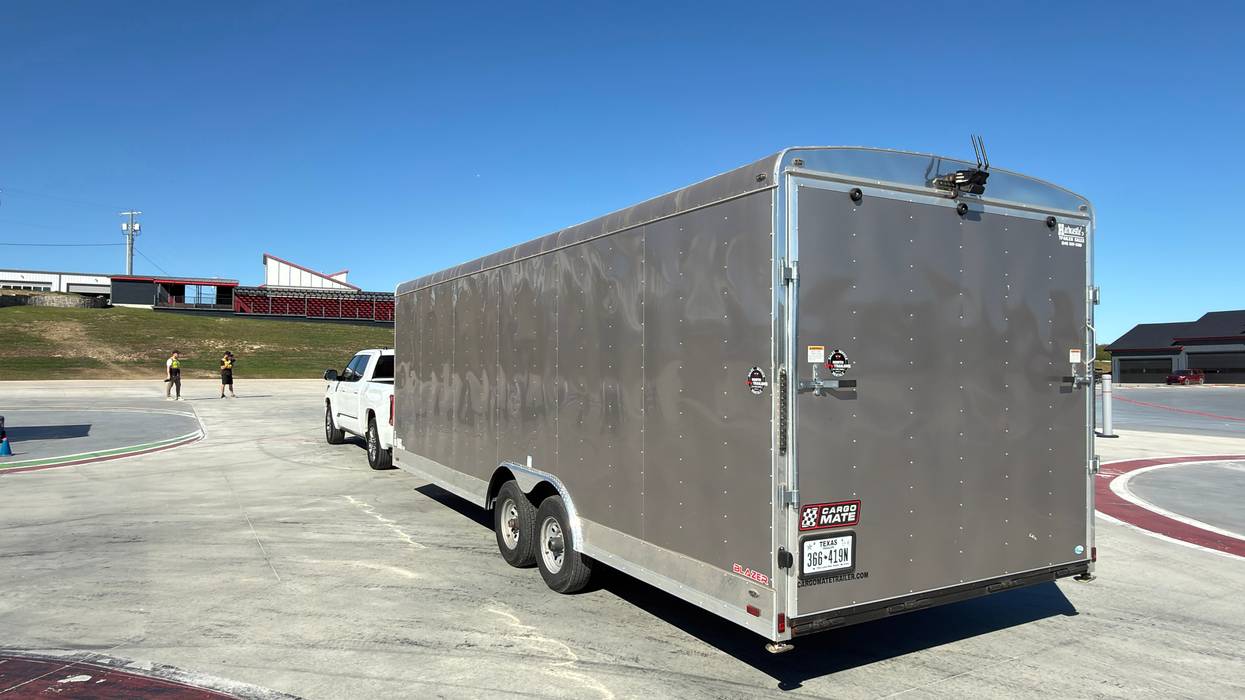
During the event, Toyota gave me the chance to test the updated trailer-assistance technology in the 2027 Tundra.
And believe me, I needed the help!
Anyone who has attempted to reverse a vehicle with a trailer attached understands the challenge. Steering inputs can seem counterintuitive, and making corrections requires patience and an understanding of how the truck and trailer move together.
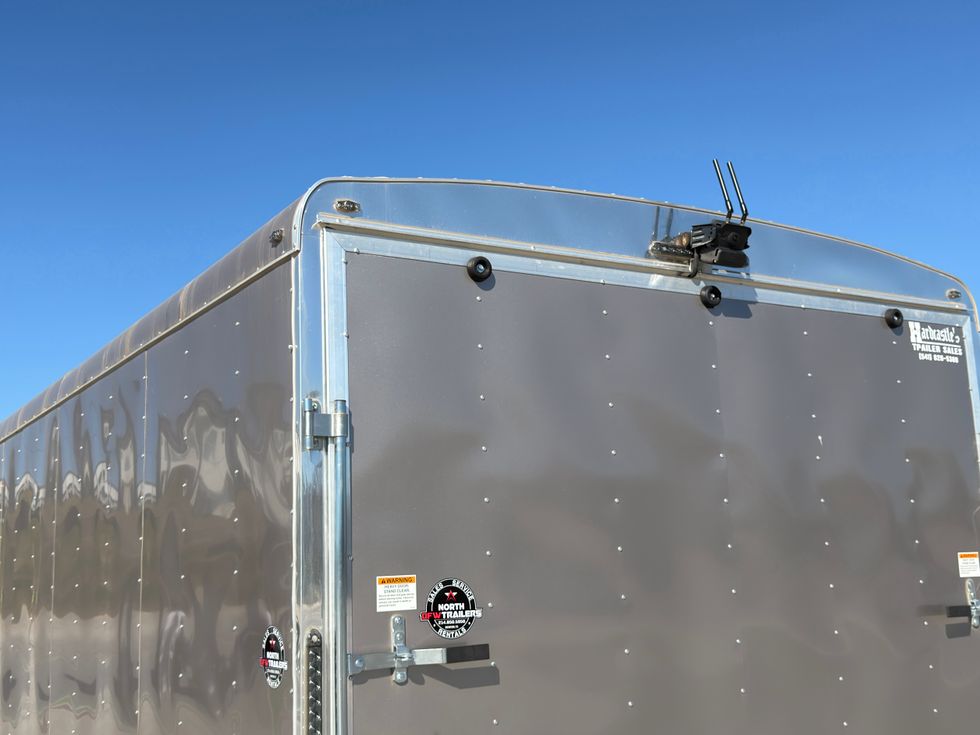
Toyota's new Trailer Backup Guide is designed to simplify the process with visual guidance, an adjustable on-screen interface, and semi-automated steering assistance.
 Daryl Killian
The 2027 Tundra also introduces automated trailer detection, which can identify a connected trailer and help establish its dimensions for the vehicle's towing assistance systems. Additional technology includes trailer blind spot monitoring and a towing-specific version of Lane Trace Assist.
These aren't simply features intended to impress buyers in a showroom. For someone who regularly pulls a boat, camper or work trailer, they could make a meaningful difference.
Of course, technology doesn't eliminate the driver's responsibility. Proper trailer setup, awareness of surrounding obstacles, and understanding the limitations of these systems remain essential.
The updated Tundra starts at $42,890, according to Toyota, with an available i-FORCE MAX hybrid powertrain delivering 437 horsepower and 583 pound-feet of torque. Maximum towing capacity reaches 12,000 pounds when properly equipped.
But after my experience with the trailer, I was reminded that one of a vehicle's most valuable features might not be its horsepower. It might be technology that makes a difficult task easier.
Taking the Sequoia and Tacoma Off the Pavement
Next came an opportunity to experience Toyota's off-road capabilities in the Sequoia and Tacoma.
Driving on challenging terrain requires a completely different mindset from navigating Atlanta traffic. The objective isn't necessarily getting somewhere quickly. It's choosing the right path, maintaining traction, and controlling the vehicle's movement over uneven surfaces.
The Toyota Sequoia is particularly interesting because it's a full-size, three-row SUV designed to accommodate families while also offering considerable capability beyond paved roads.
For 2027, Toyota has expanded the Sequoia lineup with a new Trailhunter package designed for off-road adventures. It includes upgraded suspension components, specialized tires, underbody protection and recovery equipment.
Every 2027 Sequoia is powered by Toyota's i-FORCE MAX hybrid powertrain, producing 437 horsepower and 583 pound-feet of torque.
The Sequoia starts at $69,900, with maximum towing capacity reaching 9,120 pounds, depending on configuration.
The Tacoma offers another approach, combining pickup-truck utility with more manageable dimensions than Toyota's full-size trucks.
These off-road demonstrations illustrated an important distinction for consumers. A vehicle's advertised capabilities and the features a buyer actually needs aren't necessarily the same thing.
Before purchasing an expensive off-road package, consider whether you'll regularly use the equipment or simply appreciate knowing it's available.
Scion Is Back, but This Isn't the Scion You Remember
One of the more unexpected experiences came when Toyota handed me the keys to the new Scion by Toyota KEI-01.
Yes, Scion is back!
Those who remember the original Scion brand probably associate it with small, affordable passenger cars and sporty designs intended to attract younger buyers.
The new Scion by Toyota initiative takes a different direction.
The KEI-01 is a compact, right-hand-drive utility truck inspired by Japan's popular kei vehicles. It's powered by a 660cc three-cylinder engine paired with a continuously variable transmission and four-wheel drive.
Its maximum speed is just 25 miles per hour.
That makes it a specialized low-speed vehicle rather than a conventional pickup intended for highway use.
Toyota sees potential applications for businesses, college campuses, farms, municipalities, and other operations where transporting materials over relatively short distances is a priority.
The company plans to assemble the KEI-01 in Indiana beginning in the second half of 2027, with initial sales focused on fleet customers.
What makes this vehicle interesting isn't its performance. It's the concept of providing an appropriately sized vehicle for a specific job.
In a market where many automobiles keep getting larger, it's refreshing to see a manufacturer exploring a substantially smaller alternative.
Trading the Rocks for the Racetrack
After navigating off-road terrain and learning about towing technology, the experience shifted dramatically.
I headed onto the racetrack for time behind the wheel of Toyota's GR Corolla with an automatic transmission and the limited-production GRMN Corolla equipped with a six-speed manual.
The GRMN represents a more focused expression of Toyota's performance division.
Developed using lessons learned from motorsports and testing at Germany's Nürburgring, the GRMN Corolla produces 300 horsepower and 302 pound-feet of torque from a turbocharged 1.6-liter three-cylinder engine.
Toyota has equipped it with specialized suspension components, performance tires, aerodynamic enhancements, and all-wheel drive.
It's also a two-seater, with the rear seats removed as part of Toyota's weight-reduction strategy.
Production is limited to 730 units globally, and Toyota lists a starting MSRP of $64,360.
Although both versions of the GR Corolla emphasize performance, experiencing an automatic and a manual transmission on a racetrack highlights two distinct approaches to driver involvement.
For enthusiasts, the appeal extends beyond horsepower. Steering response, braking, traction, and the interaction between the driver and vehicle are all important parts of the experience.
The AutoNsider's Takeaway
What made this Texas event particularly interesting was the diversity of vehicles and the different problems they were engineered to solve.
The Sequoia and Tacoma demonstrated specialized off-road capability. The Tundra showcased technology intended to simplify towing.
The KEI-01 introduced a different approach to utility transportation. And the GR Corolla models demonstrated Toyota's continued commitment to performance enthusiasts.
For consumers, I think there's an important lesson here.
Today's vehicles offer more specialized equipment and technology than ever before, but more features don't automatically make a vehicle better for every buyer.
The real question is whether those features improve the way you actually use your vehicle.
My trailer backing experience probably provided the clearest example. Even after decades around automobiles, I encountered a task that challenged my abilities, and Toyota demonstrated technology designed to make that task more manageable.
That's innovation I can appreciate.
One for the Road: Don't get so distracted by horsepower, appearance, or a long list of features that you overlook what matters most. The best vehicle is the one that meets your needs, fits your lifestyle, and gives you confidence behind the wheel.