

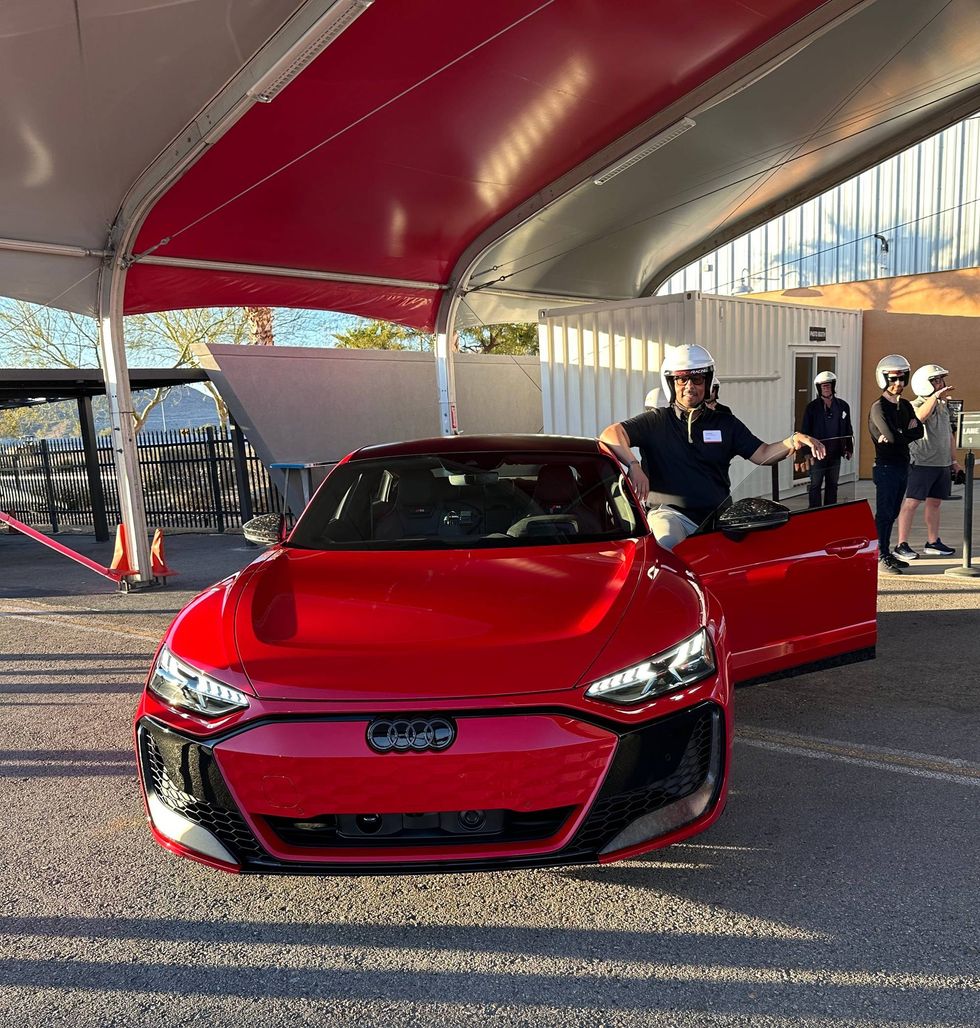
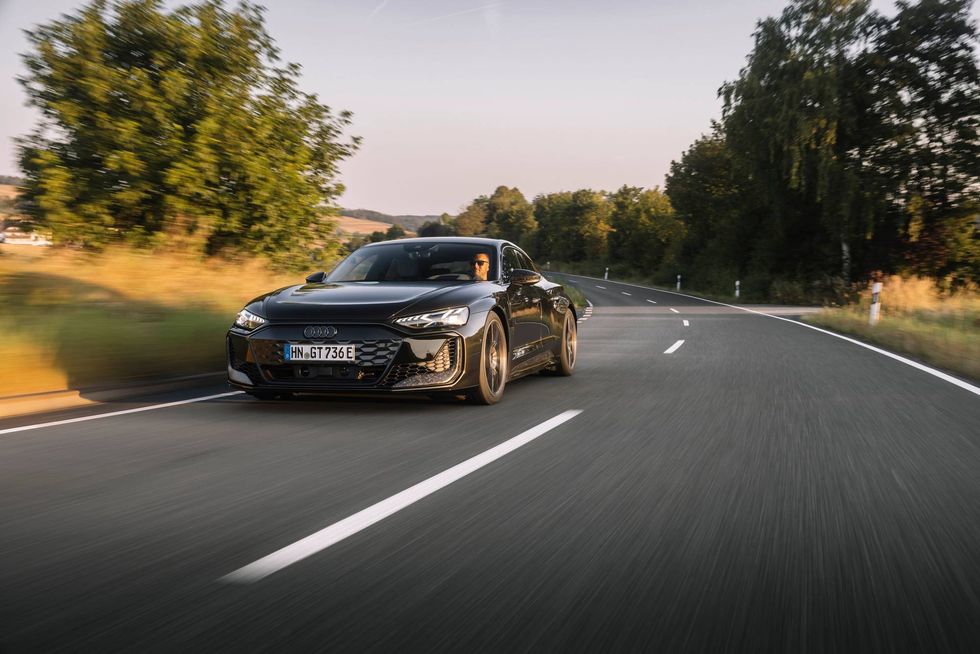
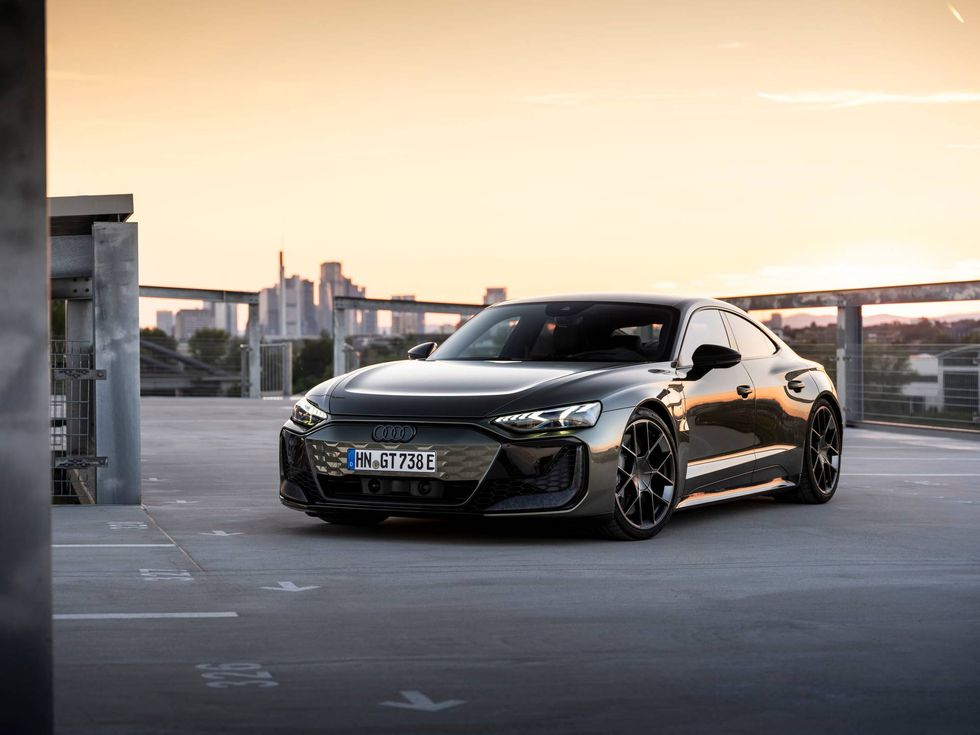
The 2025 Audi RS e-tron GT performance remains a head-turner, but after a few years on the market, its design no longer stuns like it once did. While modest updates to the front fascia and the addition of forged carbon fiber accents inside and out bring a fresh look, it's starting to show signs of familiarity — a dangerous place to be in a segment dominated by rapid innovation and cutting-edge design.
 Daryl Killian
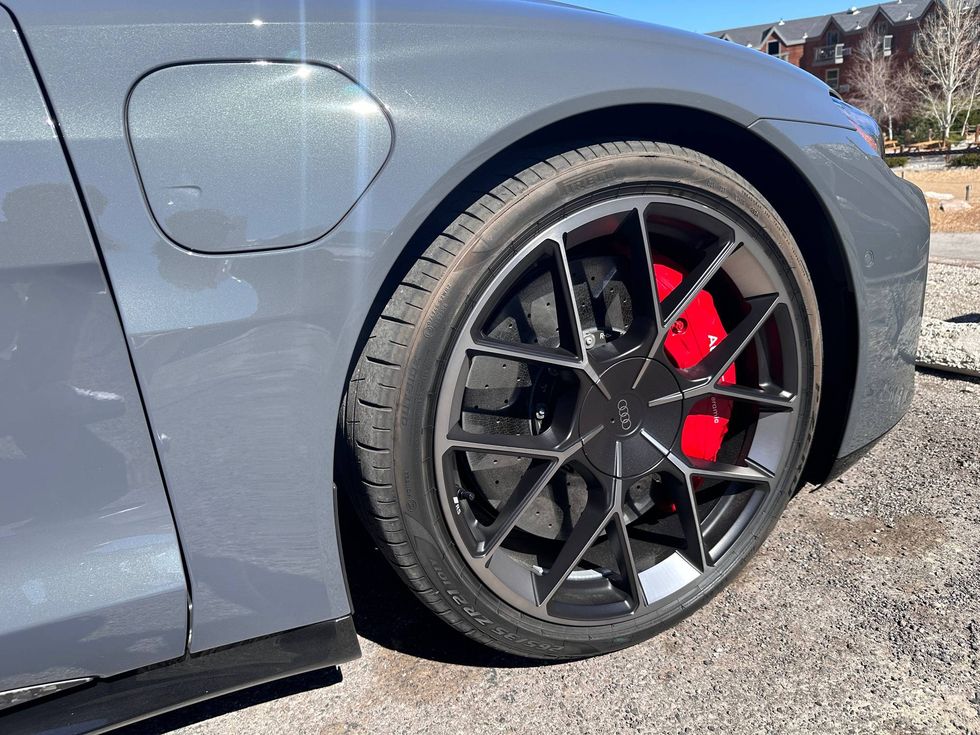
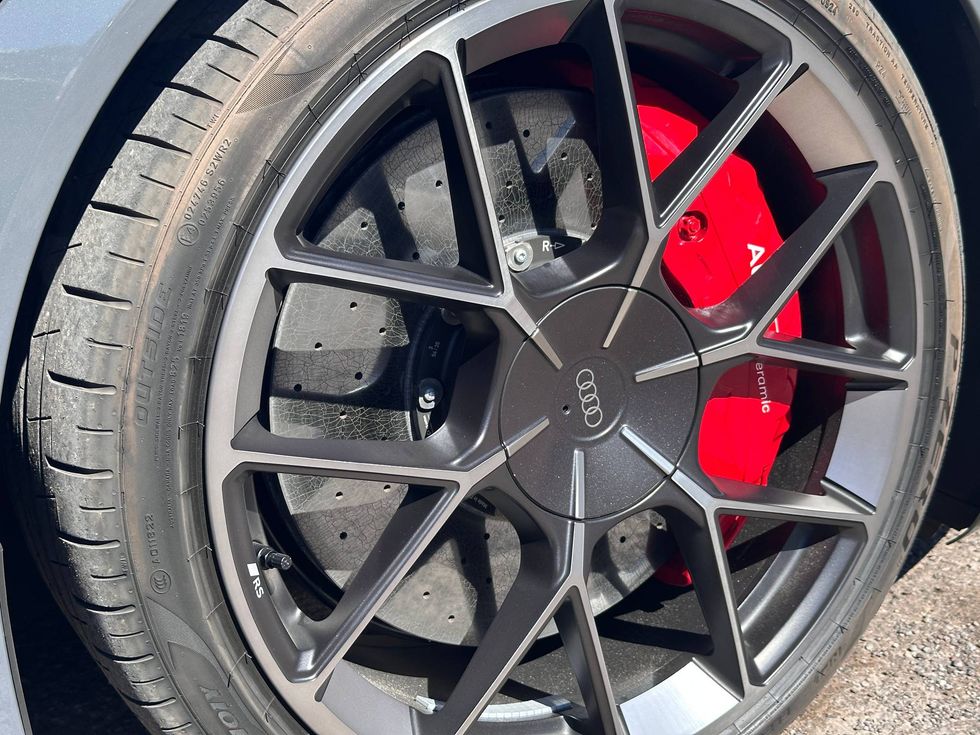
Still, it holds its own. The matte carbon roof and 21" 6-double-spoke RS wheels are proper upgrades. The ceramic brakes with anthracite calipers look the part and perform even better. From a visual standpoint, Audi stayed in its lane — tasteful aggression without leaning too far into the futuristic gimmicks some EV rivals embrace.
 Daryl Killian
 Daryl Killian
Performance, however, is where this RS earns its stripes. The acceleration is absurd — not just "fast for an EV," but supercar fast. Launch it a few times, and it'll pin you back with the kind of torque that only cars like the Tesla Model S Plaid, Lucid Air Sapphire, or Porsche Taycan Turbo S can match. And given the company it keeps, some might even call it a bargain… if dropping close to $200K on an electric car can ever be called that.
It's an easy car to drive — so easy, in fact, that after the thrill of launch mode wears off, there's not much left to explore unless you're carving canyons or pushing it on a track. That said, Audi's updated suspension with active damper control is a genuine game-changer. It eliminates body roll and squats under heavy braking — what my friends and I used to call the "ass up" moment when the rear lifts and the nose dives. That's gone. Instead, you get a composed, planted ride that boosts driver confidence and gives the impression that you're in total control — and maybe you actually are.
 Audi
Audi
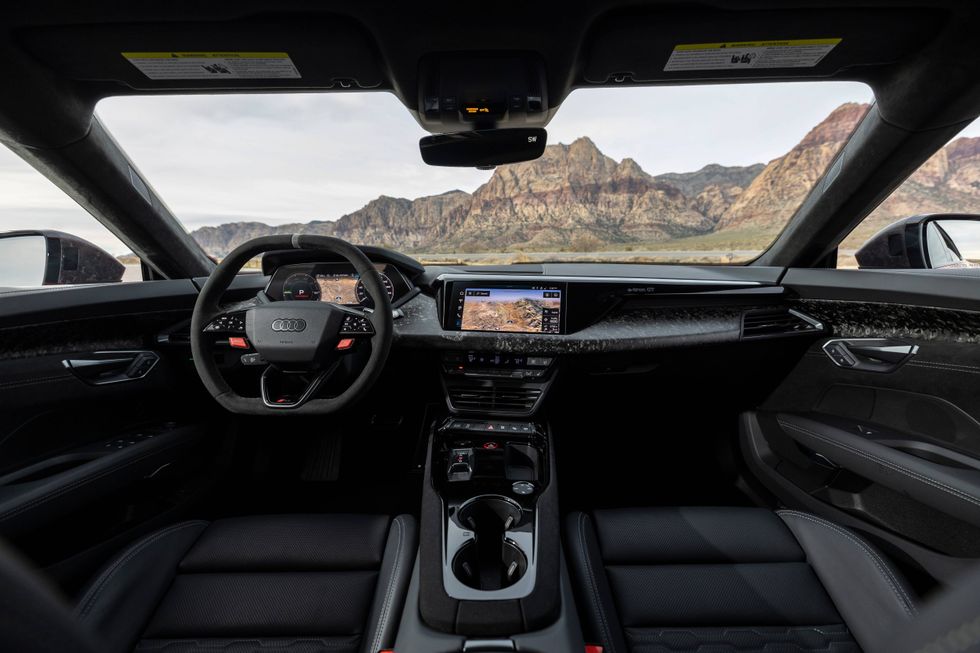
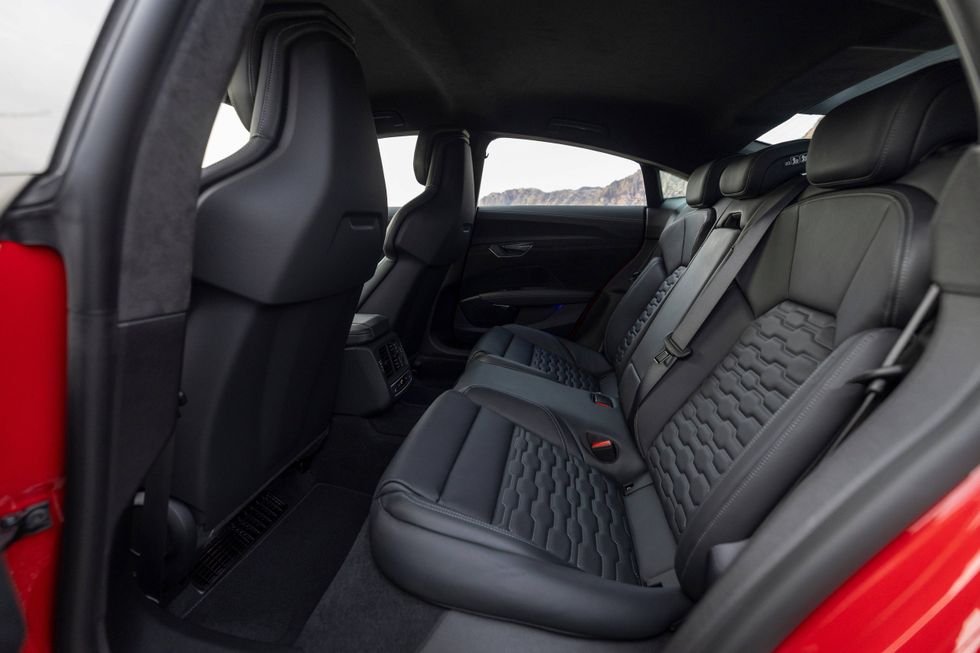
Inside, the RS e-tron GT is snug. The front seats hug you purposefully, and the massaging function is surprisingly effective. Rear-seat passengers won't be thrilled with the tight quarters, but let's be honest — no one's buying this car for its backseat practicality. It's a grand tourer in spirit, not a family hauler.
 Audi
Audi
 Audi
Audi
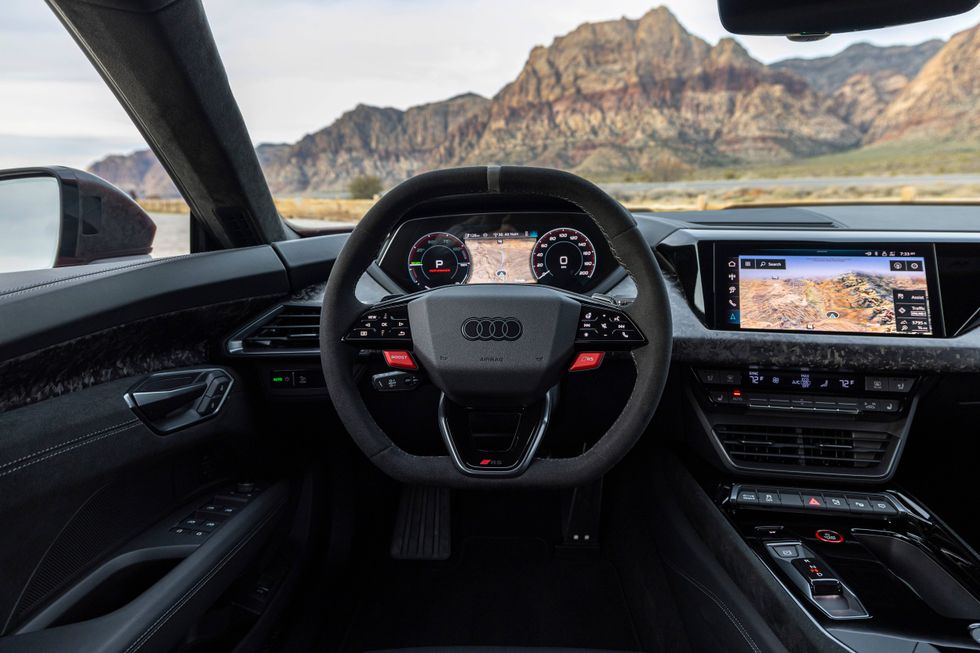
Cabin noise is minimal and what you'd expect from a premium EV, but the synthetic propulsion sounds piped into the cabin are… odd. They remind me of something from 'Back to the Future' — not in a nostalgic way, but in a "why is this necessary?" kind of way. Still, I get it. Sound is part of the emotional connection, and with no engine roar, manufacturers have to fill the void somehow.
Where Audi made real strides in this mid-cycle refresh is in the battery architecture. Though I haven't received the complete press kit yet, early impressions point to faster charging times, improved range, and optimized thermal management — all areas EV buyers pay close attention to. These kinds of updates keep the RS e-tron GT in the conversation with the best in the business.
 Audi
Audi
But here's where I pause: I struggle to fully understand the buyer willing to spend near-supercar money on an EV that's not a daily driver, not a luxury cruiser, and not quite a track weapon. Clearly, I'm not the target demo. EVs aren't just about saving money or the planet anymore—they're about fun, exclusivity, and experience. And for some, the price of admission is what defines the thrill.
The RS e-tron GT performance delivers thrills, no question. But now that the dust has settled on its debut years ago, Audi must work harder to ensure it doesn't blend into the EV landscape it helped shape.
Because in this new era of electric excitement, good isn't fast enough — and familiar doesn't feel like the future.
Because in this new era of electric excitement, good isn't fast enough — and familiar doesn't feel like the future.
Key Specifications (Estimated)
• Powertrain: Dual-motor all-wheel drive
• Horsepower: Approx. 845 hp (updated for 2025)
• 0-60 mph: Around 2.5 seconds
• Top Speed: Approximately 155 mph (electronically limited)
• Electric Range: Estimated 300+ miles (EPA figures pending)
• Charging: 800V architecture with up to 270 kW DC fast charging
• Battery System: Revised for better thermal management and efficiency
• Wheels: 21-inch 6-double-spoke RS design
• Brakes: Ceramic with anthracite calipers
• Interior Features: Sport seats with massage function, forged carbon fiber accents
• Price Range: Estimated $160,000–$180,000 (as tested)
Strengths
• Exceptional acceleration comparable to supercars
• Revised suspension improves stability, cornering, and braking control
• Distinctive matte carbon roof and bold RS wheel design
• High-end materials and craftsmanship inside the cabin
• Faster charging and better battery management than previous models
• Confident handling and smooth touring ride quality
Considerations
• Rear seat space is limited and not suited for regular adult passengers
• Artificial propulsion sounds may not appeal to all drivers
• Visual updates are modest and may not feel fresh to returning customers
• Price pushes into exotic and ultra-luxury territory
• Trunk and frunk storage are limited
• Excitement can taper off after experiencing launch mode a few times
Best For
• Enthusiasts seeking a high-performance EV with European refinement
• Drivers who want Taycan-like capabilities in a more exclusive package
• EV buyers who care about driving feel as much as range or tech
• Audi loyalists looking for cutting-edge electrification with RS DNA
 Audi
Audi
Final Verdict
The 2025 RS e-tron GT performance is still a statement piece. It's fast, planted, and unmistakably Audi. While the visual refresh won't stop traffic the way it once did, improvements to battery performance, handling dynamics, and overall driveability keep it in elite company. For those willing to pay for performance and precision over practicality, it delivers — even if the backseat doesn't.


![Detillier on Falcons' QB room: "You didn't bring [Tua] in to watch"](https://www.audacy.com/media-library/image.jpg?id=65304785&width=1245&height=700&quality=70&coordinates=0%2C0%2C0%2C0)