





The Nissan LEAF holds a distinct position in the U.S. automotive market. Introduced in 2010, it was the first mass-produced electric vehicle sold nationally and helped normalize EV ownership long before charging infrastructure, long-range batteries, or mainstream acceptance existed. A modest range, unconventional styling, and strong, incentive-driven pricing defined early versions of the LEAF. They appealed primarily to cost-conscious buyers or early adopters focused on electric technology rather than design or performance.
 Daryl Killian
 Daryl Killian
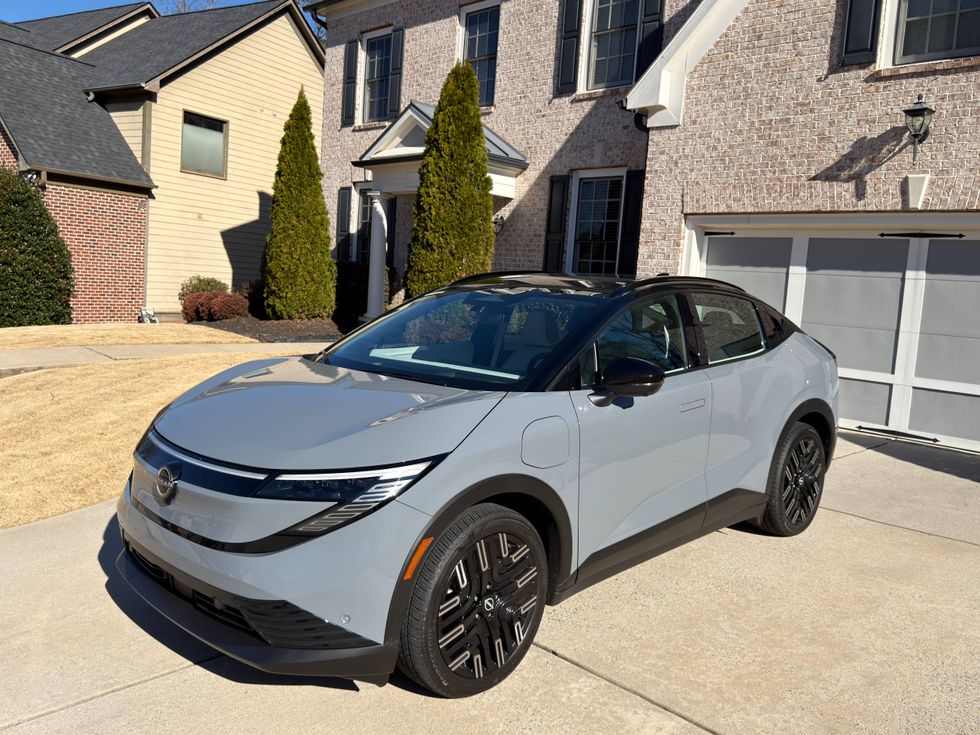
For 2026, Nissan has fully reworked the LEAF into a compact electric crossover, signaling a clear shift in both positioning and execution. This third-generation model is intended to compete directly with modern entry-level EVs rather than function as a niche product.
Exterior Design
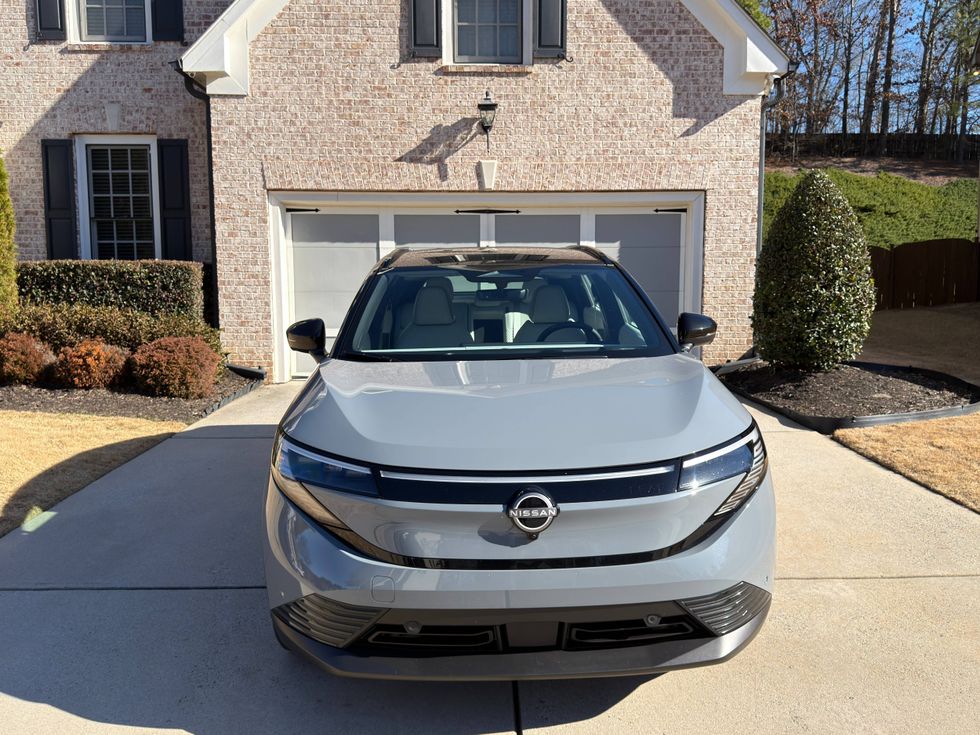
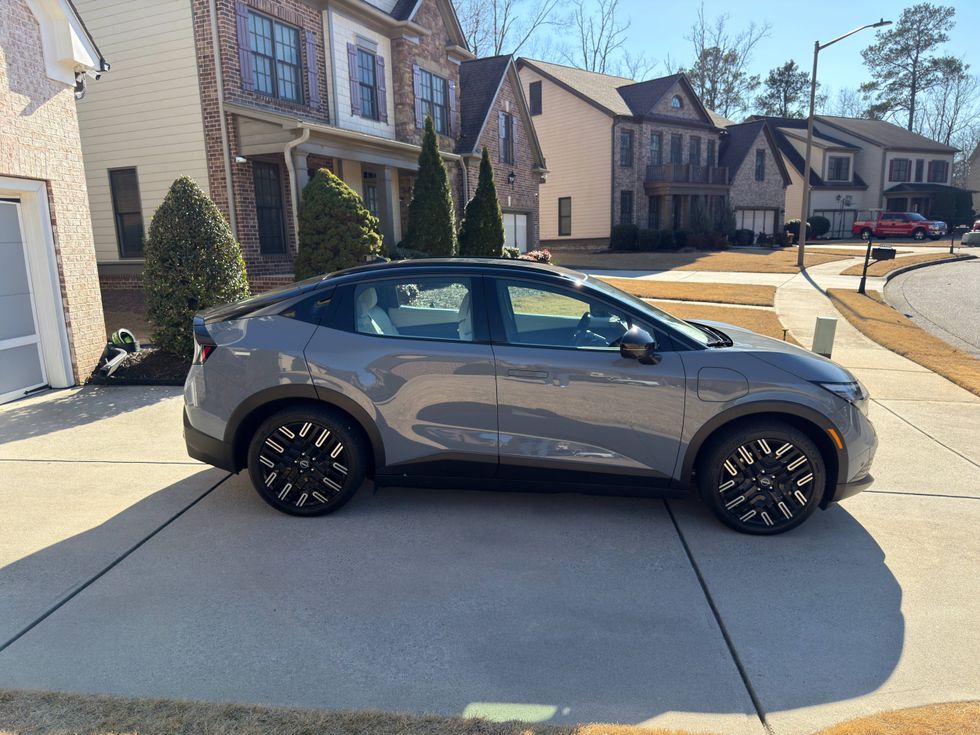
The 2026 LEAF adopts a crossover body style with improved aerodynamics, including a reported drag coefficient of approximately 0.26, down from previous generations. The design is cleaner and more conventional, with flush door handles, concealed rear door handles integrated into the C-pillar, and a sloping roofline to improve efficiency.
 Daryl Killian
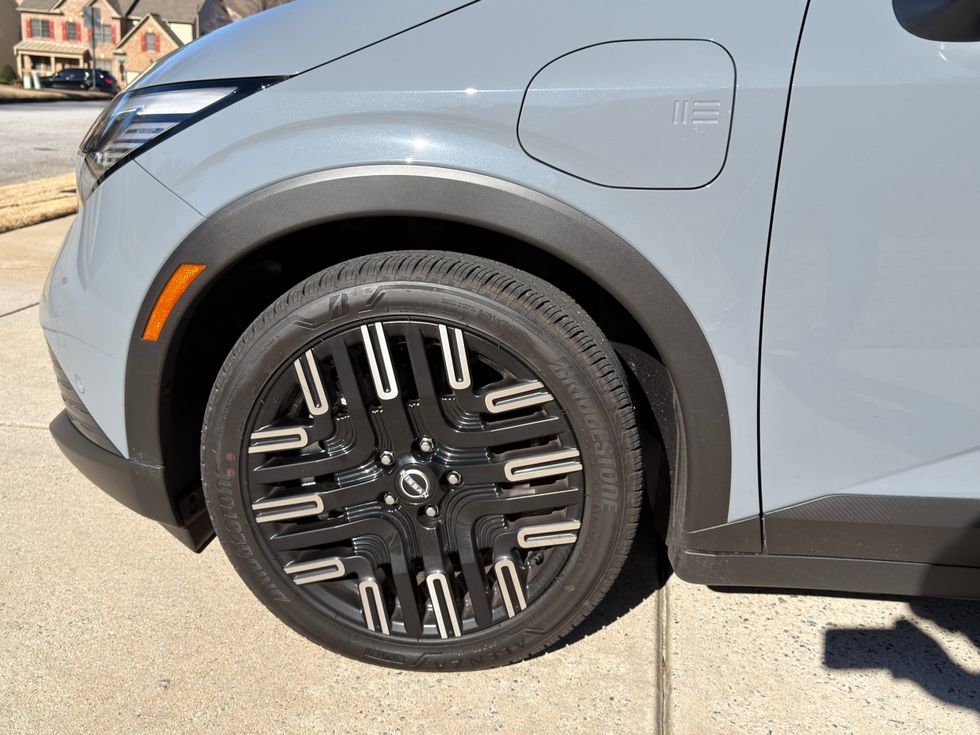
Nissan incorporates recurring design elements that reference the company's name through a two-and-three motif, reflecting the Japanese pronunciation ni san. These details appear in the lighting signatures, wheels, and interior trim. While subtle, they are intentional and consistent across the vehicle.
 Daryl Killian
From a personal perspective, the updated design appears to be effective.
During real-world driving, the vehicle attracted unsolicited attention from non-enthusiasts, including compliments on its appearance and questions about the model year. This was unexpected for a vehicle historically viewed as visually anonymous. The reaction suggests Nissan's design revisions are resonating beyond traditional EV buyers.
Interior and Comfort
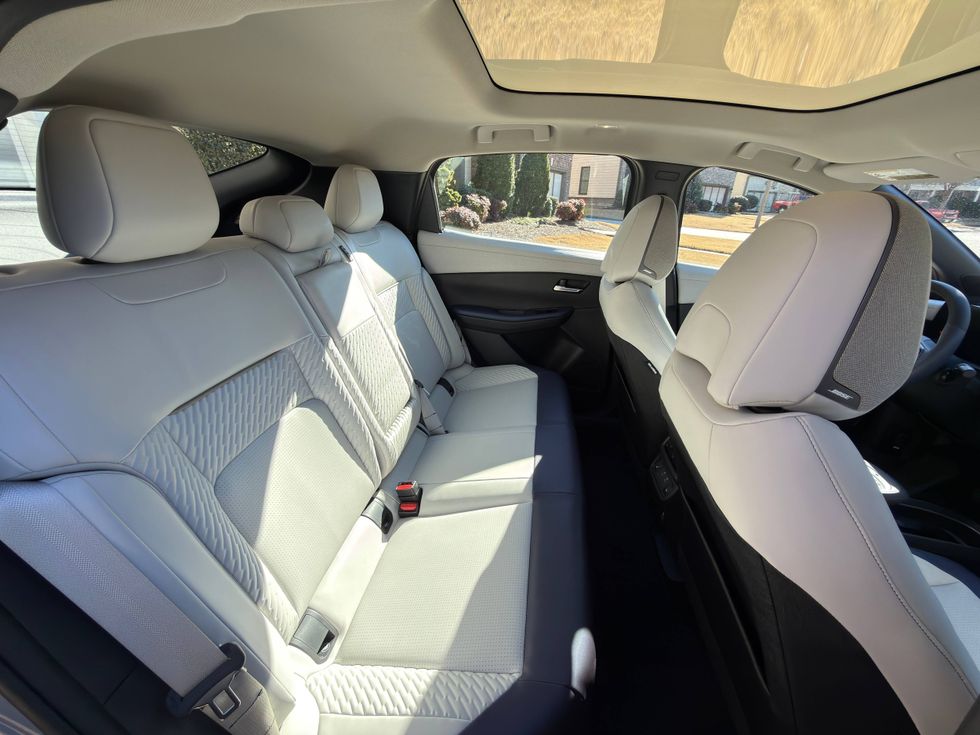
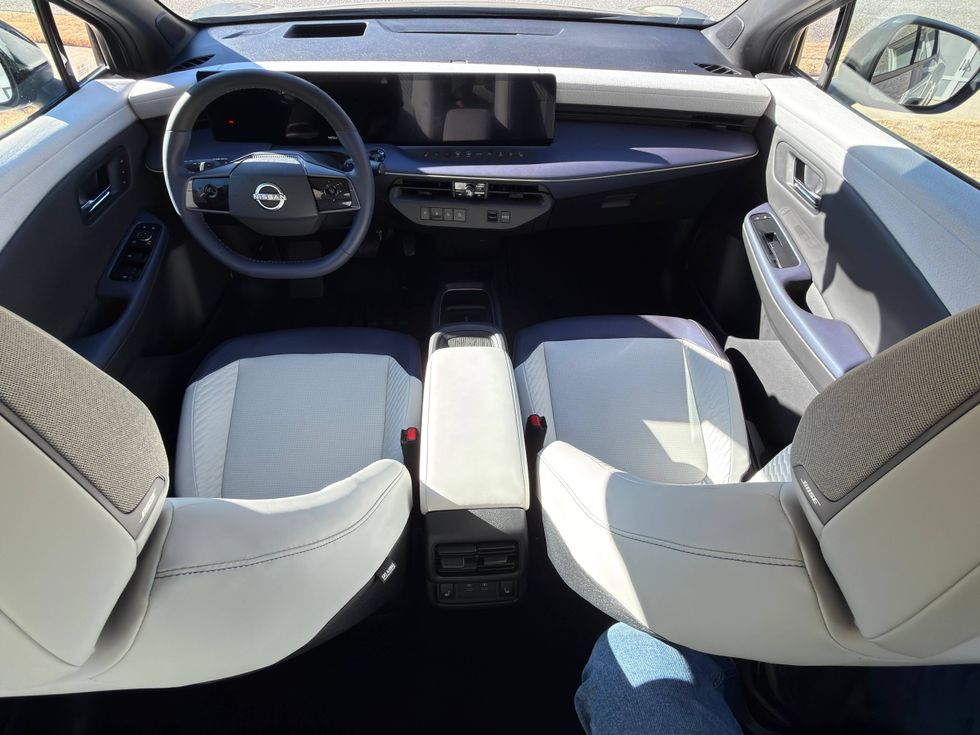
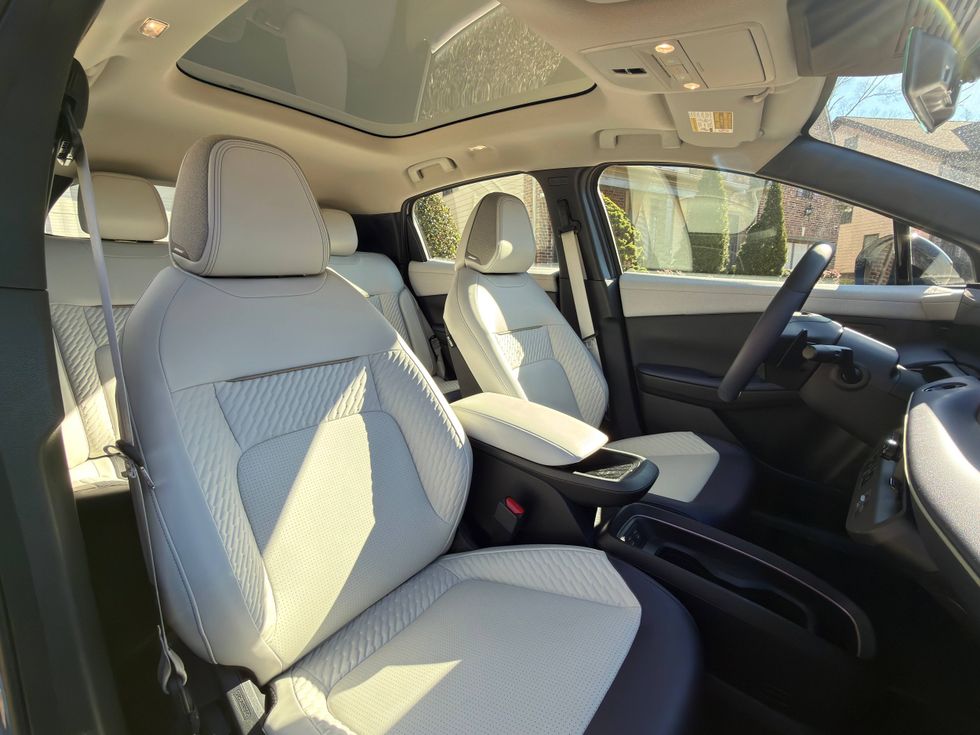
The Platinum Plus trim features a light-colored interior that appears cream under natural light. Material quality is noticeably improved over prior LEAF generations, with soft-touch surfaces in key contact areas and a more cohesive layout.
 Daryl Killian
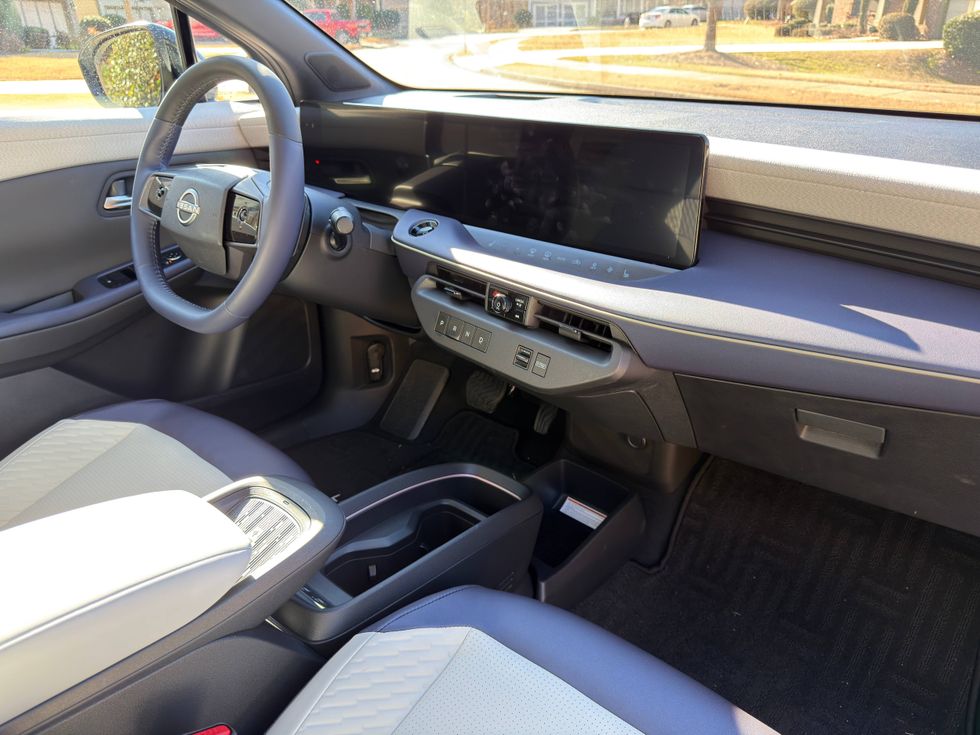
Front-seat space is generous, with an open feel aided by a flat floor and dashboard-mounted shift controls. Controls are logically placed and easily accessible. Second-row legroom is adequate for a compact crossover, though larger adults may find it limited on longer drives.
 Daryl Killian
 Daryl Killian
 Daryl Killian
Cargo capacity is competitive for the segment, with usable space behind the rear seats and additional underfloor storage suitable for items typically carried full-time, such as charging cables or emergency equipment.
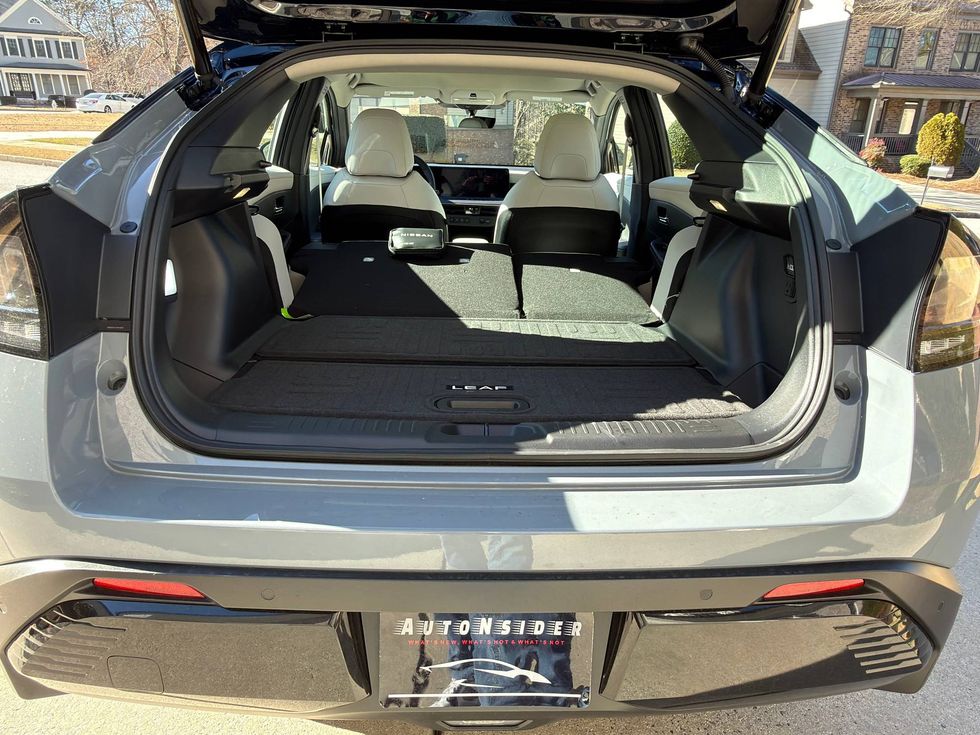 Daryl Killian
The electrically dimming panoramic glass roof is a notable feature. Unlike traditional sunshades, it allows daylight without direct heat and preserves headroom. In daily use, it contributes to a more open cabin without adding complexity.
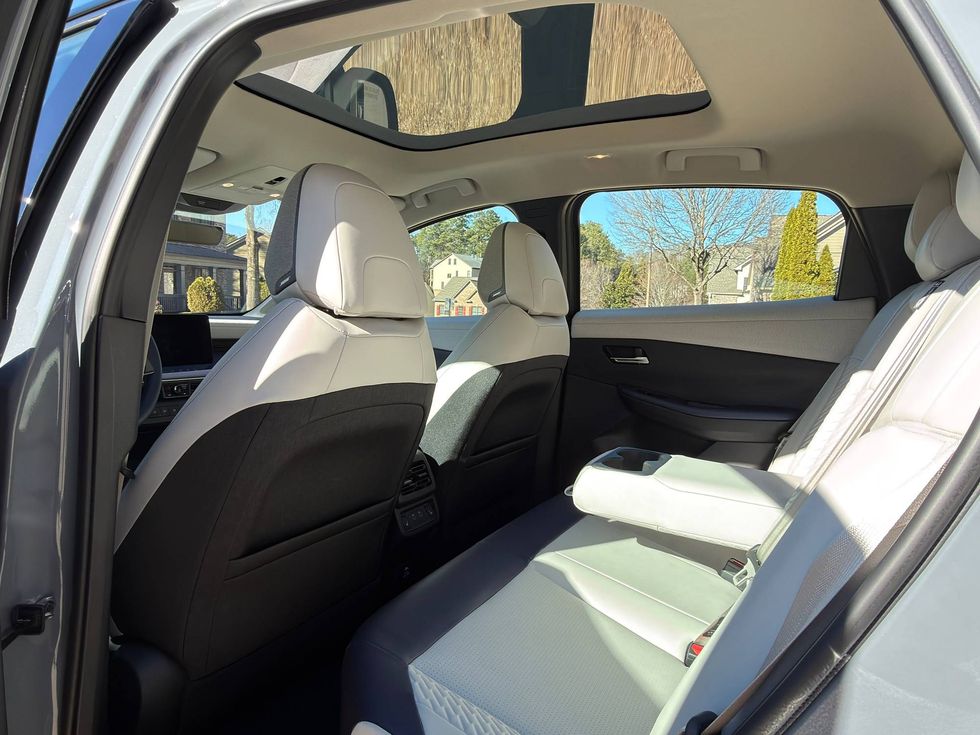 Daryl Killian
Powertrain and Driving Characteristics
The Platinum Plus uses a 75-kWh, liquid-cooled lithium-ion battery paired with a 214-horsepower electric motor. Performance is not positioned as a highlight, and acceleration reflects that. The LEAF does not compete with performance-oriented EVs but provides sufficient power for daily commuting and highway merging.
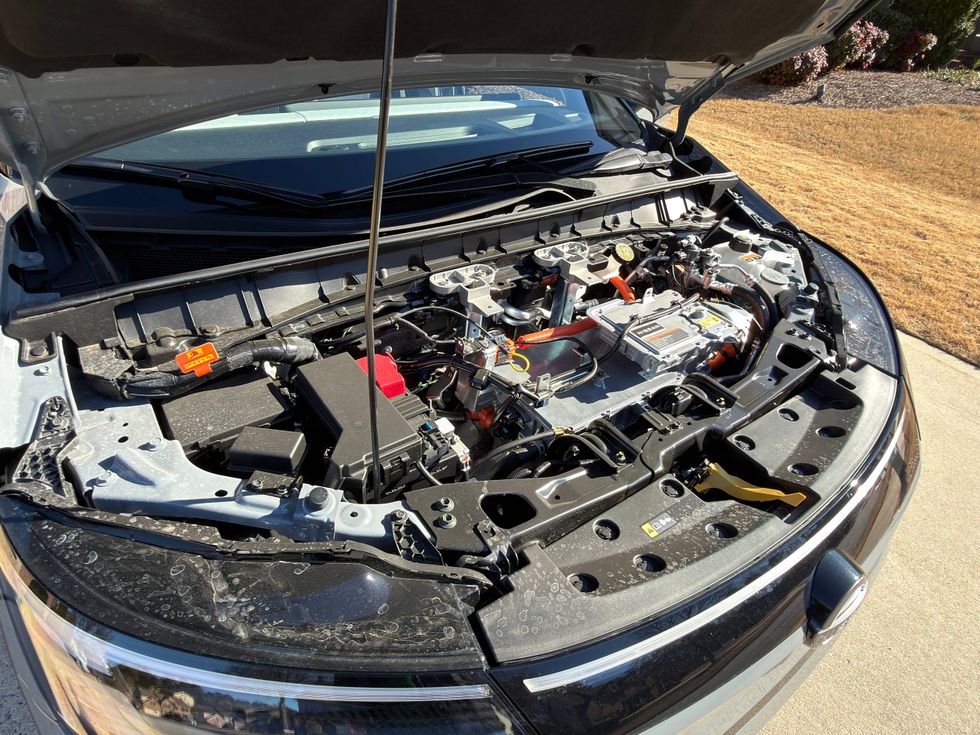 Daryl Killian
From an experiential standpoint, acceleration is smoother and quicker than that of most compact internal-combustion crossovers and sedans, though not class-leading among EVs. Ride quality is composed, and the cabin remains relatively quiet at speed. Suspension tuning favors comfort over sportiness, which aligns with the vehicle's intended use.
Range and Charging
Nissan estimates up to 303 miles of driving range depending on configuration, placing the LEAF in line with current segment expectations. Real-world range will vary based on driving conditions, temperature, and usage, but this represents a substantial improvement over earlier models.
DC fast charging is rated at up to 150 kW, with an estimated 10-80% charge time of about 35 minutes under optimal conditions. While not the fastest in the segment, it is competitive for its price class.
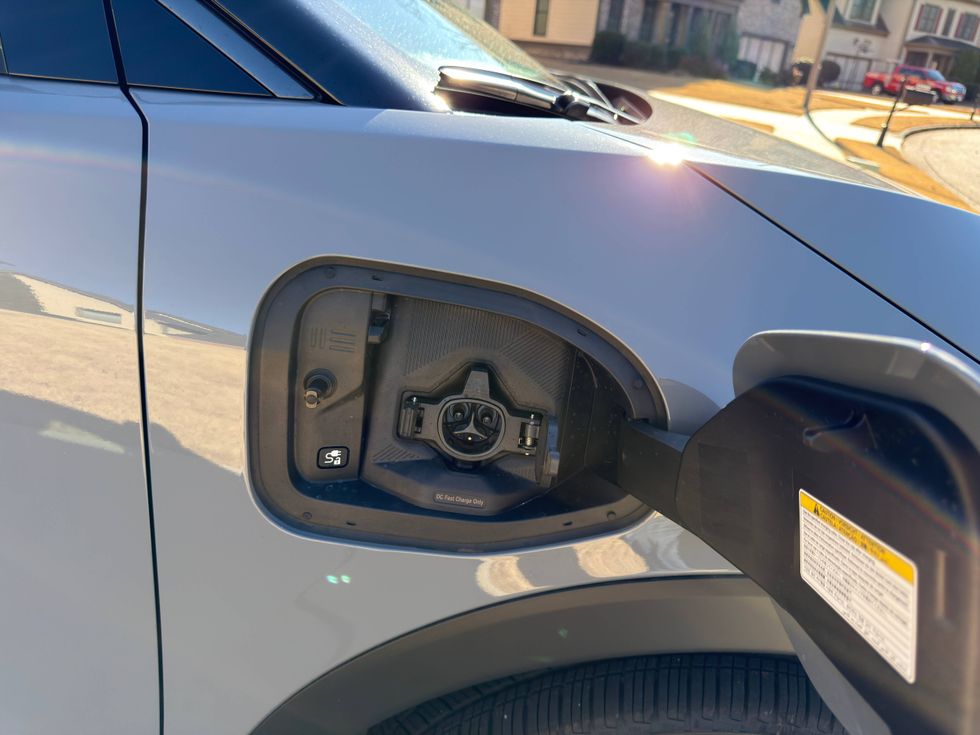 Daryl Killian
 Daryl Killian
 Daryl Killian
 Daryl Killian
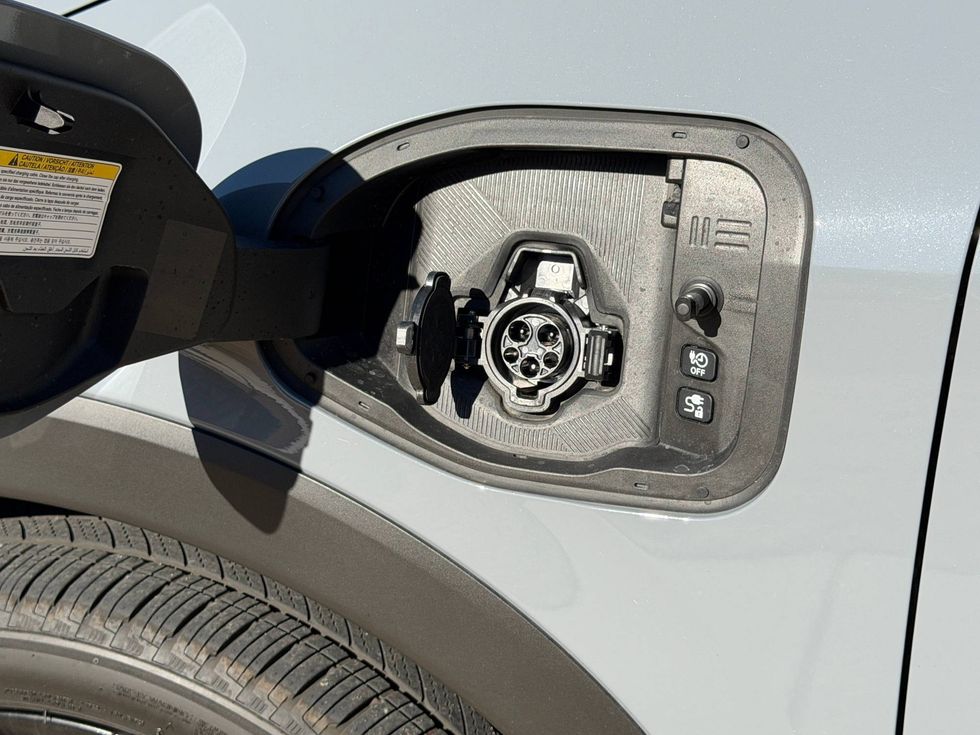
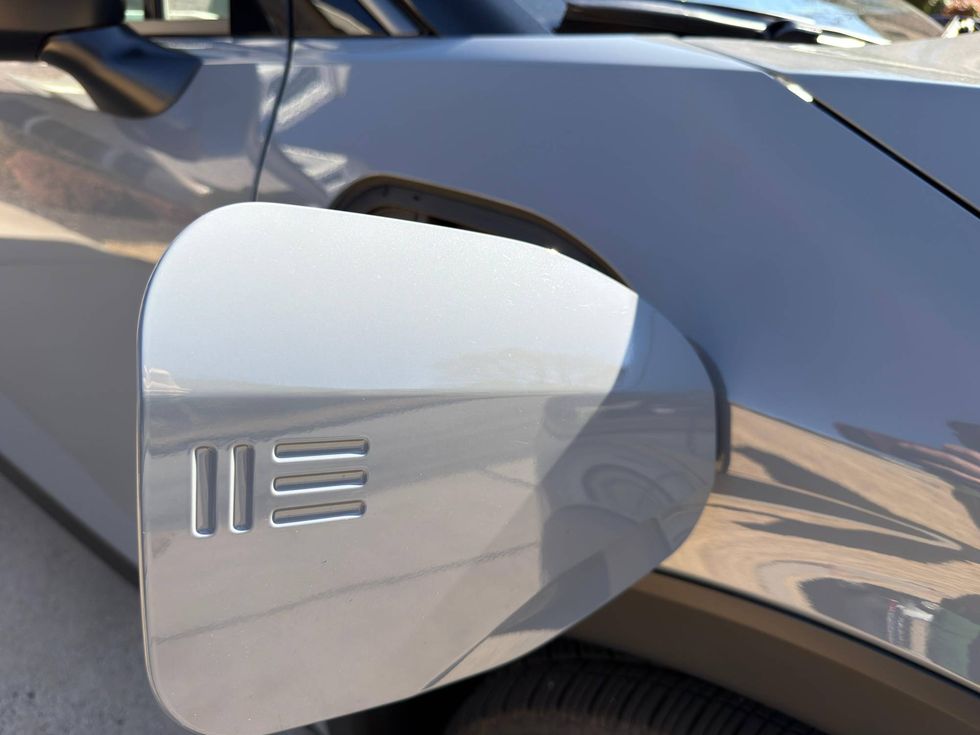
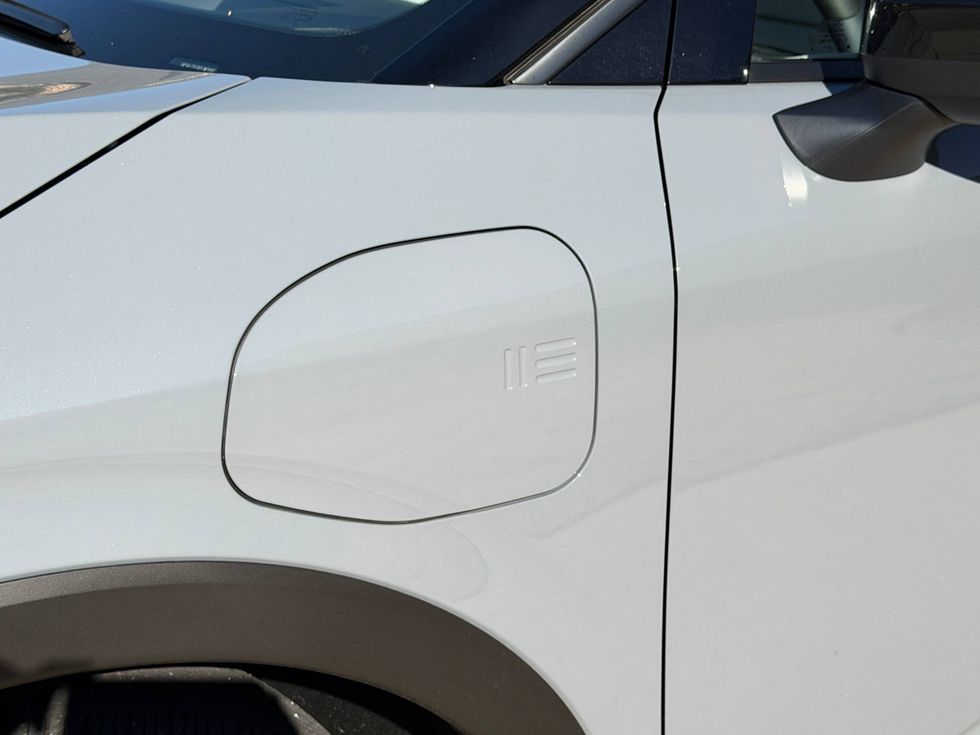
A significant functional advantage is the dual charging port configuration. The driver-side J1772 port supports home and Level 2 public charging, while the passenger side NACS port allows direct access to Tesla Superchargers without an adapter. In practice, this simplifies charging logistics and reduces reliance on additional hardware, an area where many EV owners experience friction.
Plug-and-charge capability further streamlines public charging by automatically initiating sessions at compatible stations.
Technology and Safety
All 2026 LEAF models include Nissan Safety Shield 360 and ProPILOT Assist. The Platinum Plus adds advanced camera systems, including Intelligent Around View Monitor, Front Wide View, and Invisible Hood View. These systems are particularly useful in urban environments and tight parking situations rather than serving as novelty features.
Dual 14.3-inch displays with Google built in are standard on this trim. Integrated navigation supports route planning with charging stops and estimated arrival state of charge. In daily use, the system functions reliably and reduces reliance on smartphone-based navigation.
Pricing and Trims
According to Nissan's published pricing, the 2026 LEAF lineup is positioned as follows, excluding destination charges.
LEAF S Plus 75 kWh starting at $29,990
LEAF SV Plus 75 kWh starting at $34,230
LEAF Platinum Plus 75 kWh starting at $38,990
A destination charge of $1,495 applies. Optional equipment, such as two-tone paint, a battery heater, and accessory packages, can increase the final transaction price.
Buyers Guide
The 2026 Nissan LEAF is best suited for buyers seeking a practical, approachable EV rather than a performance-focused or luxury-oriented product. It is particularly well-suited for first-time EV owners, daily commuters, and buyers who value charging convenience and interior usability over acceleration metrics.
Competitive Context
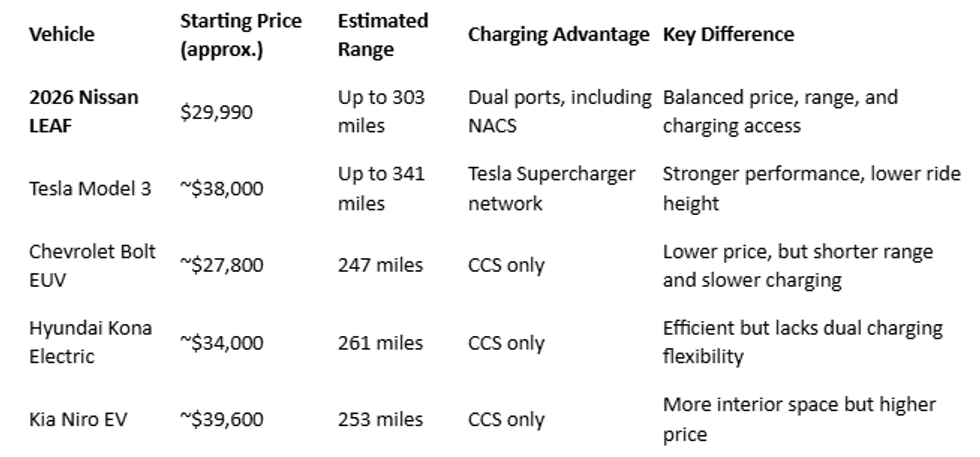
Compared to the Tesla Model 3, the LEAF prioritizes ease of entry, an open interior, and pricing over performance and driving dynamics. Against the Chevrolet Bolt EUV, the LEAF offers improved range, faster charging, and a more modern interior. Compared with the Hyundai Kona Electric, the LEAF differentiates itself with dual charging ports and integrated charging software.
Conclusion
The 2026 Nissan LEAF represents a meaningful evolution rather than a symbolic update. It addresses many of the long-standing limitations associated with earlier generations while maintaining an accessible price point.
From a personal standpoint, the LEAF has shifted from being overlooked mainly to being actively noticed. While it does not redefine the EV segment, it now competes credibly within it. Nissan has not produced a perfect electric vehicle, but the 2026 LEAF demonstrates clear progress in design, usability, and everyday functionality.
 Daryl Killian


![Detillier on Falcons' QB room: "You didn't bring [Tua] in to watch"](https://www.audacy.com/media-library/image.jpg?id=65304785&width=1245&height=700&quality=70&coordinates=0%2C0%2C0%2C0)