


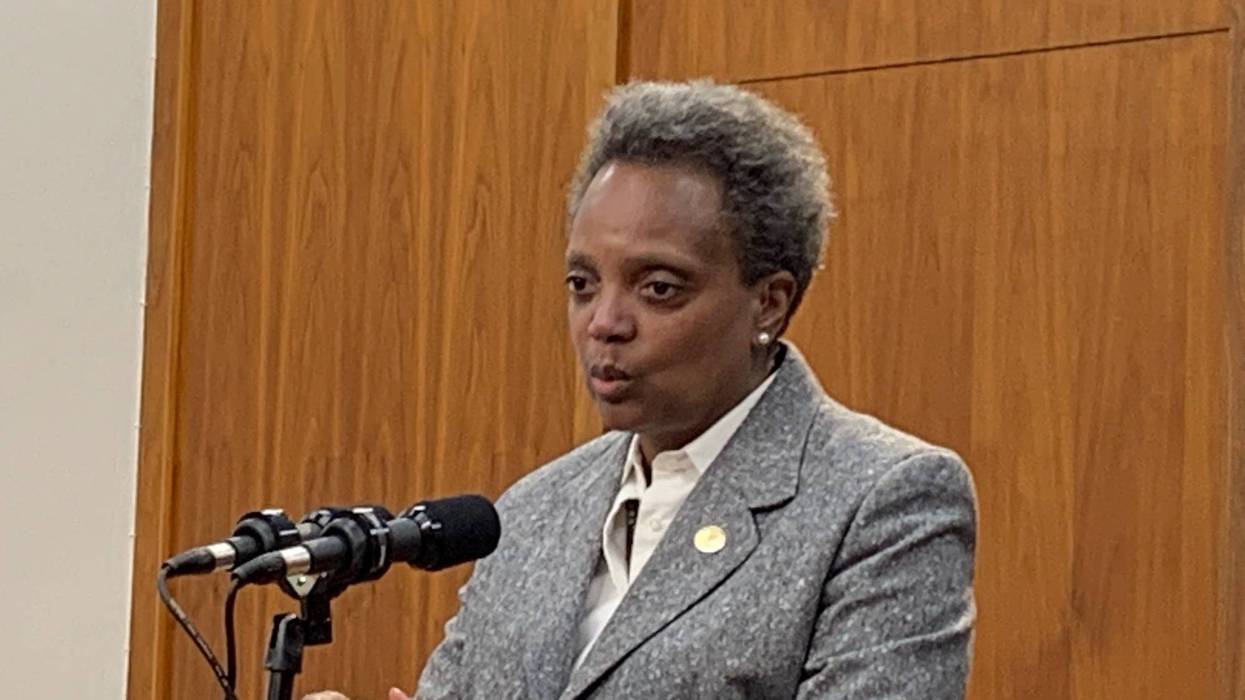

CHICAGO (WBBM NEWSRADIO) -- Mayor Lightfoot joined CDPH Commissioner Dr. Arwady on Thursday to announce a package of mental health supports for Chicago residents who may be facing challenges due to the COVID-19 pandemic.
"The COVID-19 crisis has been hard on all of us, and its challenges have taken many forms, including challenges to our mental health and wellbeing. Many of our Chicagoans have been struggling, with heightened levels of anxiety, depression, trauma, and sometimes unfortunately, with tragic consequences. What we must not allow is fear to grip us and prevent us from being able to cope with this difficult time," Mayor Lightfoot said. "Just as with the virus itself, it is our residents with pre-existing mental health conditions that are very vulnerable at this moment. We have not only lost our mobility, but in many ways our sense of security whether from the stress of job security, the safety of loved ones, or the forced isolation that has come from social distancing and staying home."
To help us combat these challenges and give Chicago communities the support they need, the city of Chicago has created a new package of mental health supports encompassing three key areas: community-based treatment, telemedicine, and self-care resources.
Mayor Lightfoot said in respect to community-based treatment, the city will be focusing on support for individuals living with serious mental illness through an evidence-based approach that will provide a holistic response to the pressing need. As part of the city's effort, it will be investing an additional $1.2 million in four leading community mental health organizations, "who taken together are distributed across our city and hold deep roots in the communities that they serve," Lightfoot said.
Thanks to the partnership with those organizations, the city will be able to expand access for persons living with mental illness, like schizophrenia, bipolar disorder, or other co-occurring issues.
The new package will also expand access to assertive community treatment services and community support team services with a focus on Chicago's South and West Sides; and provide services to those who may benefit from a higher level of support, as well as increased access to outpatient mental health services in communities most in need.
Mayor Lightfoot said to strengthen the city's telemedicine resources, CDPH is purchasing Doxy.me to deliver digital, behavioral health services at its mental health centers in Bronzeville, Englewood, Greater Lawn, Lawndale, and North River.
"For those of you who don't know, telehealth technology is a powerful, practical tool to enhance mental health services for individuals with limited access," Lightfoot said.
The move will allow CDPH mental health centers to offer psychotherapy, case management services, and other resources across Chicago regardless of income, health insurance, or citizenship status.
"And I want to emphasize this again - every single resident is eligible for these services regardless of income, regardless of health insurance, or citizenship status. If you need them, these services are there for you," Lightfoot said.
Those interested can reach a CDPH mental health center by simply calling 312-747-1020.
And finally, Mayor Lightfoot said, through a partnership with Ten Percent Happier, the city is supporting self-care through a newly launched website, Windy City Wellness. The websiet will include a curated collection of talks, guided mindfulness activities, and sleep supports from a diverse set of wellness experts. Mayor Lightfoot said it is designed for all Chicagoans to engage in their own wellbeing through relaxation, mindfulness, and meditation techniques.
"While these measure may be COVID-focused, they are in fact the latest in a series of steps we have taken over the last 12 months to support mental health in our residents, bring mental health out of the shadows, and elevate it to where it needs to be," Lightfoot said. "The issues we are addressing now did not start with COVID, and they are not going to end with it either."
Lightfoot said that is why the city of Chicago made investments in mental health in this year's budget and announced the city's mental health framework for health equity earlier this year. It is also why the city will continue to work with advocates, experts, and patients in communities to enhance mental healthcare in Chicago and give city residents and families the support so many desperately need, particularly in this time, the Mayor said.
"And let me just say on a personal note, to state the obvious, this is an incredibly difficult time. I feel the weight of this moment every day. And as a result, as part of my wellness routine, I have leaned into my faith even more. I make sure every day I have time just to be alone, to breathe, and put the burdens of the day aside. I am intentional about finding hope and love in the selfless acts of others. And I allow myself to cry and feel despair. That is also part of this moment. I don't compartmentalize my grief, despair, or fear; but I work very hard in acknowledging those very real and raw feelings, but also not to let them overwhelm me, and to be intentional everyday to find ways to let myself heal and recover."
Lightfoot said she wanted to share those things, because normally when people ask her how she is doing, my stock answer is "fine under the circumstances." But the reality is, she said, it has a lot of layers and nuance.