


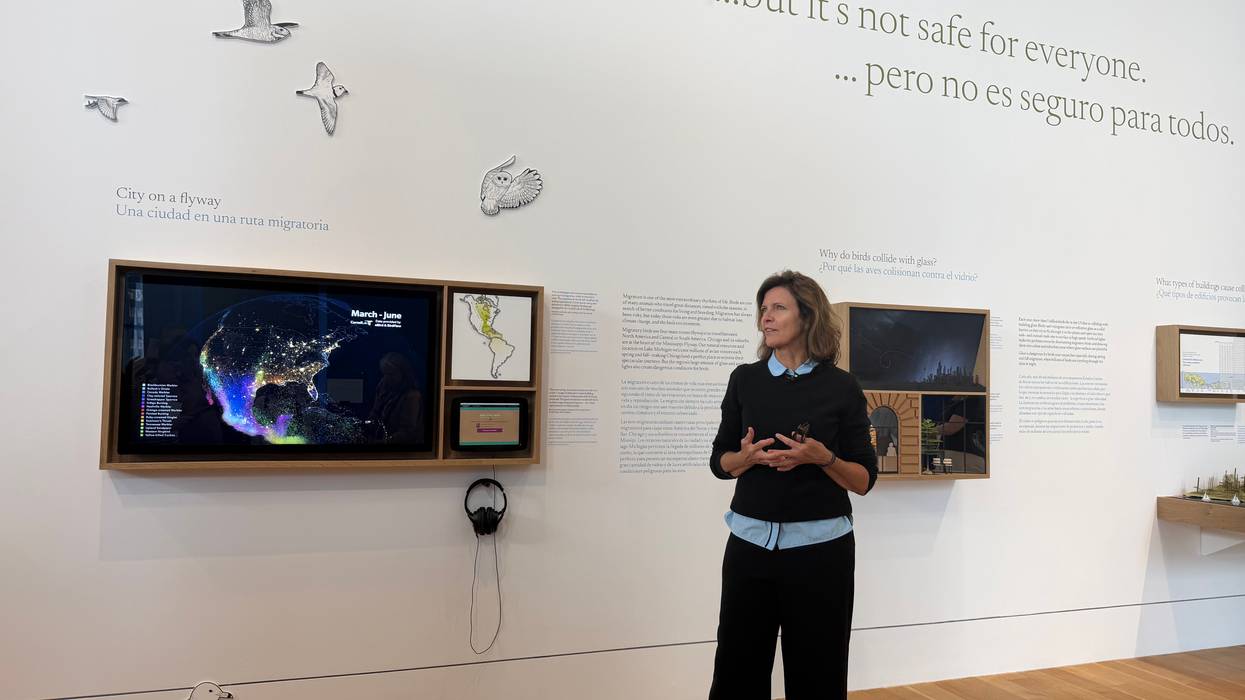

If you have a large window in your home, chances are you've probably seen (or heard) a bird fly into it at some point.
"Over a billion birds die every year crashing into glass. And that's just in the United States. And the bird population has declined by 30% just since 1970," said architect Jeanne Gang. She designed the St. Regis Chicago and the Aqua Tower, among others in Chicago and across the world.
Her latest project is an exhibit at the Chicago Architecture Center (CAC) called "Flyway City: Architecture for a Flourishing Ecosystem." It explores Chicago's role as a critical stopping point on the Mississippi Flyway, the largest migratory bird route in North America, and some of the challenges the city's buildings can present for birds.
CAC President and CEO Eleanor Gorski said that after a conversation with Gang, they decided that the CAC would be the perfect venue for this exhibit.
"Our mission is to bring design to everyday life and improve everyday living through design," she said. "That includes our city planning. That includes the whole ecosystem with our habitat and landscape, as well as buildings."
She said the CAC's goal with the exhibit is to advocate for change and remind people that it is everyone's responsibility to take care of the wildlife around them and its habitats.
"Part of being a good neighbor is to make your building, your house, your yard accessible to wildlife in a way that's safe for them and also brings joy and diversity to humans who occupy the same space," she said.
Carolina Garibay
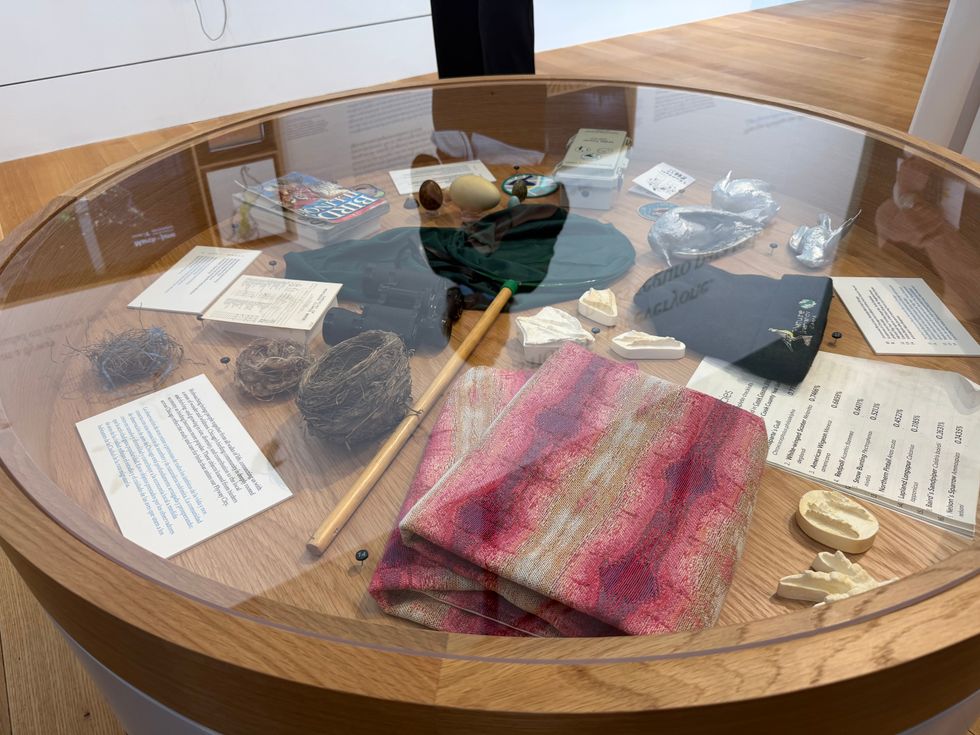
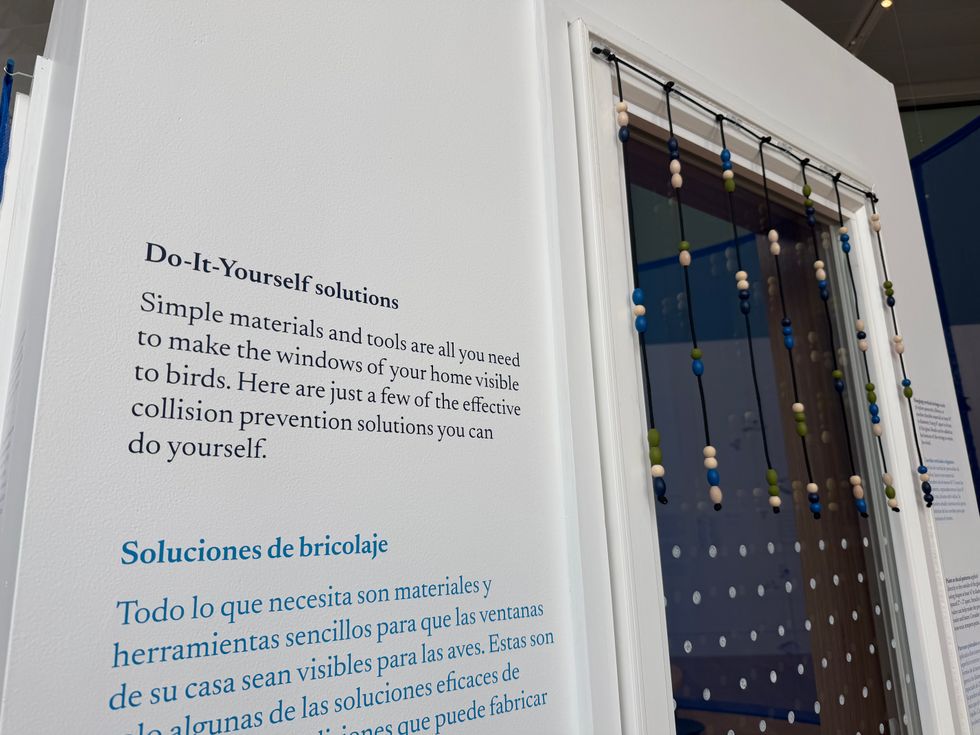
The exhibit features architectural models of examples of collision-proof buildings and offers ways for people to save birds from colliding with glass at their homes. Gang said it's organized in three phases.
"First, learning about birds themselves that come to the city and how amazing they are. Then, we talk about the dangers of glass. Then, we start going into the solutions both for new buildings and retro fitting buildings," she said.
She said while people may not always be seeing birds colliding with glass (as many collisions happen early and are often removed by building managers or eaten by prey), the issue still impacts everyone.
Carolina Garibay
"Birds eat insects. They are pollinators. They have a very strong role in our overall ecosystem health," she said. "They do play an important role in our ecology but they're also culturally important, I think, to humans, and we try to bring that out in the exhibit as well."
Gang said she hopes the exhibit inspires visitors to take action to create healthier urban habitats in their own communities.
"I hope that they leave here appreciating more about birds in our cities, in our environments and become stewards and advocates for making cities, especially in Chicago, safer for birds," she said.
"Flyway City" opens June 11. Its companion exhibit "Chicago’s Living Habitat," co-curated with conservation organization Openlands, also opens June 11.