

Before there was Motown and shortly after Chess, there was Vee-Jay.
"We are sitting in the former offices of Vee-Jay Records which is on 1449 South Michigan Avenue which is part of Chicago's historic Record Row where there were so many record companies, record distributers, young people in the 1950's and 1960's walking up and down the street trying to get a record deal." recalls Aaron Cohen, music historian, author of "Move on Up: Chicago Soul Music and Black Cultural Power.
"Vee-Jay was very much part of this whole scene as was Chess Records down the street, and then Constellation Records, run primarily by African American and Jewish American entrepreneurs. This street was so pivotal to the development of American music and music throughout the world, right on these few blocks on South Michigan Avenue." he said.
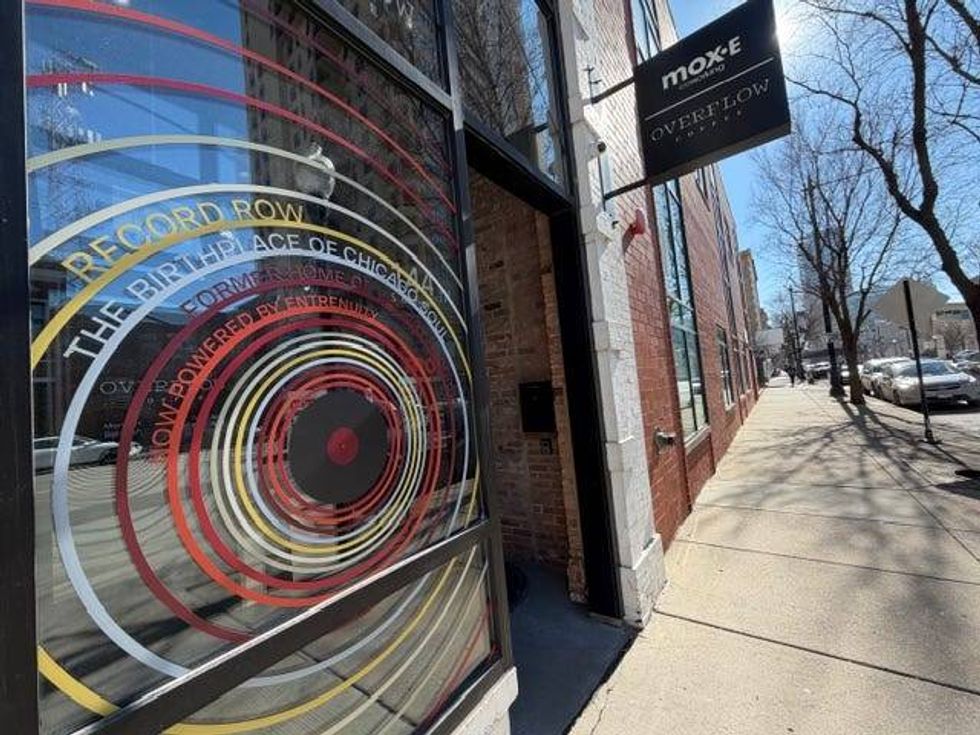 The former home of Vee-Jay Records at 1449 S. Michigan AvenueLisa Fielding/WBBM Newsradio
Cohen says it was inside these walls of what is now Overflow Coffee where the groundbreaking Black-owned record label once held the Beatles, The Four Seasons and legendary Soul and Blues artists.
"Gene Chandler, The Impressions, Dee Clark, The Staple Singers, an amazing array; Jimmy Reed, an amazing array of Blues, Gospel, Soul, the early days of Soul. Jazz artists recorded here. This was the entire lexicon of African American popular music in the late 50's, early mid 60's and it was all represented in this building that released those records," said Cohen.
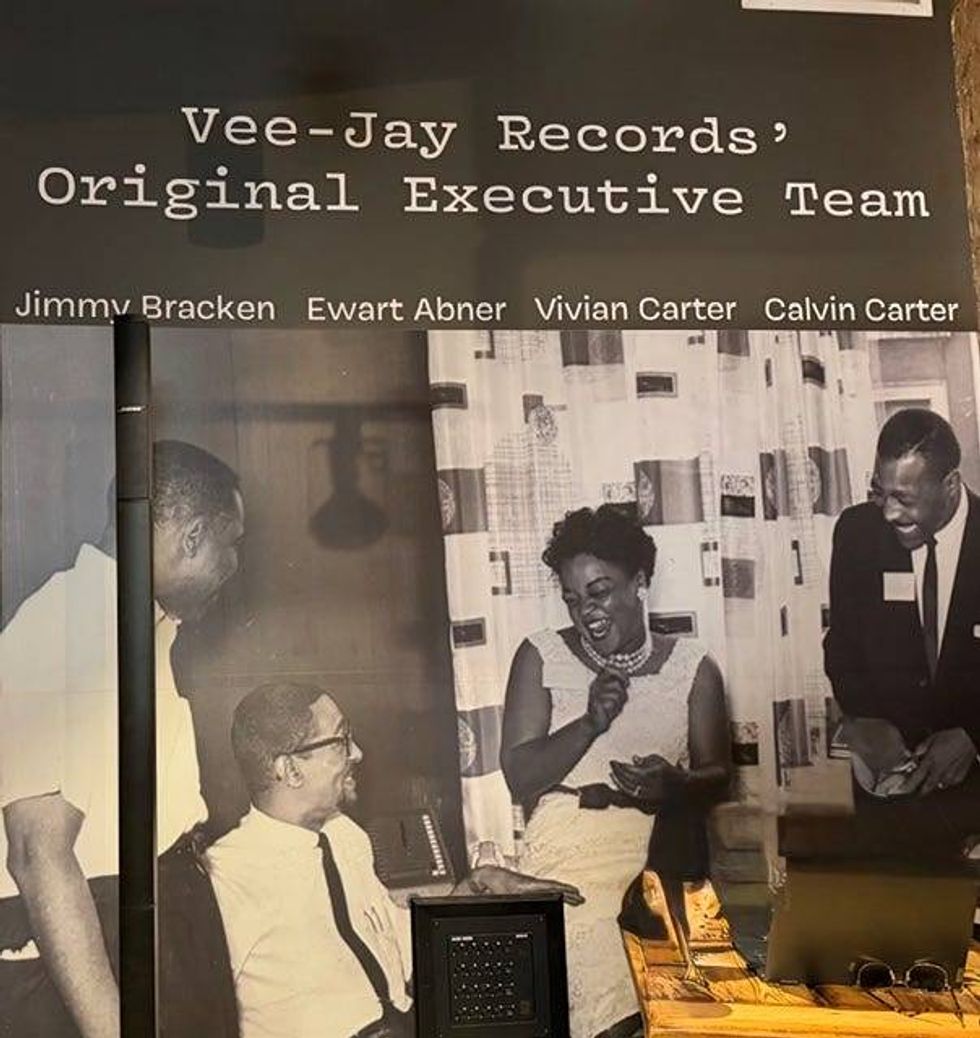 Vee-Jay's founders as shown on the back wall of Overflow Coffee, 1449 S. MichiganLisa Fielding/WBBM Newsradio
Vee-Jay was founded by Vivian Carter and Jimmy Bracken in 1953 and was one of the first black-owned and female-owned labels in America.
"Vee Jay started in Gary and then the operation moved here to Chicago. Vivian was a Gospel DJ. She and her husband started the company. They got a $500 loan to start a company and they wanted to record groups like The Spaniels, doo wop groups, and the $500 loan from a pawn broker. So this was really a by-the-boot straps operation when they started," laughed Cohen.
Vee-Jay Records was the first U.S. company to release Beatles music. It released "Please Please Me" and early material in 1963 before Capitol Records.
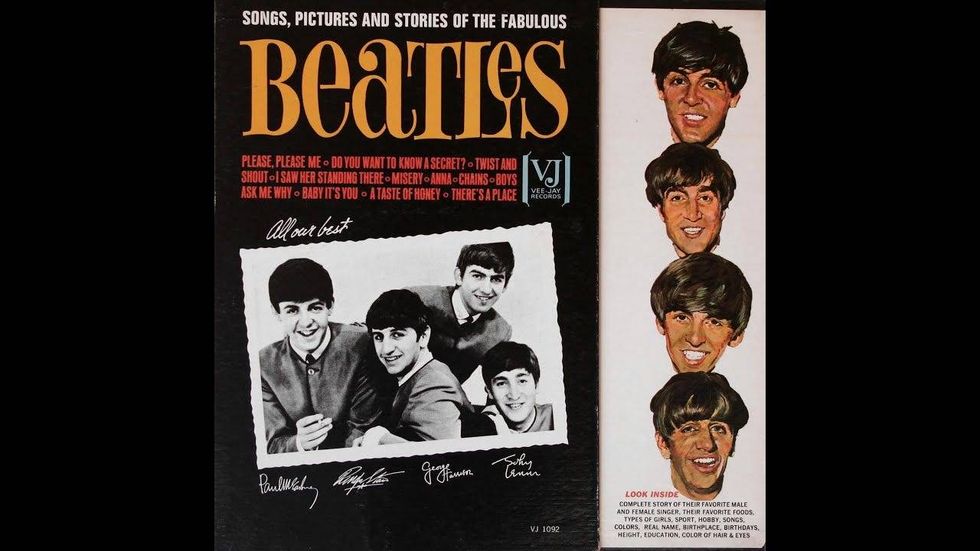 Vee Jay Records releases The Beatles first singleIllinois Rock & Roll Museum on Route 66
"The record label started dealing with international artists and they wanted to bring some British people over to the U.S. The story goes that Vee Jay tried to get people interested in this group called The Beatles, this was before the Ed Sullivan show. Vee-Jay tried to get WLS and other radio stations interested in playing these records and no one was interested," he shrugged. "Then, The Beatles appear on Ed Sullivan and they become the biggest musicians ever. Vee-Jay realizes they had these guys under contract and they can release their music." Cohen said.
"This turns out to be a blessing and a curse because it got Vee-Jay better known, however, there was a huge demand for Beatles records and they couldn't keep up with demand so there is a lot of debt, they aren't being pressed fast enough, so it became a problem. It gave Vee-Jay the historical pride to say the first American company to distribute The Beatles was an African American company in Chicago. That's a pretty big deal but it didn't profit the company. "
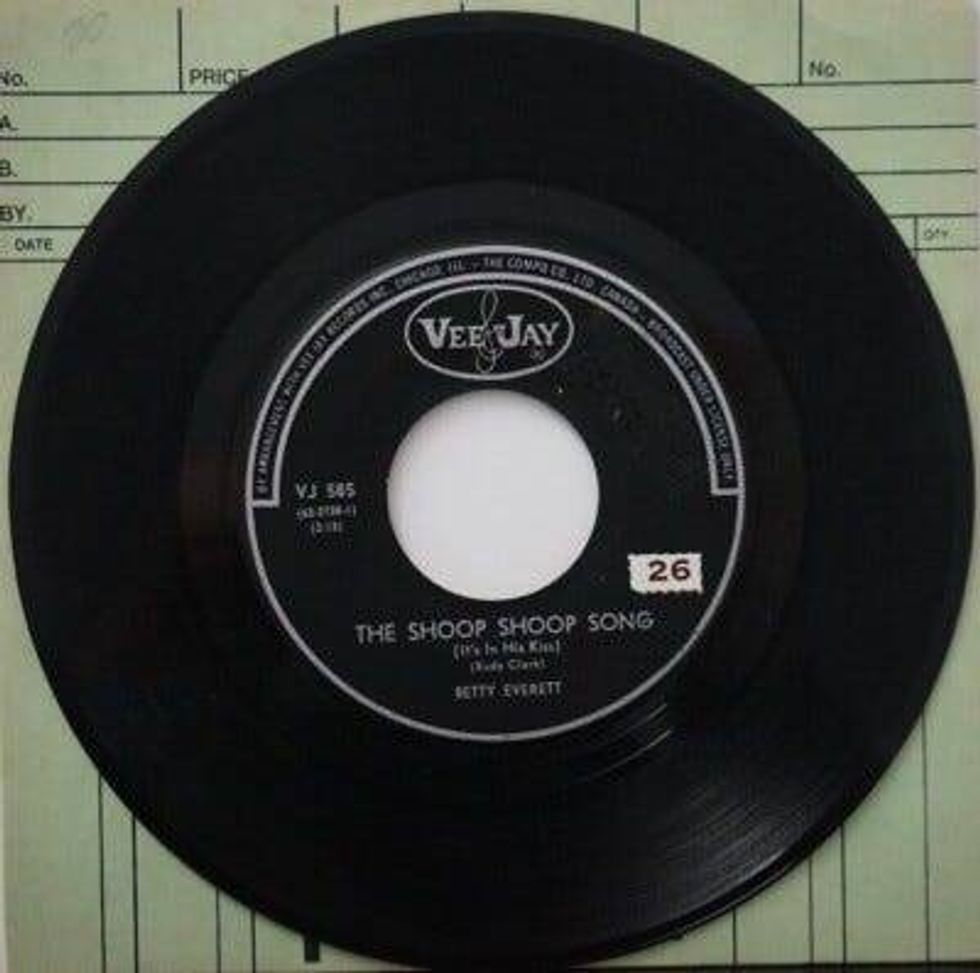
Vee-Jay launched the careers of Little Richard, John Lee Hooker and Betty Everett, amongst others. Singles include Gene Chandler's hit "Duke of Earl," The Staples Singers' "Uncloudy Day," and Everett's "The Shoop Shoop Song.
Cohen says during this particular time in history, music had a huge impact on social change.
"I always felt that Soul and R&B music in Chicago especially during 1958-1983, which I write about in my book, was crucial not just for the music-which is wonderful-not just because it was individual music, but also the story of the musicians working with African American entrepreneurs, and also the rise of the civil rights movement and how the music coincided with that, how cultural and social changes shaped the music during that time and how musicians themselves became change agents. It's no accident that Jerry Butler, later became a Chicago politician."
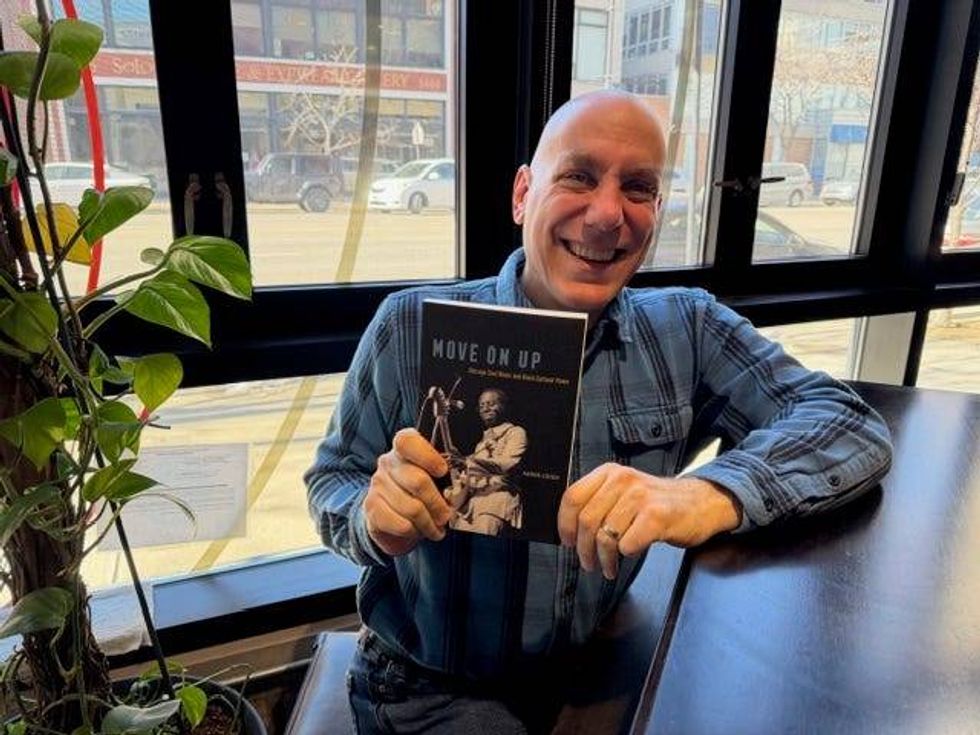 Author, Music Historian, Aaron Cohen, "Move on Up: Chicago Soul Music and Black Cultural Power"Lisa Fielding/WBBM Newsradio
Vee-Jay ran into financial and distribution problems and shuttered in 1966. The catalog includes more than 5000 master recordings and although it had a short 13 year run, Cohen says its legacy is clear.
"The most important legacy is the music itself and its sound, but also how this music can and should speak not just to its specific moment in time, but how it's endured because some of the things the artists sang about, whether it was empowerment or whatever. It's still very relevant to this day and it's influence on hip hop and other music to this day.
Overflow Coffee continues to pay homage to the label's lasting influence with a performance space and old photos and record memorabilia.
Vee-Jay records was inducted into the Illinois Rock and Roll Hall of Fame last September.
You can find Cohen's book here.
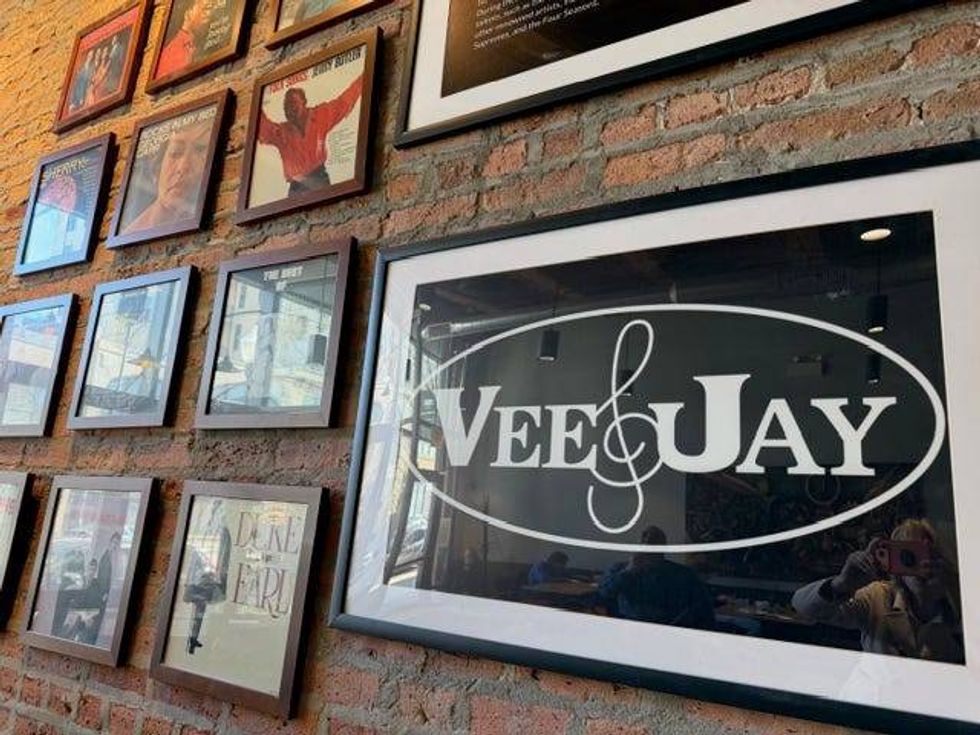 Photos & memorabilia on the walls of Overflow Coffee, former home of Vee-Jay RecordsLisa Fielding/WBBM Newsradio