
In August of 1973, high school student Cindy Campbell threw a party in the recreation room her family's apartment in the Bronx to earn money for new back-to-school clothes.
She asked her 18-year-old brother Clive, better known as DJ Cool Herc, to play the music.
And so began the hip-hop movement.
"Hip-hop is our collective consciousness, so it represents the essence of culture and community," said Amina Norman-Hawkins. She's an emcee and community organizer and teaches hip-hop history at Columbia College and the School of the Art Institute of Chicago (SAIC).
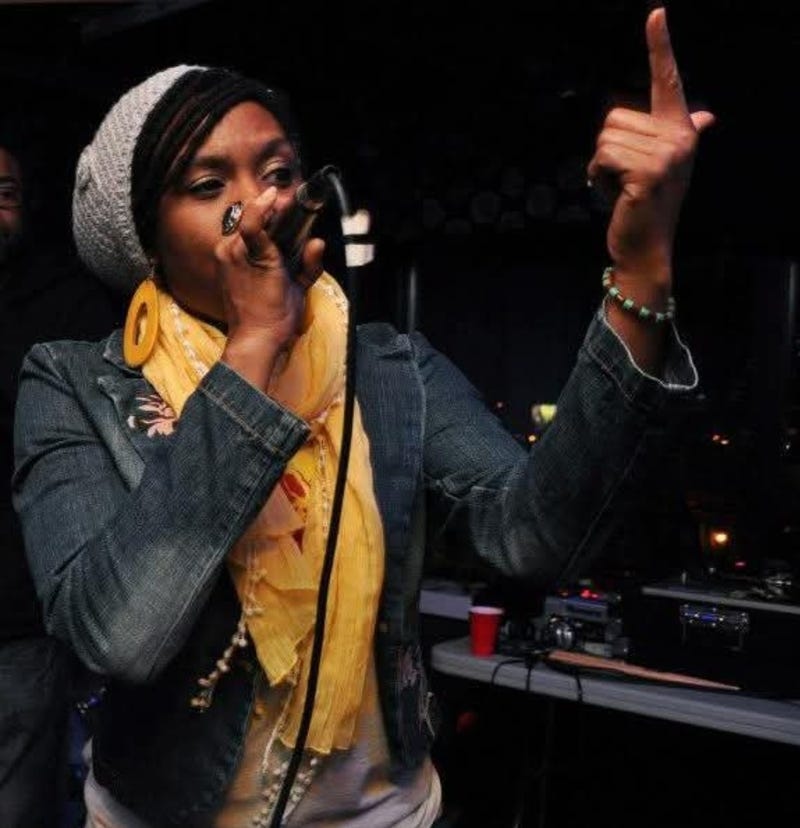
She said while often referred to as a genre of music, hip-hop is an entire movement. So, if you speak to a hip-hop practitioner, she said, she or he will look at hip-hop holistically, as a culture.
"We're looking at one part of hip-hop, and that is the element of rap that has kind of transformed into what we see as the genre," she said. "So when we talk about hip-hop as a culture, we're not really necessarily talking about that genre. We're talking about the whole of the practice."
That practice includes five pillars: emceeing, DJing, breakdance, graffiti and knowledge. Norman-Hawkins said additional elements of the movement include street fashion, street language, street entrepreneurship and health and wellness.
Norman-Hawkins, who was born in the U.S. and grew up in Nigeria, said hip-hop also retains Africa's ancestral and cultural practices.
"Our rhythm, that drum beat that you hear, that improvisation that you hear in our music, the storytelling that you hear in our rhymes, that circle that we call a cipher in hip-hop is all directly from Africa and kept so intact that it fully represents who we are as diasporic people," she said.
After the movement was founded by Cindy Campbell, now known as the First Lady of Hip-Hop, and DJ Cool Herc, it made its way to Chicago in the late 1970s/early 1980s.
"Hip-hop started with teens throwing parties for teens to create safe spaces," Norman-Hawkins said. "The same model kind of developed here in Chicago, where young people started creating parties that created space for artists to come together."
Those spaces, she said, fostered community, healing and expression.
"Growing up at a time when Chicago and many other inner cities were plagued by gang activity and unsafe spaces, it was important for kids who did not want to be involved in gang activity to find a place that celebrated who they were and allowed them to be creative," she said.
Norman-Hawkins began rapping in Chicago when she was a teenager. She said she immediately felt the pressure of being one of very few female hip-hop practitioners.
"It was challenging to navigate the space as an artist because most of what you needed you were looking to get it from a guy," she said. "In many cases, you had to be leery of what the guy's intentions might be because a lot of guys had unsavory intent."
She said this forced her very early on to rely on her independence and chart her own course.
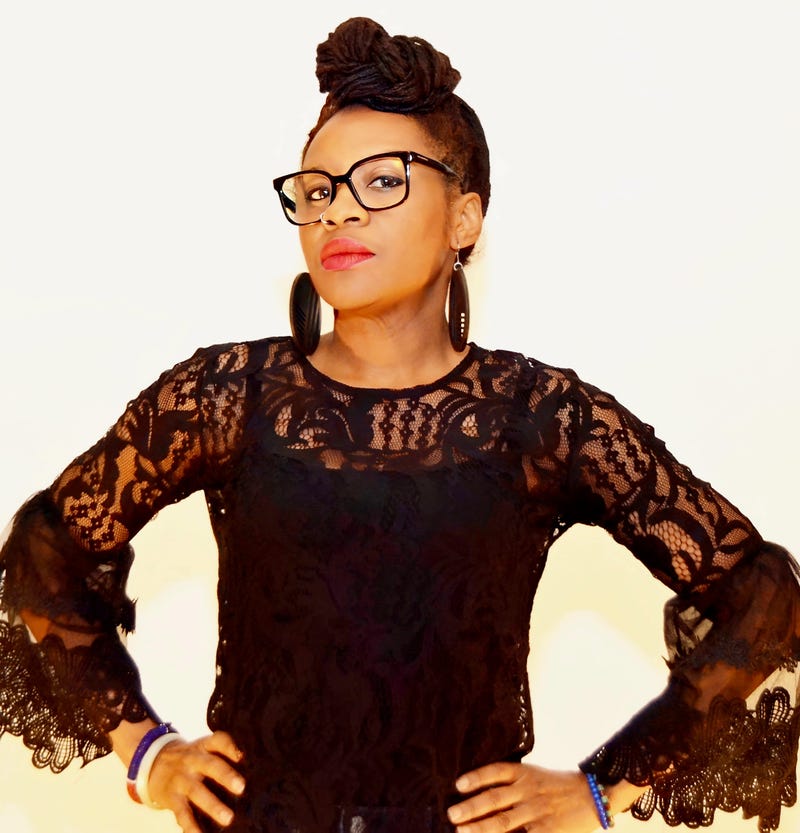
"I started organizing events very early on, creating my own spaces and creating spaces for other people to perform. I recognized that I needed my own power in order to navigate in the way that I wanted to," she said. "I recognize that a lot of girls don't do that, and I do see women getting taken advantage of."
At the same time, she said, it has been encouraging to see more women being represented and celebrated in the hip-hop space more recently.
"Especially with the advent of the Internet, the playing field is a little more leveled," she said. "Women are able to carve out and create their own spaces and assert their own voices."
Still, she said, it's important to acknowledge that women have always been at the forefront of hip-hop and have laid the foundation for what hip-hop is today.
Norman-Hawkins, herself, is one of the founders of Chicago Hip Hop Heritage Month. In 2003, she presented the resolution to alderman Walter Burnett Jr., who then brought it to the City Council. It was approved by Mayor Richard M. Daley, and now July is officially Chicago Hip-Hop Heritage Month.
"Without a Cindy Campbell, we may not have hip-hop. Sylvia Robinson released the first hip-hop record with all of its controversy," she said. "Women have always been there in every space, in every arena. We just haven't had the leverage of patriarchy on our side, and so we've had to fight for things."
But she said she is very proud of what girls and women are doing in hip-hop currently. Chicago has produced several successful female hip-hop artists, such as Da Brat, Dreezy, Jamilla Woods and Noname, to name a few.
Norman-Hawkins said she's particularly a fan of artists like Ang13, Newsense (of Psychodrama), Lyrisis, Sweet Juices and Brittney Carter, among others.
And Norman-Hawkins, herself, is in a hip-hop duo with her husband called Urbanized Music. She passes down her knowledge and experience to the young women she teaches.
"I believe that hip-hop, and especially under the guide and tutelage of more women, can return to its authentic self," she said. "It needs to return to its core around peace, love, unity and having fun."
She said she hopes that as more women enter the hip-hop space, and specifically in executive and leadership roles, that hip-hop can reclaim its authenticity from what she said has largely become a "money-making commercial industry."
"I think we can help return the balance that hip-hop has lost with misogyny and the patriarchy," she said. "I think women can help bring the balance back in hip-hop that will restore the authenticity and integrity back into the art."