


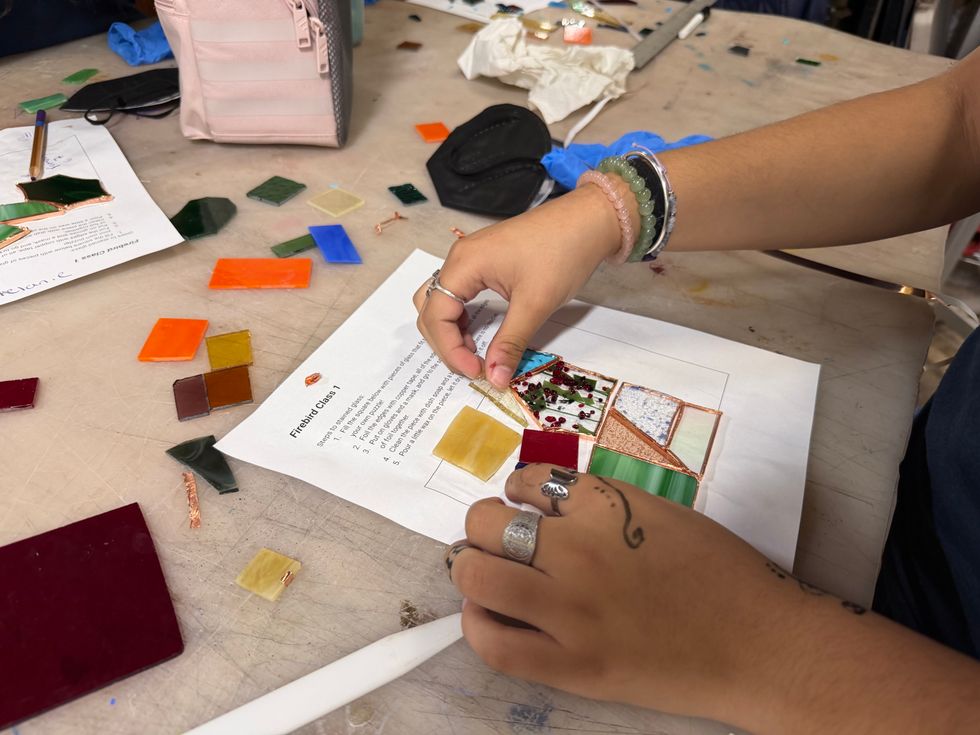
It was a different kind of field trip for students at Reilly Elementary School.
“It's really exciting for us because this is something new," said seventh grader Yaretzi Martinez. "We are actually able to do hand-on-hand projects and experiments with all of our peers."
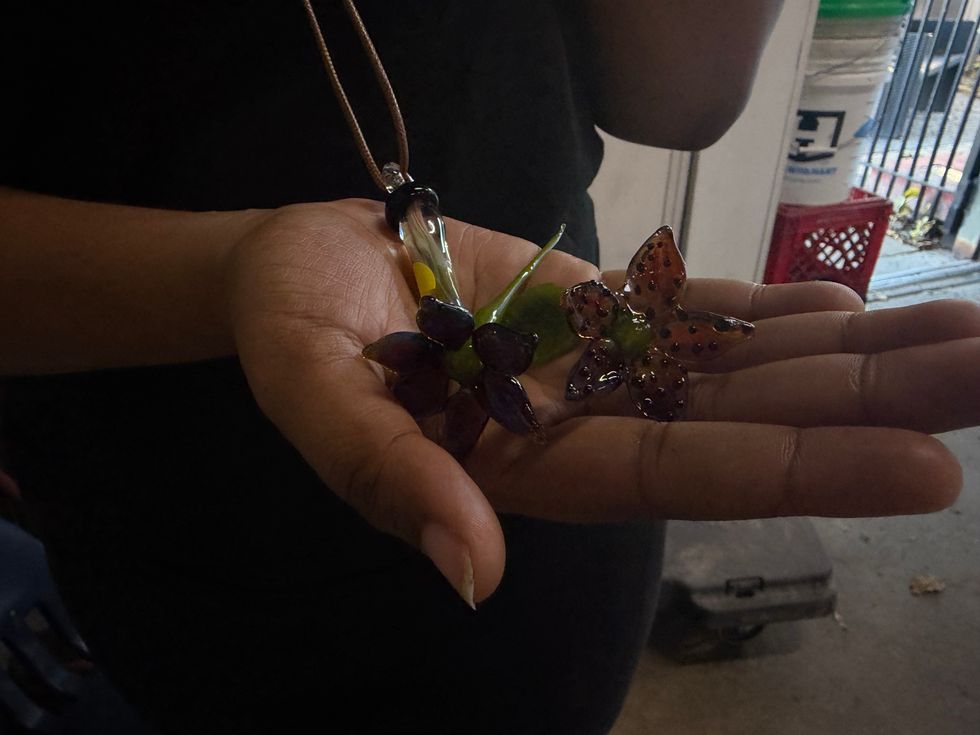
Students are at Firebird Community Arts Center in East Garfield park, where they're creating stained glass pieces.
"What I'm enjoying is seeing the blowing glass and also seeing people connect throughout making these art pieces," said eighth grader Jasmine Dominguez.
Yaretzi and Jasmine are members of Reilly’s Peacemakers program, a student leadership program that trains students to be restorative practitioners to interrupt conflicts in the community.
The stained glass pieces they're working on at Firebird will be featured in an exhibition at the Jane Addams Hull-House Museum next year.
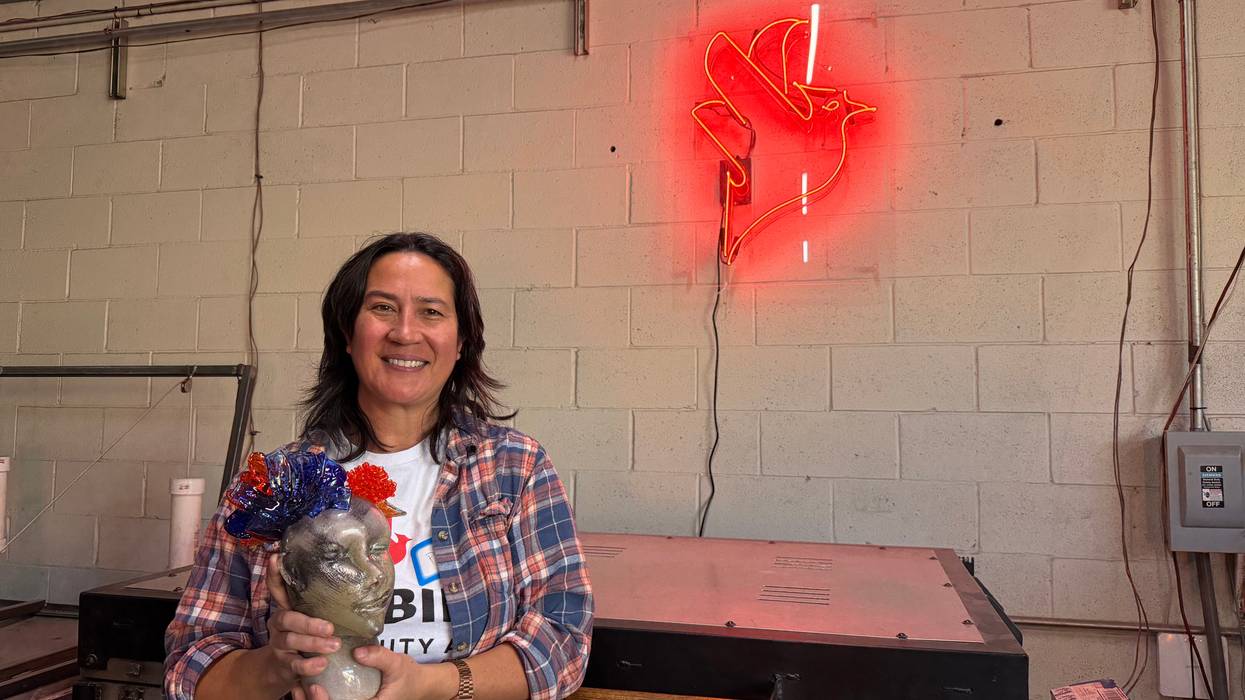
“We love to partner with schools, other groups, especially groups like this that are doing so much wonderful work in their communities," said Peark Dick.
Dick is a glass artist and the founder of Project Fire at Firebird.
“We do glassblowing and ceramics here. We're a community studio, so we're open to all. But we really do focus on arts as a tool for healing," she said. "Project Fire is a program that we do that is specifically for young people who've been impacted by community violence."
Project Fire began more than 10 years ago after Dick said she was struggling to find a way to use her creative talents to create direct change.
“I really, really desired to be doing something that was a little bit more in direct service, like something that that I could see a really tangible impact on the community around me."
After working with a group of young people in Humboldt Park, Dick said she realized just how therapeutic art can be for young people, especially those who have experienced violence.
“Glassblowing, in particular, is an incredible way to reach, especially the young, the populations of young people we've been working with, who have all sorts of noise going on in their worlds, in their heads, and they're experiencing all of these things. It brings people in to be present," she said.
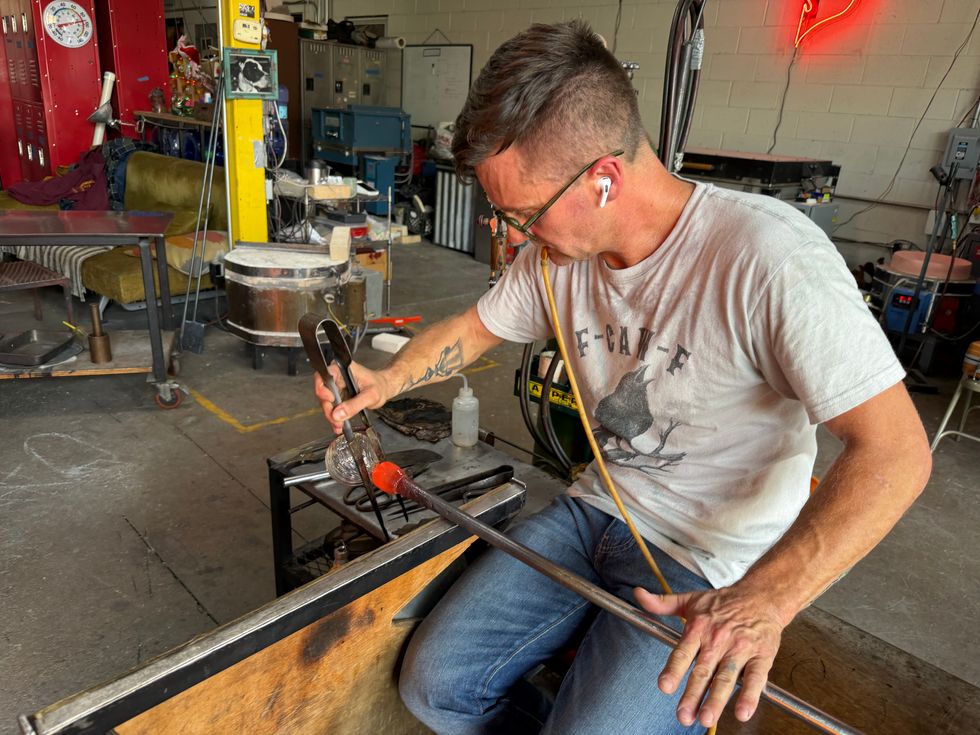
But glassblowing, she said, is also one of the less accessible art forms.
“There are only a few places in Chicago you can do it," she said. "It's really expensive to do. It tends to be people who are wealthy. Me, coming up, it was a lot of white men. There weren't a lot of women. There weren't a lot of people of color."
She said Project Fire aims to remove barriers. The program employs and mentors young people, provides trauma-informed support groups and partners with local mental health providers for intensive case management.
Participants meet for four to eight hours a week beginning with three hours of glassblowing. The pieces they create are then sold, with 70% of sales going to the artist and 30% going back to Firebird’s programs.
Dick said even after one session of Project Fire, she sees transformational changes in the young people who come through the program.
“When they first come into Project Fire, when you ask them about where they see themselves in a year or two years or even beyond, they don't see a future for themselves. Often they'll be like, ‘shot or in jail,'" she said. "What they see for themselves as a possibility in their lives expands so much."
That was the case for Lynquell “LA” Biggs. He said growing up on the South Side, he faced poverty and violence from a young age.
“When I first got into glassblowing, I was injured by gun violence. I got shot when I was about the age 13," Biggs said.
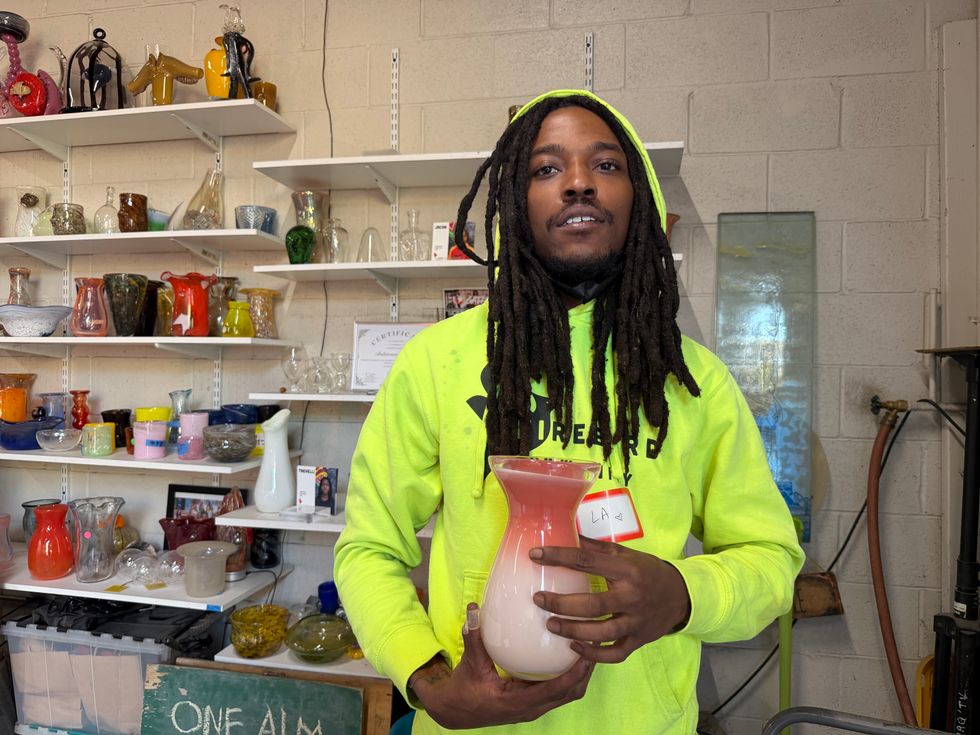
He said he heard about Firebird and Project Fire through social workers. He had always enjoyed art in school and it turned out, he was a natural at glassblowing, and he said it helped him blow off some steam.
“You got a lot on your mind. You come in, then you're moving and you're working," he said. "You're putting all that, all your energy into your hands.”
He’s been at Firebird for 10 years now. His work includes sculptural pieces, along with functional items, such as cups and vases.
Along with a portfolio of these pieces, Biggs said Firebird provided him with the space to learn "a lot of things that people ain't had time to teach me."
"Becoming a man and noticing what's more important in life, just a number of things that Firebird helped me see and helped me create myself," he said. "It's something that makes my family proud of me. It's something that I could do that's positive."
They're things Dick said she had only hoped Firebird would be able to do for young people.
“I really, mostly would just feel so grateful if, when people left our programs, they they left feeling more empowered and just knowing that they're a good person that has a lot to give," she said. "That they continue to spread the care and the support and the love and the creativity that they had access to here at Firebird."
Biggs said now the opportunities for him seem endless.
“I never thought that I'd be doing something like this," he said. "You never know what's down the road for you. Some things could be good. Some things could be bad. The bad could turn into good, and in the end it's just all about what you do with your life and the choices that you make.”