


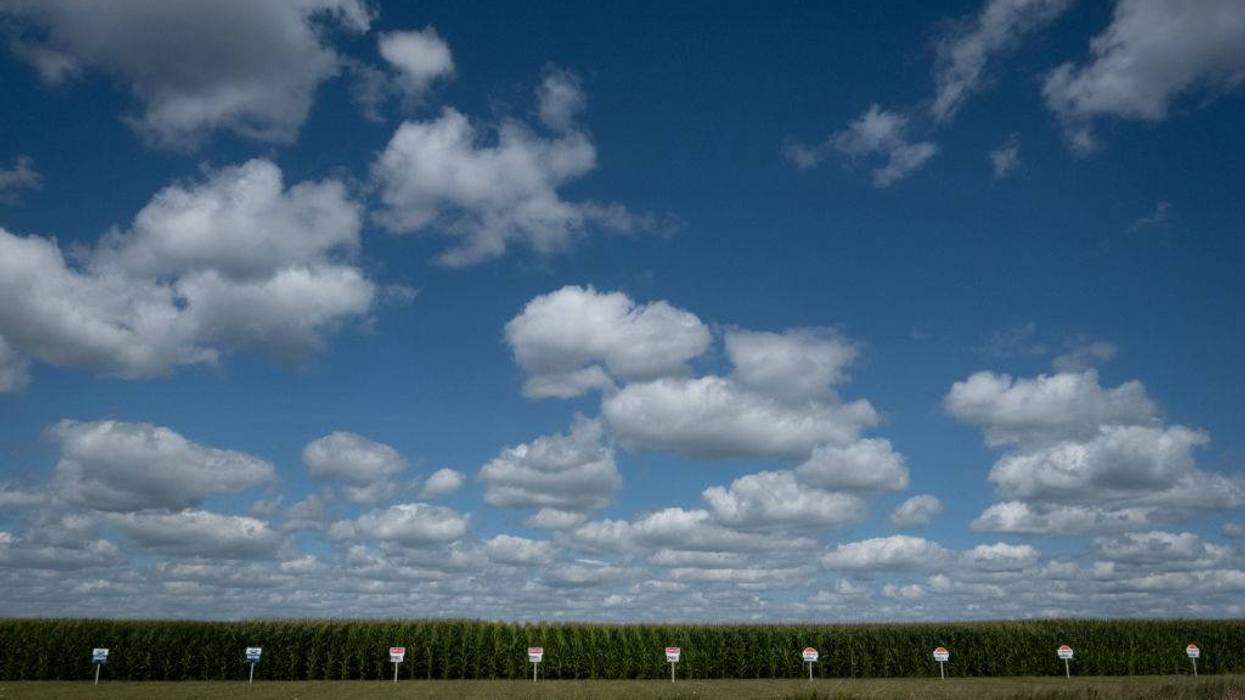

If and when the Army goes ahead with a plan to blow up unstable lead at an Iowa ammunition plant, tracking where the fallout goes depends on the weather.
Vishal Verma, assistant professor of civil and environmental engineering at the University of Illinois Urbana-Champaign, says larger particles in the air will fall around the explosion site.
But the smaller ones will move based on the wind speed and direction.
Canadian wildfire smoke darkened Chicago skies from hundreds of miles away this summer but Verma says lead particles are 2- 4 times more dense so they would be less likely to travel as far.
The state border is only ten miles from the Army’s plant and Chicago is about 250 miles away.
Rain would take some of the lead out of the air but just move to the ground or water.
Verma says while the US EPA has a safety standard for how much lead can be in the air, there is no safe amount in water.
Also it’s not very water soluble so if lead lands on farm fields, it will likely stay there and not runoff much.
The mostly-flat terrain of Iowa and Illinois means airborne lead is likely to travel further.