



There aren't many places nearby where you can see insects like a "glow in the dark" scorpion, known more scientifically as an Arizona bark scorpion.
Field Museum Collections Assistant Jim Louderman said the insect is bioflourescent, which means it absorbs light from the sun and re-emits it.
"When you're out in Arizona, they blend in with the sand so you really almost never see them, but if you take a ultraviolet light and go out at night and go out on the ground, you can see these from 10 feet away," he said.
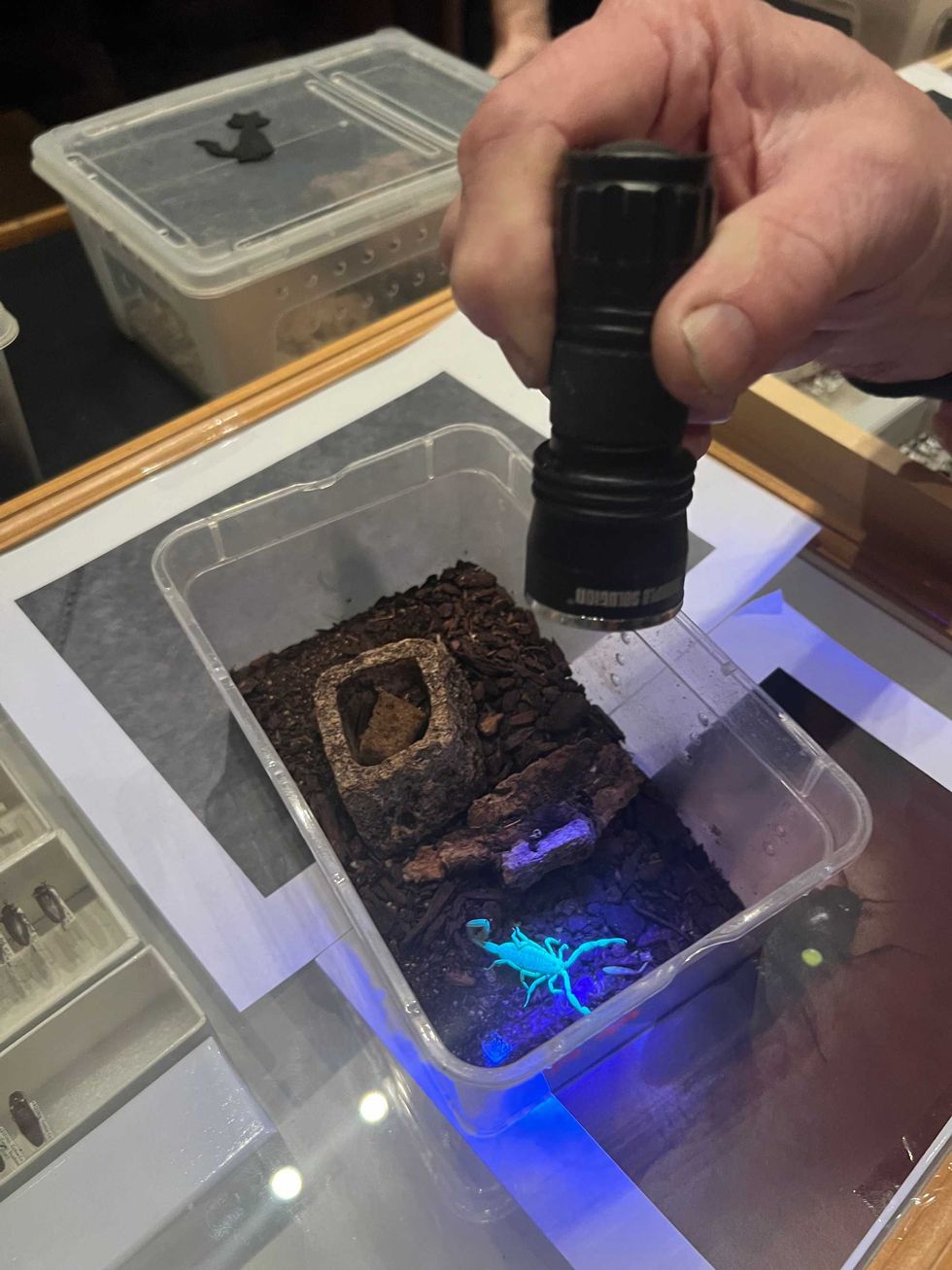 A Field Museum scientist shines a UV light on an Arizona bark scorpion. The scorpions are biofluorescent, which means they absorb light from the sun and re-emitting it.Carolina Garibay
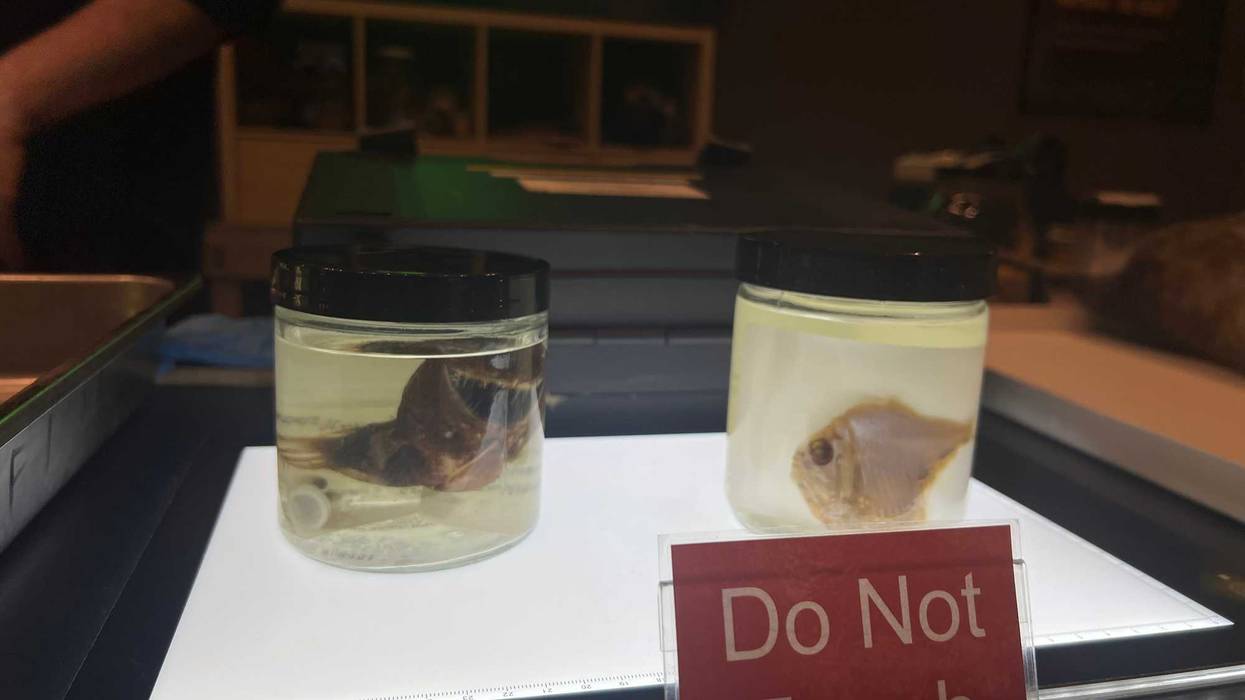
The scorpion was one of several insects, fish, fungi and another animals the Field featured at its special holiday edition of Meet a Scientist, which featured creatures that produce or reflect light.
"There are proteins in their skin, their exoskeleton, which is made out of chitin like finger nails, and ultraviolet light excites those proteins and then they reflect the ultra violet light," he said.
The scorpion is an example of something that exhibits biofluorescence, when organisms absorb light from the sun and re-emit it. Other organisms, such as lightning bugs, exhibit bioluminescence, which mean they produce light with their own bodies.
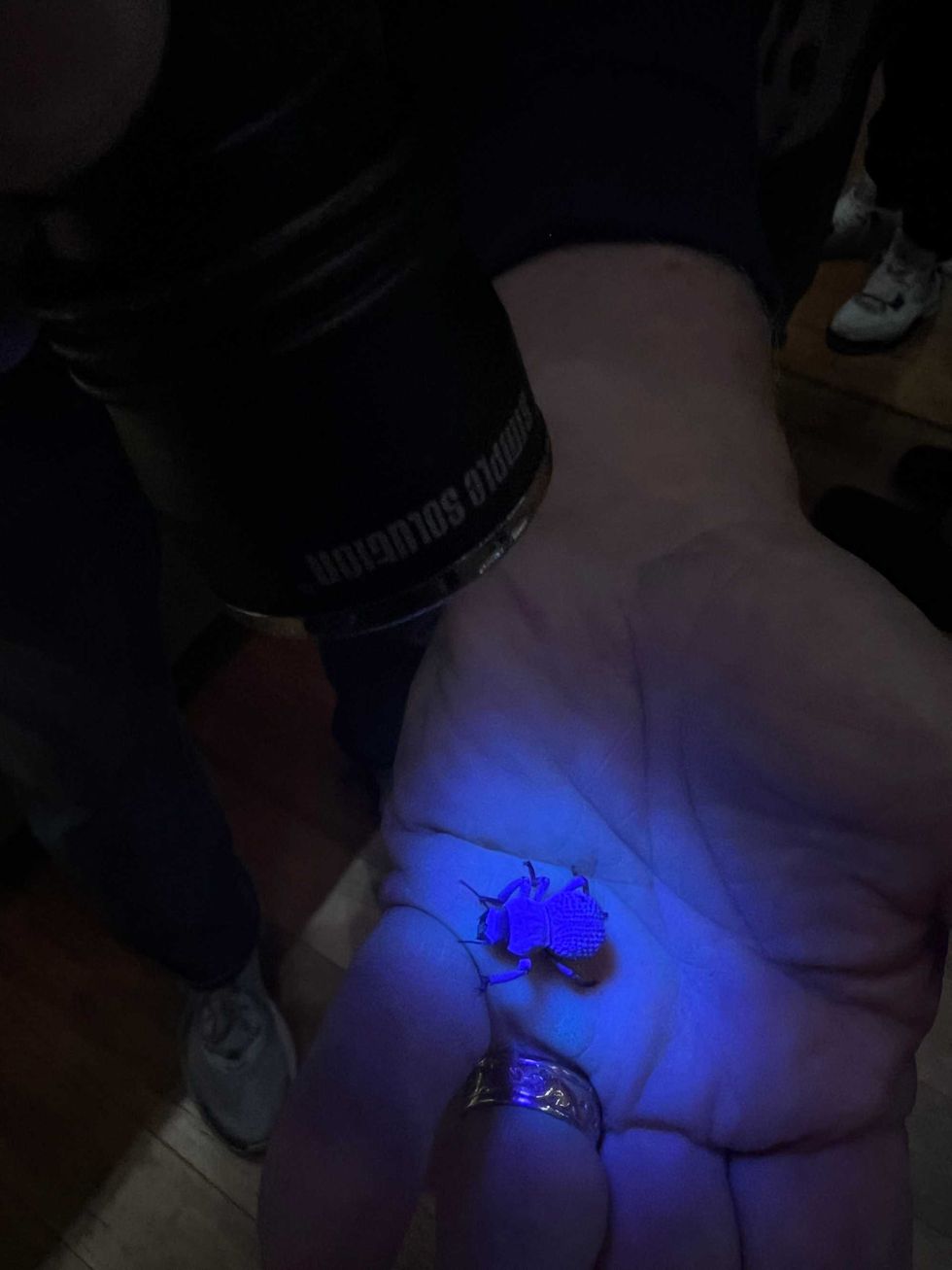 A Field Museum scientist shines a UV light on a blue death feigning beetle. The insect is covered in a powdery blue wax coating, which acts as a sort of sunscreen for the beetles.Carolina Garibay
"I think it's really cool," Louderman said. "For humans, we have to have an ultraviolet light to see this. But they can actually see that. Humans cannot produce light on their own, but a lot of insects, like fireflies or the little click beetles, can produce their own light, and I just think that's fascinating."
He said these animals and fungi evolved the ability to light up for many reasons: luring prey, blending in, alerting others of danger and to attract mates.
At the Meet a Scientist event, several curious and excited young students stopped by to meet some of these illuminating creatures.
Head of Zoology Collections Caleb McMahan said he hopes they were able to learn something new about some of the animals they might already be familiar with.
"A big, greater appreciation for what we're still learning constantly about the world and the organisms that live in the world and even for things they might be familiar with like this possum or squirrel, you learn something new about that today," McMahan said.