


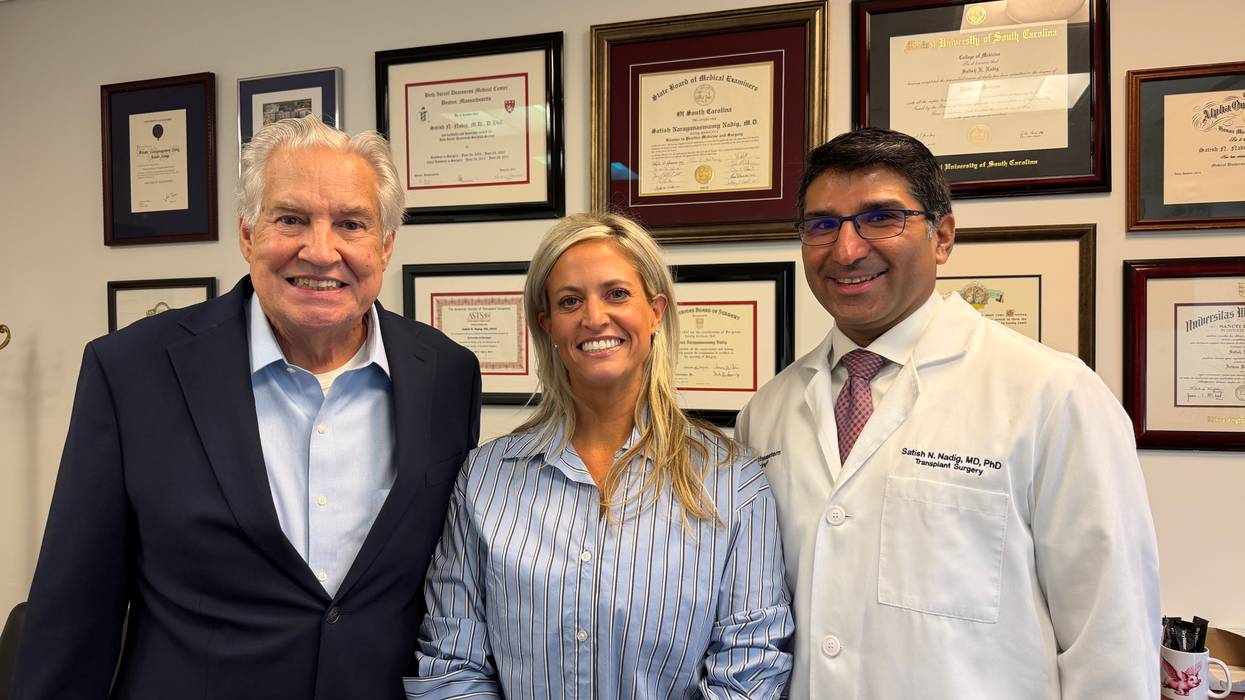

Natalie Nichols of Fisher, Indiana, said when she found out her dad needed a kidney transplant after being diagnosed with multiple myeloma, she knew she had to at least see if she would be a match.
"I didn't know how things would would match up or if it would work out or if I'd be able to do it, so I didn't want to tell him," Nichols said.
Then, Nichols found out she was a perfect match.
"I didn't really feel nervous. It was more excitement," she said. "My dad is my hero, he's my best friend, and I think if you had a chance to help or save your best friend, you would do it. In this case, it just happened to be my dad, so it was a no-brainer."
Arthur Nichols of West Bloomfield Township, Michigan, said when he found out Natalie was the one who donated her kidney to him, he was "in shock."
"In walked Natalie, and I was just totally blown away," he said. "That was the biggest surprise of my life. I mean, it was amazing."
Arthur Nichols was diagnosed with multiple myeloma, a rare blood cancer, in 2023, just days before Christmas.
The cancer severely damaged his kidney, and he said he was on dialysis for more than two and a half years before receiving his kidney transplant.
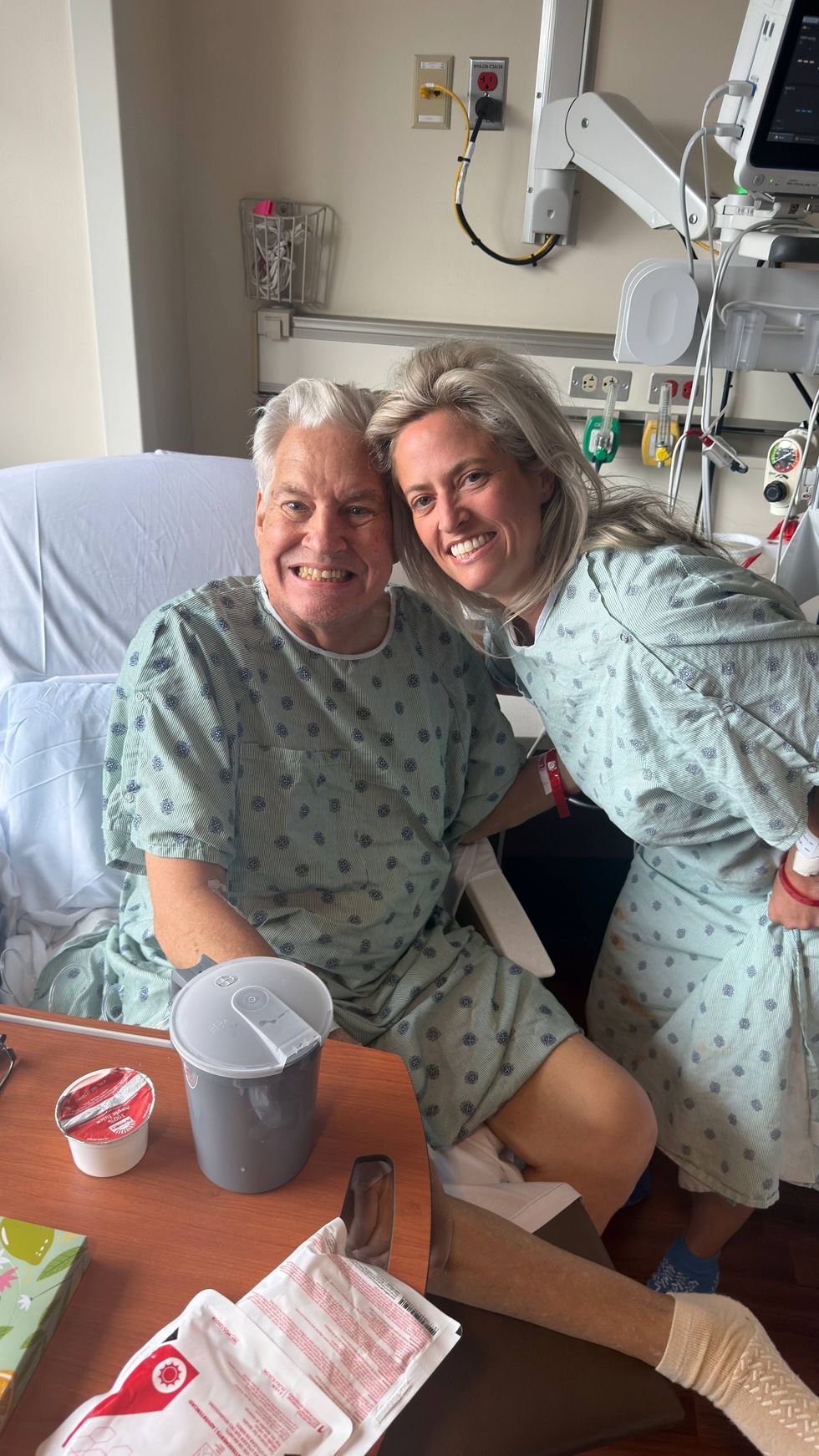
Natalie Nichols
"When someone's on dialysis, every year a portion of their lifespan is dropping, and it's not only a burden to them because it just shortens their lifespan, the quality of life is not very good," said Dr. Satish Nadig, transplant surgeon at Northwestern Medicine.
Dr. Nadig is the executive director of the newly established Northwestern Medicine Transplant Institute, which has made stories like the Nichols' possible. It launches on the heels of surgeons performing Northwestern's 3,000th liver transplant.
Dr. Nadig said the Institute, the result of a five-year fundraising campaign, brings together nationally recognized programs and multidisciplinary expertise to make transplants safer, more effective and more accessible.
"It's this idea of doing programs where you have everything in silos, whereas now you integrate all of these programs into one entity, so that you can go from research innovation straight to streamlined patient care with seamlessness," he said.
With all of the different programs in communication with each other, he said patients will be able to easily explore different options to determine what's best for them.
Dr. Nadig said the Institute also allows Northwestern to "push the boundaries of conventional norms."
"Innovation, such as living donor kidney transplantation, has to be built on quality, and it has to be built on a program that can have the infrastructure to do that, and so it's our goal for the Transplant Institute at Northwestern to be a guiding light for other programs and to be a destination for transplant innovation," he said.