

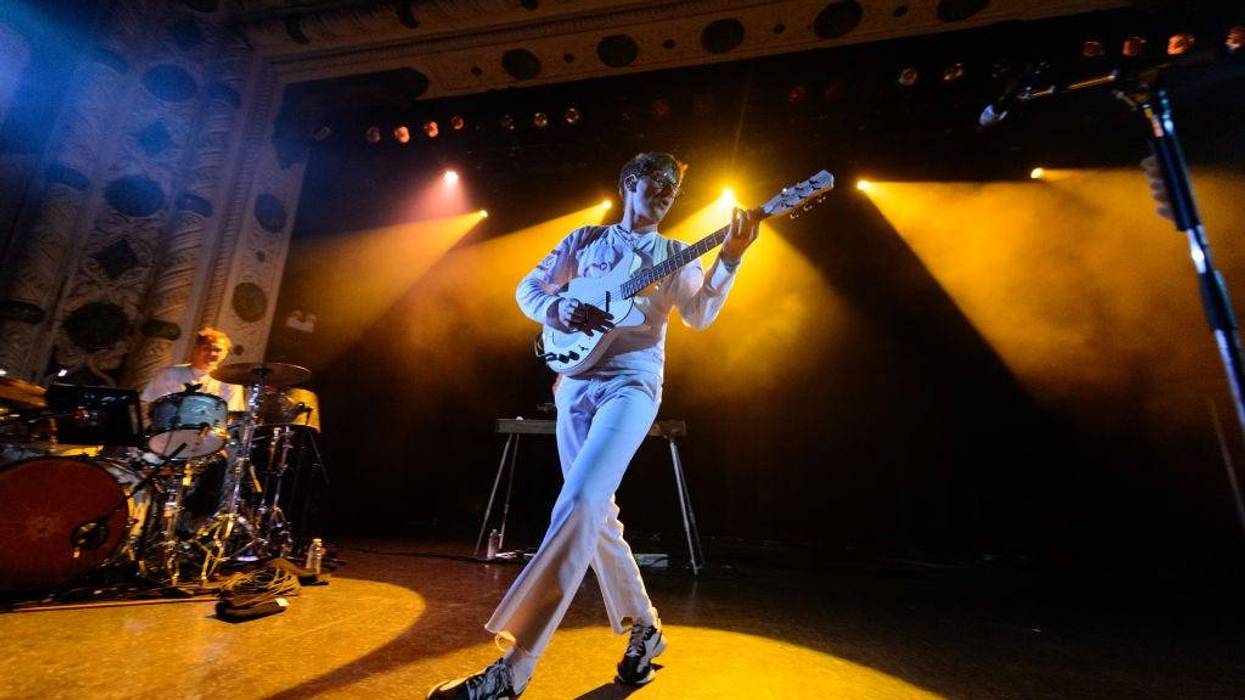

Chicago's independent music venues have been putting on a good show lately. Relative newcomer The Salt Shed is selling out most shows and leaning into an onsite music village concept with a record store, guitar shop and food trucks. Meanwhile, Wrigleyville stalwart Metro is unparalleled with its rare club showcases from bands like Metallica and Green Day.
Yet, according to a new report, even as the city's boutique venues are bringing in big crowds and top dollars, many are struggling to keep the lights on.
"The State of Live," newly released by the Chicago Independent Venue League, finds that nearly three out of four independent live entertainment venues in the city are currently not profitable, as they reel from rising artist fees, higher taxes and soaring labor and production costs.
The study is the first widespread economic research assessment to examine the city's independent entertainment scene and does not include venues owned by conglomerates like Live Nation or AEG. Beyond just music venues, the report also includes festivals, promoters, nightclubs and performing arts centers.
According to the report, the city's indie music venues contribute $2.8 billion to the local economy, $184.9 million in tax revenue and $1.1 billion in wages and benefits across nearly 17,000 jobs.
But it also paints a "sobering portrayal" — in the words of one participant – of concert halls in 2026. According to Billy Helmkamp, founder and owner of Sleeping Village and The Whistler, some owners are taking out extra loans or forgoing their own salaries to keep the lights on.
"The study finally put numbers to what we've felt for years, which is that independent venues behave like an infrastructure not just for culture, but also jobs and tourism, yet without the protections and incentives that similar impact sectors receive," said Helmkamp, who also serves as the executive director of CIVL. The nonprofit originally was founded in 2018 to combat Live Nation's proposed Lincoln Yards development, since, according to venue owners, it threatened to put their sites out of business. CIVL has been advocating for the community ever since.
Adds Bruce Finkelman, the founder and managing partner of the hospitality collective 16" on Center, whose portfolio includes Empty Bottle, SPACE, Thalia Hall and the Salt Shed: "If we don't get some of our business and government leaders to understand what the economic state of these venues is and the importance to the economic and cultural engine of Chicago, as the study clearly reports, then we're in some trouble."
The biggest issue for many independent venue owners are the skyrocketing operating costs that have been affected by rampant rates of inflation since the COVID-19 pandemic. "It's something that everybody is feeling with the cost of living increases," said Finkelman. And as he's seen with 16" On Center's varied portfolio, the predicament affects rooms of all sizes, no matter the capacity: "It's plaguing everybody in the independent infrastructure."
Tyler Nevius, owner and founder of Ramova Theatre, which opened in 2023 in Bridgeport, said it's expensive to remain competitive in a big live market. "If you need additional speakers or lighting, because the artists of course want to put on the best show possible, the cost of those materials and the labor to put them up is continuing to go up. And there's increased wages for audio engineers, lighting engineers and staff, and you've got to make sure you have good people in the room because it's such a competitive space," he said.
Insurance, too, has "gone up at an exorbitant rate," Nevius added. Ditto food and beverage costs, which affects a venue like Ramova with its onsite taproom and brewery.
Food and beverage sales are not a guarantee any longer, either. Typically, a music venue profits from bar and menu sales, since a concert hall's ticket revenue almost always goes to the musical artist. But as food and beverage costs go up, margins shrink. Then consider that far fewer people are drinking alcohol, which means lower bar tabs.
To combat this, many venues had been offering THC-infused beverages, but those, too, face additional federal and local regulation. Chicago's City Council has moved to ban all hemp-derived products; as of Jan. 21, a ruling provided an exemption for beverages. Even so, said Nevius, "I can't think of a single area where you're seeing good news as far as costs. It's just pressure and increases across the board."
The effect of it all is starting to trickle down. In just the last couple of months alone, Hyde Park music venue The Promontory closed, citing unsuccessful lease negotiations. In the dinner-theater space, Teatro ZinZanni said it will stage its last show for now on Saturday, due to a ticket slump driven by COVID-19 and audience fears around immigration enforcement activity Downtown. The food hall Time Out Market Chicago served up its last meals this month, closing as a result of slower traffic and higher operating costs.
CIVL's report comes at a critical juncture for the local entertainment sector faced with an uncertain future as venues try to remain viable beyond just defraying costs to entrance fees. "There's only so much that [ticket] prices can continue to rise with expenses. We just can't catch up," said Finkelman.
Even as independent venues struggle, entertainment powerhouse Live Nation, which owns Ticketmaster, reports that business is up. Live Nation, which owns House of Blues, Aragon, Credit Union 1 Amphitheater and Huntington Bank Pavilion at Northerly Island, saw an 11% increase in revenue in the third quarter of 2025, totaling $8.5 billion.
But they have advantages that independent operators don't. "There's a certain ability for some of these larger companies to purchase tours, where they buy dates in five or six cities, and that's just not in the economics for the small independent venue," Finkelman explained. Ticketmaster also has been known to use a dynamic pricing structure and provides resale opportunities for ticketholders, which are among the reasons cited for why ticket prices are swelling. This also impacts smaller venues that can't compete with the top tier pricing and whose events are often bypassed by music fans who have to make decisions about how many shows they can afford to see.
"It does certainly hack into a large part of people's budgets," said Finkelman. "If you're looking at Taylor Swift, if you can even get a ticket, it can sometimes go upwards of several hundreds or thousands of dollars, and that does take away from some of the smaller events people want to see."
Chicago venues aren't the only ones struggling. Funded by Choose Chicago, the report is an extension of a nationwide study conducted in 2025 by the National Independent Venue Association (NIVA) in coordination with research firm TEConomy Partners. It utilized a combination of survey data and information from a large swath of venue owners as well as federal stats from the Census and Bureau of Labor Statistics and third-party data from industry collaborators like Bandsintown, Jamalytics, Jambase and SMU DataArts.
NIVA's national report showed larger-scale issues in the market. Namely, while indie venues across the country contributed $153.1 billion in total economic output, just 36% were profitable.
Venue owners reached for this story said they hope that city and state lawmakers will consider the live community with arts grants, small business support, and a focus on workforce development.
"We are certainly going to be utilizing this data and the findings in this report to push for change, whether it be tax credits or tax rebates or support from local and state government for workforce development programs," said Helmkamp. "These numbers now give policymakers something they've never had before for the sector: defensible conservative evidence that investing in independent stages is also investing in local economies and workforce and tourism."
But while Chicago venues wait for those developments, they're also experimenting with creative solutions, like pre- and post-show entertainment so that audiences stick around for longer. Expect to see more one-of-a-kind experiences, too, such as the Empty Bottle Presents programming, like the "Beyond the Gate" shows featuring the likes of Sonic Youth frontwoman Kim Gordon at Bohemian National Cemetery, which happened in 2024, or the recent sold-out performance by Geese frontman Cameron Winter inside University of Chicago's Rockefeller Memorial Chapel.
"If people are coming in for a big show, we are looking at what else we can do to get them to come in a little bit earlier," said Nevius. "Maybe we have a DJ in the taproom, maybe we have some sort of activation out in our beer garden. If we have a popular show that ends a little bit earlier, maybe we get people to hang out in the club space upstairs. We're trying to get more creative and take advantage of this amazing space that we're able to pull together."
Out-of-the-box ideas have also been the lifeblood of the 16" On Center suite, said Finkelman. "It's really about coming up with ideas beyond the traditional running of a business and looking in other directions."
On Feb. 28, The Salt Shed will also debut its fully dedicated non-alcoholic bar — a concept the group tried and found successful through the venue's outdoor Fairgrounds space over the summer. "I really believe in the independent music scene, and I think there's always a way to be able to better it and bring it forth into the future," said Finkelman.
Even suburban venues like Robert's Westside in Forest Park must get creative. Concerned about the well-being of artists, owner Donnie Biggins committed this year to giving 100% of all proceeds to the acts that take the stage, forgoing taking a cut for production fees, an industry standard that typically helps with overhead costs. The way he sees it, it's an opportunity to invest in the talent that's also getting hit hard due to the current economic factors associated with touring.
"They're the reason we're here, the reason why we're all in this to begin with," said Biggins. He said he makes the numbers work by fulfilling multiple roles himself as owner, talent buyer and sometimes bartender and by reducing his marketing spend for shows, particularly on social media, opting instead for old-school methods like flyering and street teaming. "I would like to believe that this is a sustainable model, but the caveat is that the owner/operator has to make a personal sacrifice to do it," said Biggins. "And I hope that if more people are taking this path, it can kind of level out the playing field."
Nevius does see that hope for the future, even in spite of the challenges – and, for him, it comes back down to Chicago's music fans. 'So many people care about these venues. That's one area that continues to be a bright spot: the care and the love for these spots," he said. "And that means everything."