

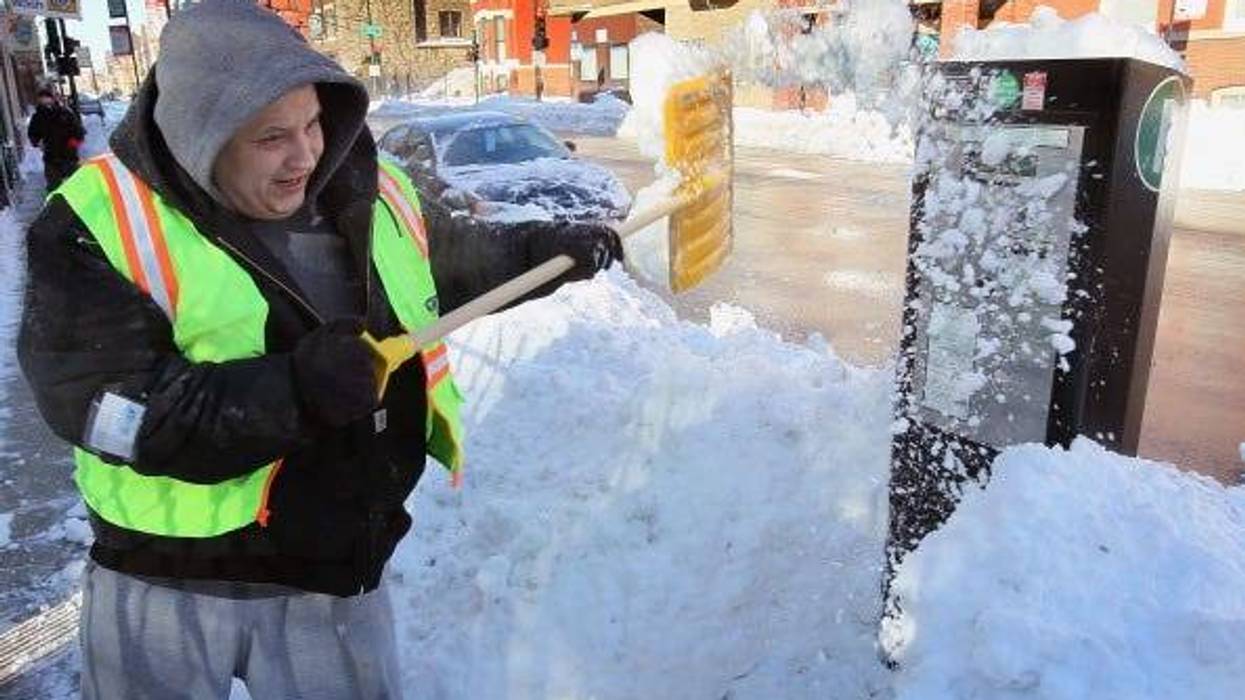

A few months ago, one of our younger colleagues asked why so many people complained about Chicago's parking meters. For him, the meters were a necessary evil in the city, but hardly worth all the grousing he'd heard in the community. It was a reminder that nearly a whole generation has passed since the city entered into what Mayor Brandon Johnson this week called "the worst deal in the history of municipal finance."
And the latest reports surrounding the future of the city's meter contract illustrated why it still inspires so much criticism.
Here's a refresher: During the Great Recession back in 2008, former Mayor Richard M. Daley was searching for alternatives to a potentially unpopular property tax increase to raise revenue. He'd been praised four years earlier for selling off the Chicago Skyway for $1.8 billion, so he turned to the city's 36,000 parking meters. At the time, street parking cost anywhere from a dollar an hour in the neighborhoods to as much as $4 an hour in the Loop. Aldermen balked at the Daley Administration's original plan to double parking rates across the city, so the mayor offered another option: lease the city's meters to a private company in exchange for an infusion of cash, and let the meters' new owners take the heat for any increase in rates.
And so, less than two days after it was formally proposed, the City Council approved a 75-year agreement to lease Chicago's parking meters to an investment group for $1.16 billion. Just five aldermen voted against the deal, among them Scott Waguespack, who still represents Roscoe Village and other neighborhoods on the North side. Even now, the alderman says the sight of a parking box is a trigger.
"Yeah, every time I see one," Ald. Waguespack (32nd Ward) chuckled as he talked to us this week. "It's a daily reminder of how you should do business, and what we were left with." He also noted that the city could have gotten more than $2 billion out of the deal, but the desire for quick cash left a lot of money on the table, and denied the city a structural flow of money (the meters generated $160 million in 2024, or nearly double what Mayor Johnson's proposed corporate "head tax" could have brought in).
Now, the owner of the meters contract is looking to sell, and the Mayor confirmed that the city submitted a bid to buy it back, effectively taking back the asset Chicago leaders sold off 18 years ago. However, he told reporters that his team pulled back after realizing that doing so would have cost the city more than $3 billion, all of which would have to be borrowed. "We would be locked into ever-rising debt payments that would require City Council to increase parking rates year after year," the mayor told reporters. "It just underscores how bad of a deal this was."
The meter deal and its rush to approval sparked a number of changes at City Council, including an ordinance giving aldermen more time to review legislation. It's also still invoked around City Hall as a synonym for "bad financial decisions."
Even so, if Mayor Johnson had managed to unwind the contract with no (or even relatively little) pain to taxpayers, he'd probably have gotten a ticker-tape parade down LaSalle Street, if not a boost to his re-election chances. Instead, he'll join Rahm Emanuel and Lori Lightfoot on the list of chief executives who've tried, and failed, to undo one of the worst blemishes on Rich Daley's legacy … one Chicagoans pay for by the hour every time they park on the street.