


MEDARYVILLE, Ind. (WBBM NEWSRADIO) — A near-record number of migrating sandhill cranes arrived Monday in Indiana's Jasper-Pulaski Fish and Wildlife Area, about 90 minutes southeast of Chicago.
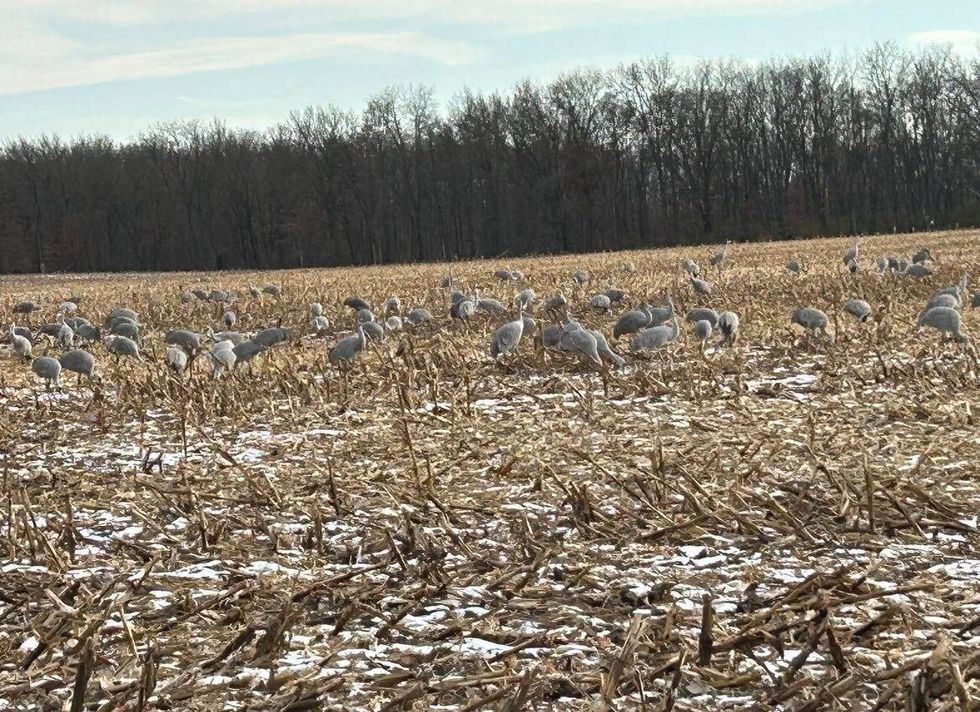
Spread out across about 500 acres of open field at what's known as "Goose Pasture" at Jasper-Pulaski, cranes came in from all directions before sunset, socializing.
Nick Echterling, the property manager, said they counted 32,900 cranes on Monday. The daily record is about 34,000, and the migration generally sees about one-third of the eastern population of sandhill cranes, heading south.
As has become custom over the years, people gathered on a viewing platform to watch, film and photograph the birds.
"Pretty good conservation success story, too," Echterling said. "There was only around 9,000 in the '70s, and now [there's] over 100,000, so that population has really grown over the last 50 years."
The cranes are coming from Michigan, Wisconsin and Ontario. They're heading to Georgia and Florida for the winter. Researchers have used GPS collars to track the migration in spring and fall.
 "There was only around 9,000 in the '70s, and now [there's] over 100,000, so that population has really grown over the last 50 years," said Nick Echterling.Mike Krauser
An illustration from Purdue researchers has shown what almost looks like an hour glass shape — fanning out to the north and south — with Jasper-Pulaski at the narrow point.
Sandhill cranes have been called "ribeye of the sky." They're not hunted at Jasper-Pulaski, but they are in some places.
The sandhill crane numbers at Jasper-Pulaski are expected to dwindle in mid-December, but some will be around longer.