


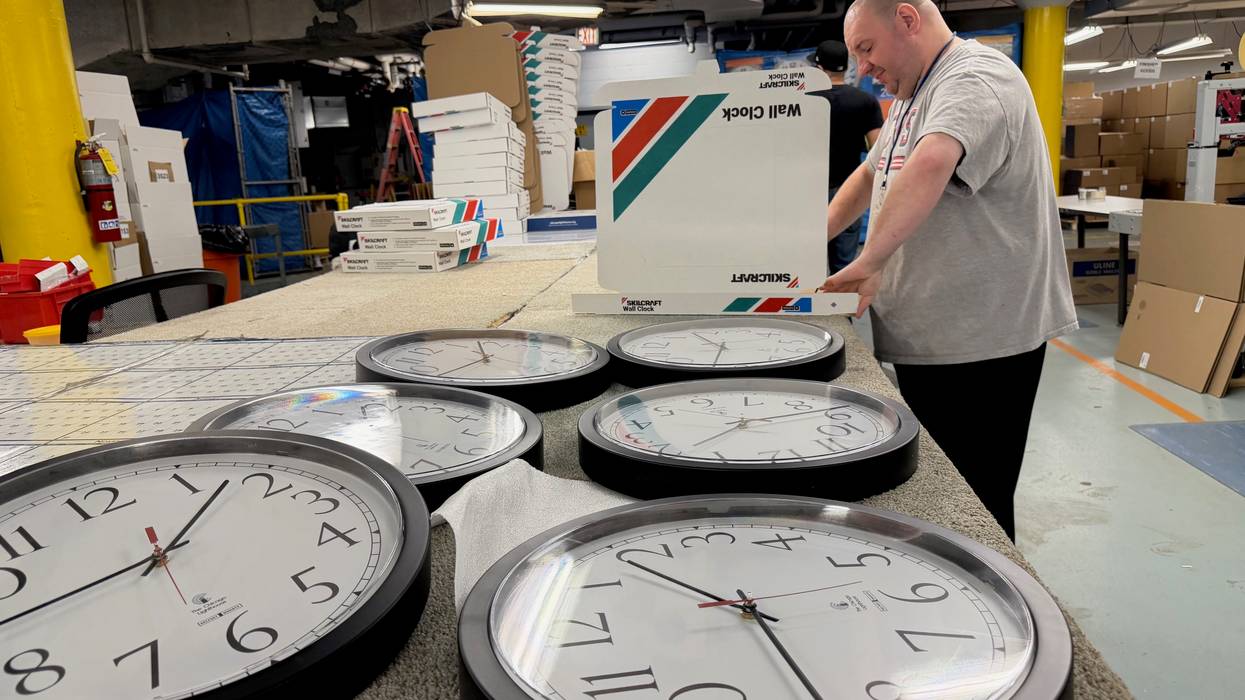

Marcin Okreglak has been working for the Chicago Lighthouse for 12 years.
"I work in the warehouse. I'm packing the clocks, or shrink wrapping the calendars." said Okreglak.
He's legally blind, along with dozens of other employees.
"I was born in Poland. My blindness stems from Chernobyl, a condition from toxins from the pollution. Even though the nuclear power plant exploded in Chernobyl, it traveled into the neighboring countries. I was born with this. I have zero vision in my left eye, my right eye has limited vision," he said
Across the manufacturing floor, Dale Bentenhousen cuts clock faces. He says when he punches in each day, he says he feels a sense of purpose.
"I'm more blind than sighted. I've been doing this particular job since I started and I can do it blindfolded," he laughed. "I set up a template to cut four of these faces at one time." and he said he is finally on a level playing field with those around him.
"I've cut faces for over a couple million clocks. I've been here 18 years. The people here are fantastic. They work together. We put out the best product we can for the blind and visually impaired community." he smiled.
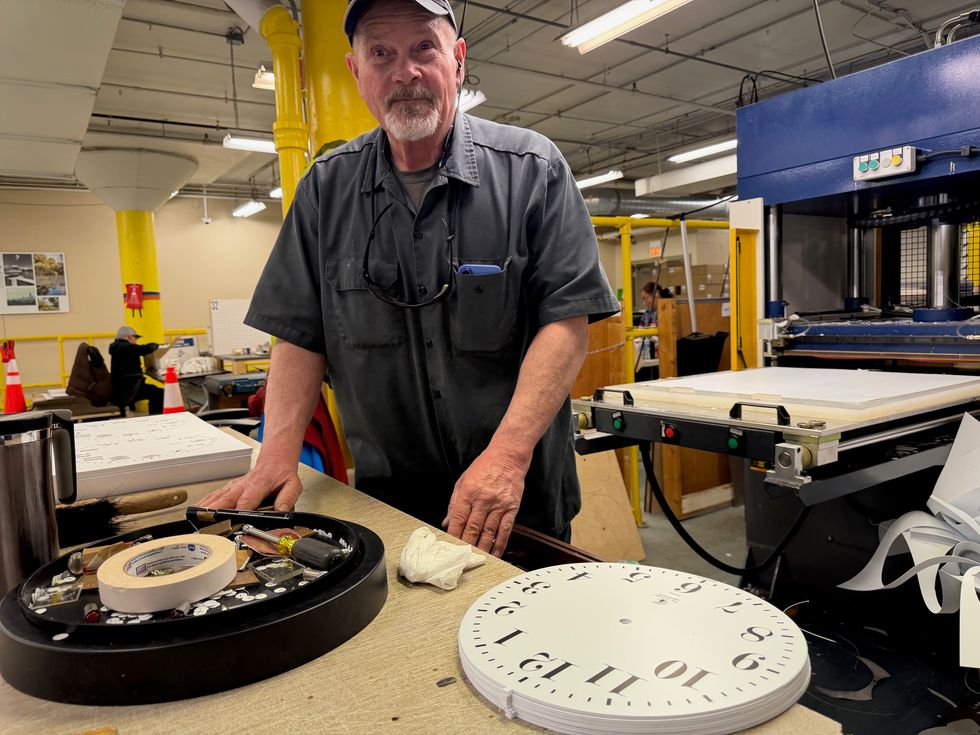
Dale Bentenhousen, an 18 year employee, cuts clock faces in the Chicago Lighthouse warehouse
Lisa Fielding/WBBM
Founded in 1906 on Chicago’s West Side, The Chicago Lighthouse has been a pioneer in innovation across the areas of vision care, rehabilitation, education, employment and technology for over 100 years.
"It began with a group of women who saw a need and there were people living on the streets of Chicago who needed support with clothing and food. So they pooled their money and were able to raise enough money to buy the first building and organized the Chicago Lighthouse Improvement Association for the Blind. The jobs were traditional jobs for people who were blind: carpentry, basket weaving, television cable assembly, a great tradition of having an integrated workplace for people who had disabilities. We have carried on her legacy and we have modernized the jobs that are offered to people how are blind or are visually impaired." said Dr. Janet Szlyk, President and CEO, The Chicago Lighthouse.
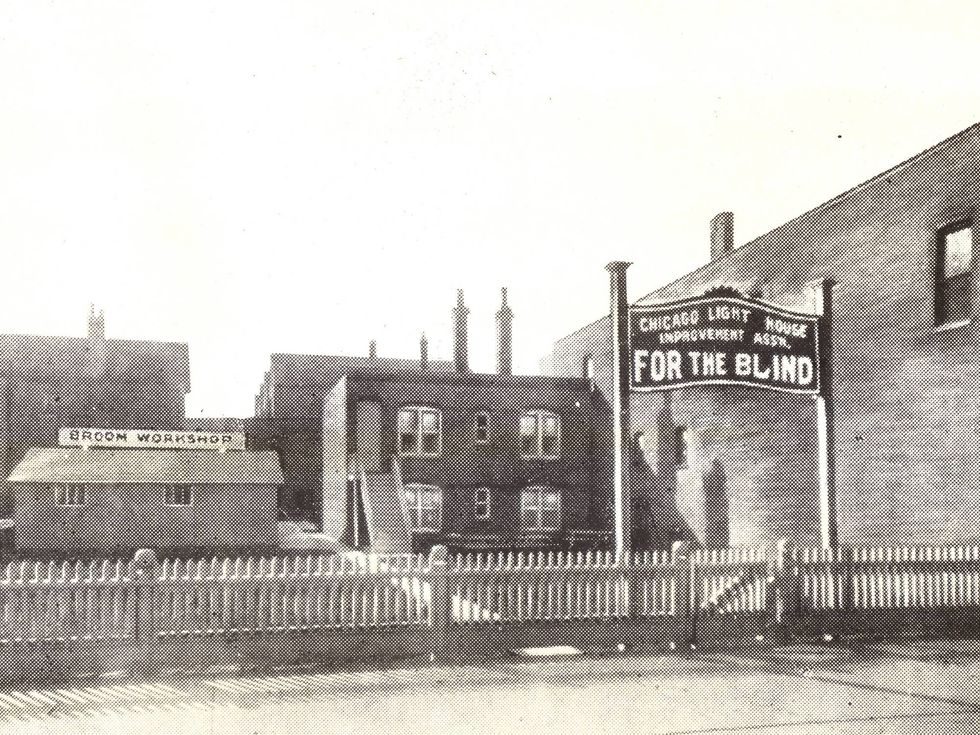
The original Chicago Lighthouse Improvement Association for the Blind
The Chicago Lighthouse
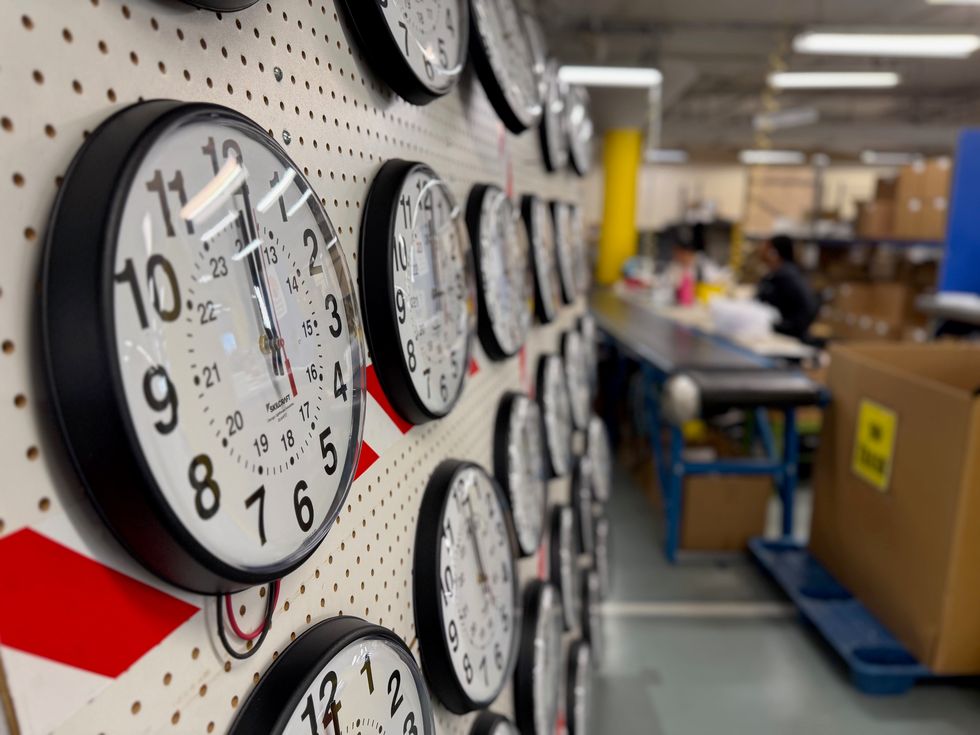
"We assemble clocks. That has been a tradition for us, we've been doing that since 1977. We sell them to the federal government and the private section. Now we've branched out to digital clocks, and fashion clocks, a fashion line that is available at Target, Amazon and Wal-mart." she smiled.
Slyk says they produce about 90,000 clocks a year, make custom logos and now have entered the office product commercial market.
"We make and sell monitor arms, standing desks, back rests, foot rests, laptop stands. Those are all part of our line and we have about 85 products that are assembled in our manufacturing wing."
Today, The Chicago Lighthouse serves more than 67,000 people each year.
"We have nearly 800 employees across the board. 85 % of our employees are blind or visually impaired in our Ability One Program. It's an inclusive workforce. We also are in the customer service business. We answer the phones, we do medical scheduling, we do payments. We have a partnership with the Illinois Tollway. So when you call to add a credit card or replenish your credit card for your transponder, you are speaking to an agent from the Lighthouse. If you call UI Health, if you're a patient, you're speaking to one of our agents," she smiled.
"We are the most comprehensive vision rehabilitation program in the country. That's the signature program." Szlyk said.
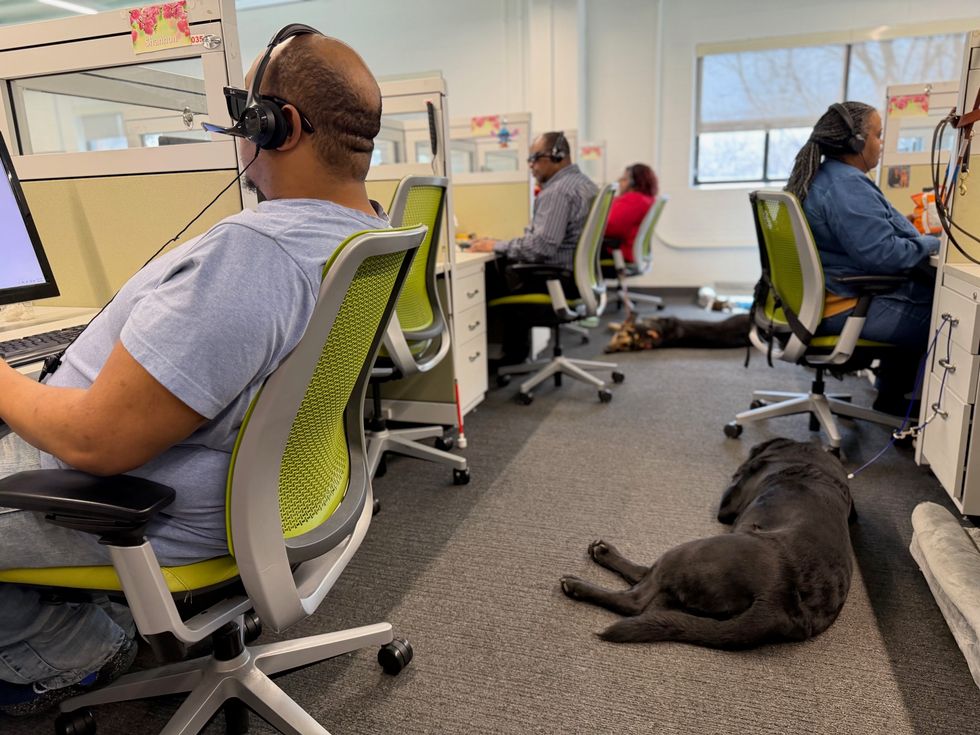
Chicago Lighthouse employees in their customer service center
Lisa Fielding/WBBM
Through touch and memory, blind workers have the routine down pat, and the assembly line runs like clock work.
"People who are blind have incredible problem solving skills. Imagine shutting your eyes, not being able to see, having to go about your day, being very organized, keeping to a scheduled, having a schedule. That makes people who are blind excellent employees. There is longevity, there's reliability, there's intelligence and because we live in a world that sighted, they are often overlooked so when they do have employment, they value their job. It's a workforce that is very dedicated." added Szlyk.
"People come in and they ask me when they are viewing the shop floor, you said that these people are blind? Yes, but it doesn't' appear to be the case as the navigation skills, the sense of movement, the awareness of others in the room, the ability to do what they do so skillfully and stay focused is pretty extraordinary. When you have a visual impairment, your others senses can be heightened. The tactile sense, the auditory sense, the senses are heightened. A person who is blind, the brain is reconfigured but they can do the same things but in a different way, to accomplish the same task. "
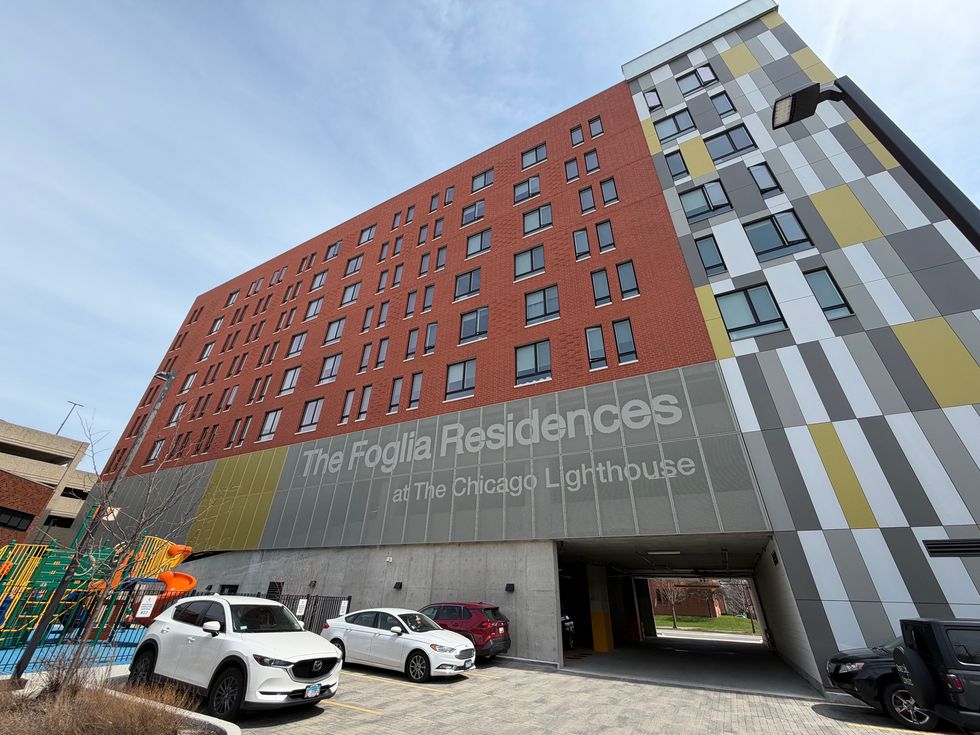
The new Foglia Residences, a 76 unit apartment complex on campus
Lisa Fielding/WBBM Newsradio
The lighthouse has since expanded and added a 76 unit affording housing complex.
"We felt there was a great need for housing, especially during COVID. The city of Chicago was very supportive. It came from private and public monies. It was the first time affordable housing tax credits were used in the United States to build housing for people who are blind," said Slyk.
There are studios, one bedroom and two bedroom apartments.
"It's affordable housing, it's on our campus. The unites are all filled and there's a waiting list. It' provides housing that is safe, affordable, beautiful and well kept. Eventually it will become and asset of the Lighthouse entirely and become part of the legacy of what we have to offer. "
"We're seeing students and tenants who are employees who live there. No excuse for being late, just walk across the campus." she laughed.
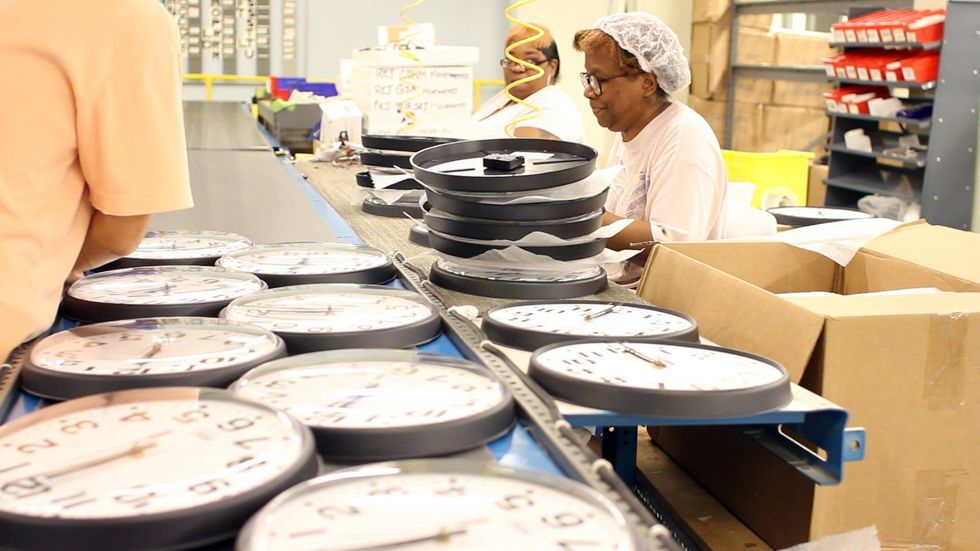
The clock factory line
The Chicago Lighthouse
The Lighthouse made its 7 millionth clock made last month. The Chicago-based factory keeps the world on time and the blind employed.
"This has been a fabulous experience for me," said Okreglak. "I've learned how to type, improving my typing skills, I've learned computer skills. I can't say enough about what this place has done for me," he smiled.
"During our 120 years, we've been through war, plagues, and financial crisis, and we've been able to sustain ourselves as an organization. I have great hopes for the future because we have a lot of legacy families involved in maintaining that course, that trajectory. We're proud to be in Illinois. "
They've also opened a senior center in a satellite space in Glenview, 222 Waukegan Road.
"We expanded our facilities, expanded our community, expanded our services. We have 40 programs and services. The Lighthouse is a very happy place. It's a place that offers hope and opportunity. You walk into the building, people are very happy to be here and to be part of such a caring community."
The Chicago Lighthouse will hold their annual fundraising Gala and 120th celebration on May 16th at The Art Institute.
For more information about their programs and services, you can click here.
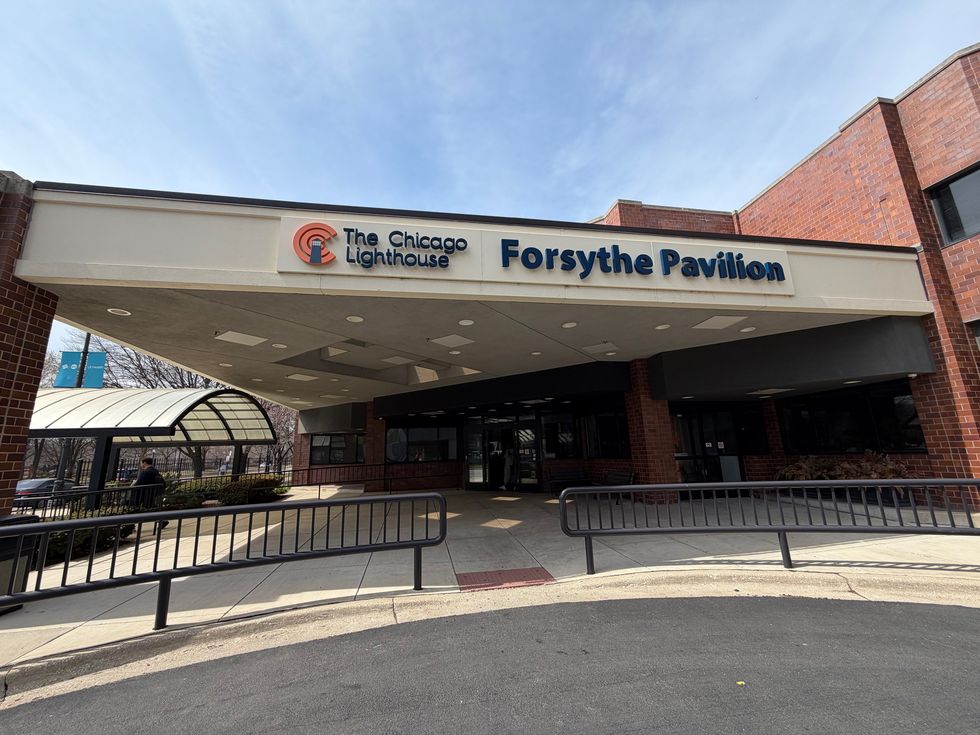
The Chicago Lighthouse, 1850 W Roosevelt Rd, Chicago, IL
Lisa Fielding/WBBM Newsradio