


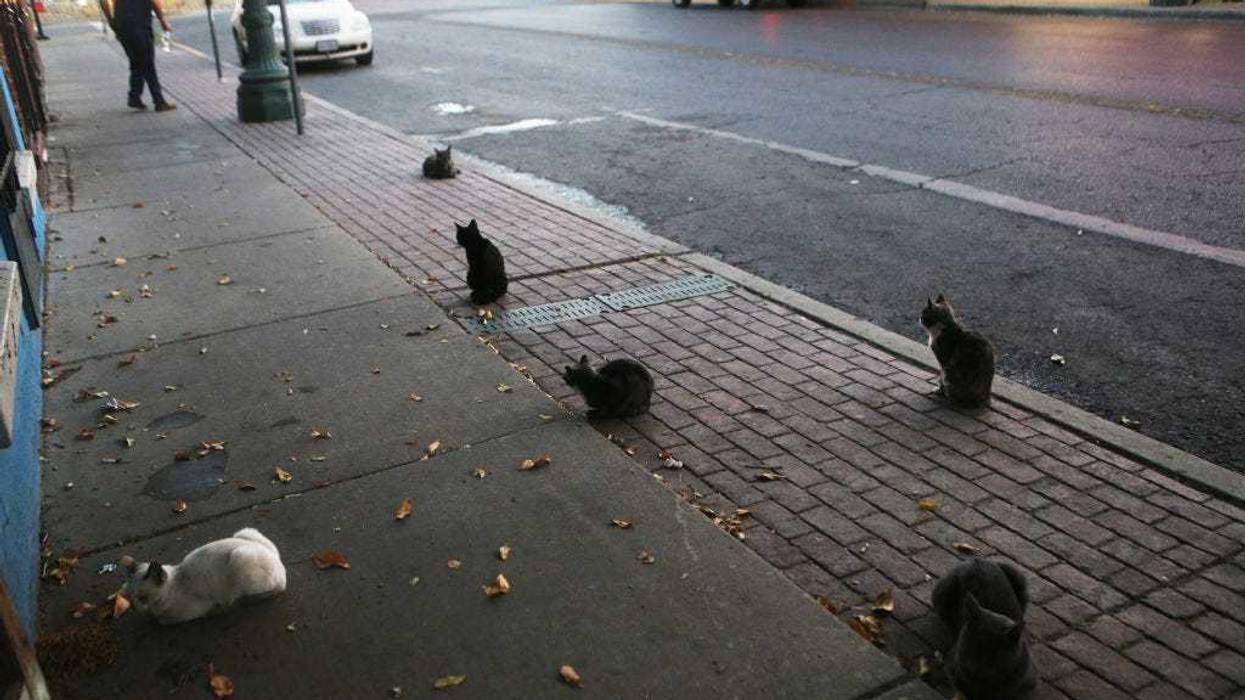

Researchers at the Lincoln Park Zoo conducted a study of feral cats in Chicago to determine whether they're impacted by eating rats that ingest poison.
The study was led by Maureen Murray, a PhD with the zoo's Urban Wildlife Institute.
"No one has ever looked at whether cats that live outside or especially cats that are placed to control rats, if they get exposed to rat poison," she said.
57 cats were part of the study.
They didn't capture the cats, themselves, she said.
"Yeah, we don't mess with cats, we left that to the professionals."
They had already been captured as part of a trap, neuter, release program.
Blood samples were taken.
"And then we tested that blood sample for a panel of different types of rat poison that are called anticoagulant rodenticides."
They found that very few had rat poison in their blood.
"We found that only 7 percent of the 57 cats tested positive and they tested
positive at very low amounts," she said.
Just 4 tested positive.
"The low concentrations weren't that surprising," Murray said, "but I was a bit surprised that only a handful of cats had any rat poison in their systems."
She says it's very unlikely that those cats ingested the poison itself.
"They only really eat meat, so if cats encounter rat bait I doubt it would eat it, so I think it would be from consuming rats."
The research was published in the Journal of Wildlife Diseases.
Murray is also studying the use of contraceptives on rats in Lincoln Park instead of poison, which can be deadly for wildlife, including birds of prey.