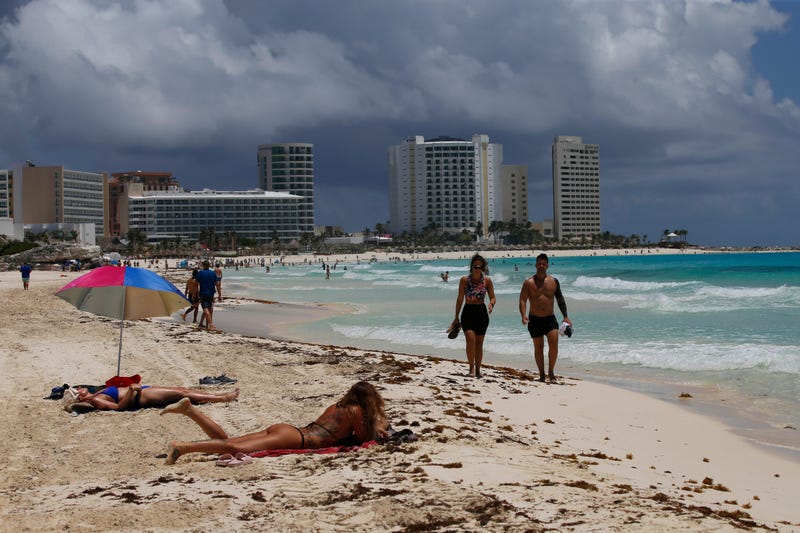
With spring break on the horizon, travelers may be reassessing their plans to vacation in Mexico after cartel-related violence broke out last weekend in parts of the country.
The retaliatory violence in some 20 states that followed the killing of Mexico's most powerful drug lord on Sunday came as many families and college students finalize their plans for spring break, which generally falls in March or April.
Security and travel risk experts say tourists are understandably concerned, but note potential dangers vary widely depending on their destination, modes of transportation and the activities they have planned.
No matter where or when, travel usually breeds uncertainty as “there’s always something that can come up,” said Michael Johnson, president of Ensemble Travel, an association of travel agencies in the U.S. and Canada.
The U.S. and Canada have lifted the “shelter in place” advisories they briefly issued for their citizens in parts of western Mexico, including the cities of Guadalajara and Puerto Vallarta in Jalisco state, where the former cartel kingpin Oseguera Cervantes, better known as “El Mencho,” was based. Both are recommending that travelers exercise caution, stay aware of local conditions and monitor updates before and during travel.
The U.S. State Department warns against any travel to six Mexican states, and urges travelers to reconsider visiting seven others, including Jalisco. Global Affairs Canada wants citizens to avoid nonessential travel to 13 states and Lagunas de Zempoala National Park in Morelos.
What to consider
It’s important to understand where the risks are highest and know what options are available if conditions quickly change, Johnson said. Rather than making a yes-or-no decision all at once, travelers should “take it step by step."
— Official guidance: U.S. State Department and Global Affairs Canada travel advisories can help travelers understand general risk levels. Travelers should also monitor local news reports on current conditions in the specific areas or regions they plan to visit, Johnson said.
— Destination: Mexico is roughly three times the size of Texas. Other popular tourist destinations like Cancun or Tulum are more than 1,200 miles (1,900 kilometers) from Jalisco, which was the focus of the recent violence. Staying within major resorts and tourist zones can simplify transportation plans and limit how much travelers need to move around once they arrive.
— Flexibility: Travelers should review airline, hotel and tour cancellation policies. If they have a travel insurance policy, read the fine print about what it does and does not cover.
— Risk tolerance: For anxious travelers, it may be wise to cancel the trip. “Don't go on vacation if you're uncomfortable. It's one thing to get there, but another if you're looking over your shoulder the whole time,” Johnson said.
Vancouver resident Scott Leaf and his wife are headed to Mexico in two weeks to celebrate his 60th birthday, with planned stops in Mexico City, Cancun and south to the coastal town of Akumal. After learning of the recent violence, Leaf said they didn't see a need to cancel their trip to a country where they have vacationed annually for three decades.
They're not traveling close to Jalisco state, he said, and “we've never, ever felt unsafe in a tourist area in 33 years.”
“Canceling a trip to Cancun is like canceling a trip to Disneyland because of what's happening in Minnesota,” Leaf said, referencing the Trump administration's recent immigration crackdown there that saw two and a half protest-filled months, 4,000 arrests and two fatal shootings by immigration officers.
What travelers can do to prepare
Rich Davis, a senior security adviser at risk mitigation company International SOS, says preparation can make the biggest difference for travelers who decide to move forward with a trip.
— Build a buffer: Travelers who need essential medications should pack enough to last longer than the planned stay, in case plans change unexpectedly.
— Register with your government: U.S. travelers can enroll in the State Department's Smart Traveler Enrollment Program, which allows embassies to share safety updates and contract travelers in emergencies. Canadians can register through Registration of Canadians Abroad, known as ROCA.
— Consult a travel adviser: Even if a trip is already booked, consulting a travel adviser can still be helpful. Johnson said advisers may have on-the-ground insight, including from clients currently traveling in the area, and can suggest adjustments to itineraries. For travelers who haven’t yet booked, he said advisers can help shape plans with flexibility and location in mind — and for those who book through an adviser, that relationship can provide an added layer of support if plans change or problems arise.
On the ground
After landing, a few straightforward habits can help travelers navigate a new destination with confidence, experts say.
— Move in pairs or groups: Traveling with at least one other person, when possible, can make getting around an unfamiliar place easier and more comfortable, while also helping travelers stay aware of their surroundings.
— Keep others in the loop: Share itineraries and daily plans with a trusted friend or family member, and check in regularly, Davis said.
— Use the hotel as a hub: Setting up transportation directly with the hotel or resort concierge can add predictability, especially for transfers and excursions. Before getting into a vehicle, confirm the driver's name or details and destination. Avoid accepting unsolicited rides, Davis said.
— How to call for help: Not every country uses “911” as its emergency contact number. The State Department has a list of emergency contacts for different countries, and it recommends travelers save it in their phones.