

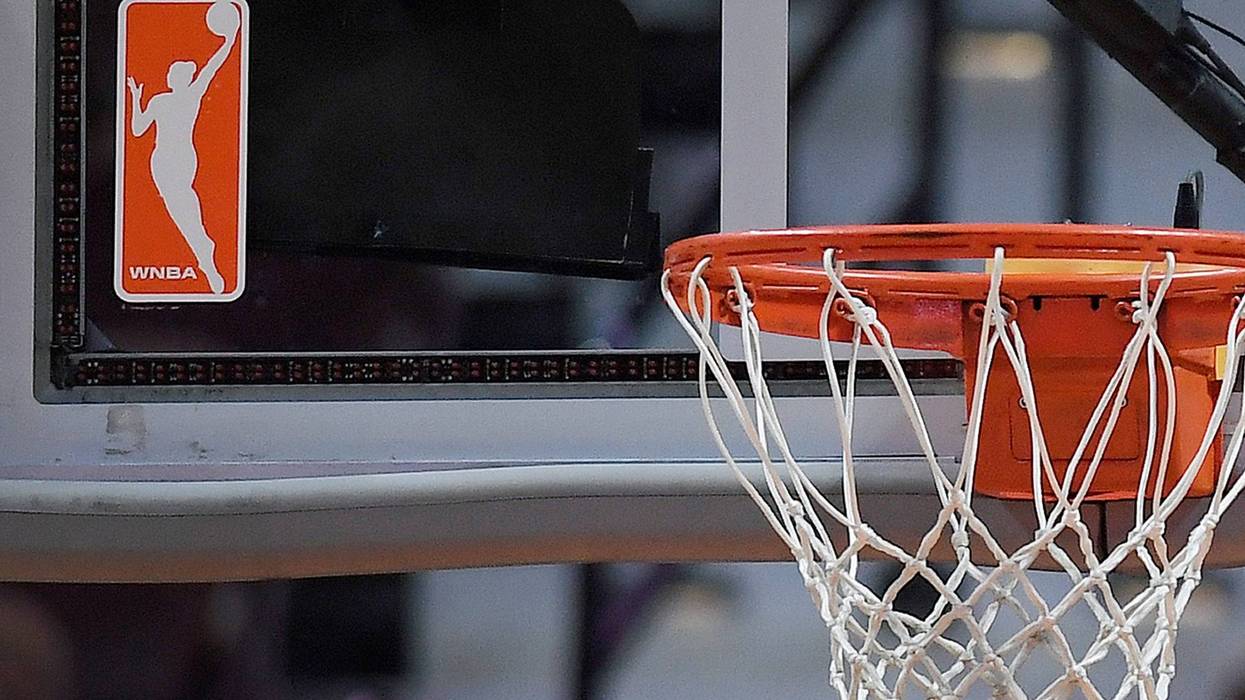

NEW YORK (AP) — The WNBA and its players' union weren't able to agree to a new collective bargaining agreement by the Friday night deadline, and now the league enters a “status-quo” period with no new extension reached.
Negotiations will continue with the current CBA still in effect.
The league and the players had two previous extensions, with the most recent expiring Friday night. The sides have met several times this week, but are still far apart on many key issues, including salary structure and revenue-sharing.
“Despite demonstrating our willingness to compromise in order to get a deal done, the WNBA and its teams have failed to meet us at the table with the same spirit and seriousness,' the union said in a statement. “Instead, they have remained committed to undervaluing player contributions, dismissing player concerns, and running out the clock.”
If a new CBA isn't agreed upon soon, it could delay the start of the 2026 season. It's already delayed the expansion draft for Toronto and Portland.
“As the league experiences a pivotal time of unprecedented popularity and growth, we recognize the importance of building upon that momentum," the WNBA said in a statement issued after the deadline had passed. "Our priority is a deal that significantly increases player salaries, enhances the overall player experience, and supports the long-term growth of the league for current and future generations of players and fans.”
The last CBA was announced in the middle of January 2020, a month after it had been agreed to. It could easily take two months from when a new CBA is reached to get to the start of free agency, which was supposed to begin Sunday.
The WNBA, under U.S. labor law, has a status-quo obligation to allow teams to send out qualifying offers under the expired CBA agreement. Both sides could agree to a moratorium that would result in a pause of all free agency activities until a new CBA is ratified. The league offered one, according to a person familiar with the situation. The person spoke to The Associated Press on Friday night on condition of anonymity because of the sensitive nature of the negotiations.
With no moratorium in place, the league has told its teams that they can send out qualifying offers to free agents beginning on Sunday, according to the person. Those offers would go to players who were restricted free agents or ones that the teams wanted to give the franchise tag to.
Because neither the players nor the teams have any idea what the new salary structure and salary cap would be in the new CBA, it would be a worthless process for now.
The league’s most recent offer last month would guarantee a maximum base salary of $1 million in 2026 that could reach $1.3 million through revenue sharing. That’s up from the current $249,000 and could grow to nearly $2 million over the life of the agreement, the person told the AP.
Under the league’s proposal, players would receive in excess of 70% of net revenue — though that would be their take of the profits after expenses are paid. Those expenses would include upgraded facilities, charter flights, five-star hotels, medical services, security and arenas.
The average salary in 2026 would be more than $530,000, up from its current $120,000, and grow to more than $770,000 over the life of the agreement. The minimum salary would grow from its current $67,000 to approximately $250,000 in the first year, the person told the AP.
The proposal would also financially pay star young players like Caitlin Clark, Angel Reese and Paige Bueckers, who are all still on their rookie contracts, nearly double the league minimum.
Revenue sharing is one of the major sticking points in the negotiations.
The union’s counter proposal to the league would give players around 30% of the gross revenue. The player’s percentage would be from money generated before expenses for the first year and teams would have a $10.5 million salary cap to sign players. Under the union’s proposal, the revenue sharing percent would go up slightly each year.
“Make no mistake. Pay equity is not optional and progress is long overdue,” the union statement said. "We urge the league and its teams to meet this moment. The players already have and will continue to do so.”
___