



(AP/WBEN) - Police shot and killed a 27-year-old Black man on a Philadelphia street after yelling at him to drop his knife, sparking violent protests that police said injured 30 officers and led to dozens of arrests.
Video of the fatal confrontation posted on social media shows officers pointing their guns at the man, later identified as Walter Wallace. He walks toward the officers as they back away from him in the street, guns still aimed at him. Both officers then fired several times.
A lawyer says the family of Wallace had called for an ambulance to get him help with a mental health crisis, not for police intervention. Chief Police Inspector Frank Vanore said earlier that police received a call about a man screaming and that he was armed with a knife.
Philadelphia Police Commissioner Danielle Outlaw said Wednesday her department will release 911 tapes and footage from police body cameras "in the near future." She also said the police department should move "as soon as possible" to integrate with mental health services.
Buffalo has recently seen its own issues with police and mental health cases, as Willie Henley was shot by police in September on Genesee Street after striking an officer with a baseball bat.
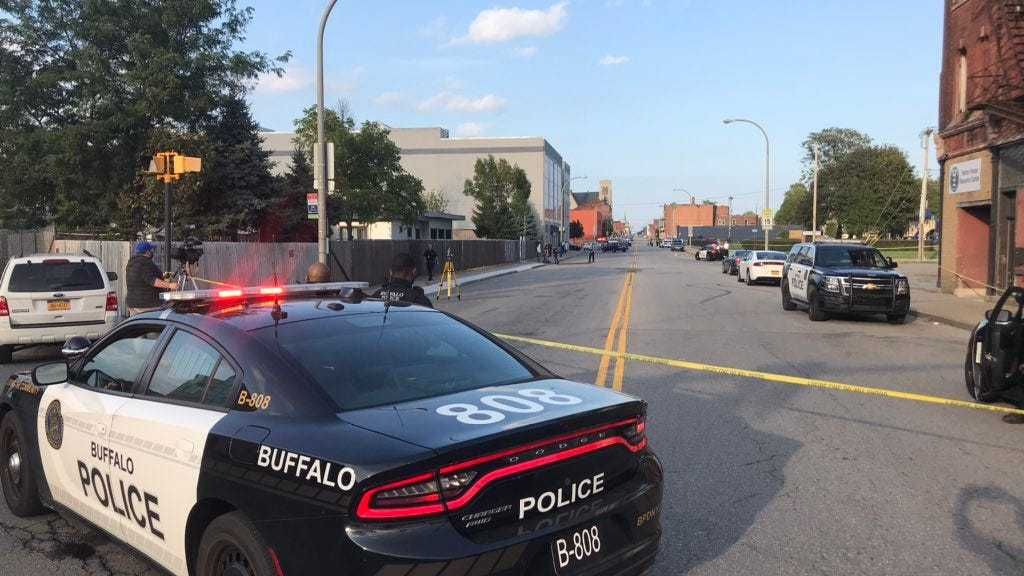
Just a few days later, Mayor Byron Brown announced the formation of the Buffalo Police Department's Behavioral Health Team, which was in the works prior to the incident.
[shortcode-inline-related expand="1" link="/wben/news/local/buffalo-police-create-behavioral-health-team" headline="Buffalo Police create "Behavioral Health Team" in the wake of shooting of man in mental crisis" image="/media-library/image.jpg?id=63601118"]Sarah Bonk is a mental health professional and serves as the program manager of the response team at Endeavor Health Services, and she said it's critical and urgent that Buffalo and other police departments around the country get better at integrating mental health care into emergency response.
"Our program-specific standpoint is that until we have a broad robust way of intervening at every point possible, we're going to be there to support the response to those individuals in the community who are experiencing those moments where their mental health might become overwhelming and help law enforcement interact with those individuals in a way that promotes the safest outcome possible," said Bonk.
However, there has been some push back from other local social workers who aren't convinced the program will have any major effect, saying the data from other similar programs is inconclusive, and perhaps an even bigger reason, they don't believe police should be present at mental heath crisis cases at all.
Bonk was discouraged by some of the opposition to the work, noting her team has helped perform dozens diversions to this point, with a vast majority occurring with police officers present.
"Since late August, we've had 38 diversions...where our clinicians have been able to partner with law enforcement and prevent people from being arrested and hospitalized unnecessarily, so that's just our program within the last few months," she said.
However, she did note that she would like to see society move away from simply dialing 911 for every emergency, and that hopefully in the future, a more nuanced approach to resolving crisis will be a part of the norm, which will then take much of the load off law enforcement to situations they're not necessarily equipped to deal with.
"I think as continue to grow, develop and learn more, we'll learn about other emergency referral options and the national suicide prevention hotline, and we get our communities to use those numbers more consistently before things rise to a violent level of crisis, then we will get other opportunities and other individuals to respond in those immediate circumstances," said Bonk. "Just because somebody might be having a moment in time where they're experiencing difficulty does not mean that's who they are throughout the entire course of their life, so let's be human, let's be honest and let's be helpful in that moment."


