


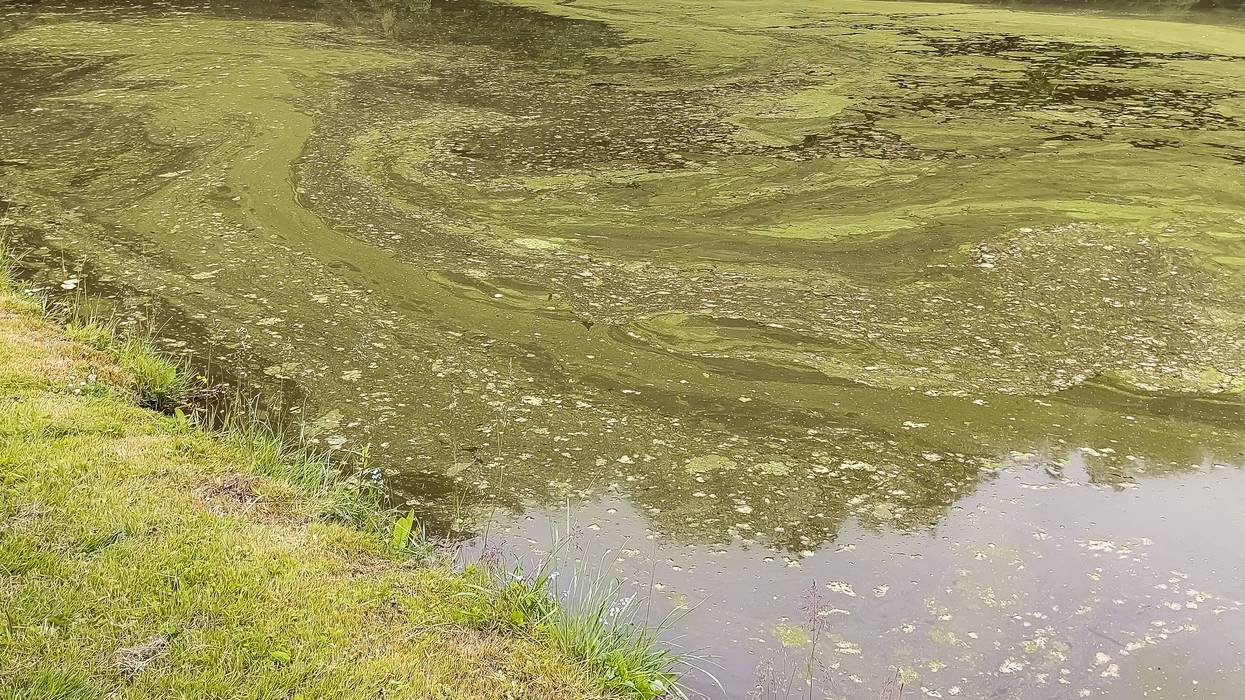

Buffalo, N.Y. (WBEN) - With temperatures across Western New York continuing to soar this summer, concerns over harmful algae blooms increase in several waterways and other bodies of water throughout the region.
Executive director of Buffalo Niagara Waterkeeper, Jill Jedlicka says the increase in algae blooms every year in the waterways of Western New York is nothing entirely new.
"It has been kind of steadily increasing in recent years, but also we've been monitoring it more and keeping an eye out," said Jedlicka in an interview with WBEN. "It's still too soon to determine are these algae blooms happening more frequently, or are we just paying more attention to them when they happen."
Jedlicka says Buffalo Niagara Waterkeeper has been trying to collect samples more frequently from a number of affected water bodies in Western New York, and then they look go deeper under the microscope to try and identify what kind of potential threats there are to water quality.
"It's a good thing in one hand to be more observant and to be doing the sampling and identifying these blooms, but, of course, it comes with the alternative that it affects people's lives and potentially the health of pets and people," Jedlicka acknowledged.
At this time, Buffalo Niagara Waterkeeper has been able to identify four local waterways dealing with algae blooms:
- Tonawanda Creek near Ellicott Island Park
- Ellicott Creek in the City of Tonawanda
- Hyde Park Lake in the City of Niagara Falls
- Green Lake in the Town of Orchard Park
Buffalo Niagara Waterkeeper has over 5,000 miles of creeks and streams and ponds and lakes in Western New York it monitors. Where the challenge lies for Jedlicka and others with the organization is there is no regional entity that has the authority or the obligation to monitor local waterways for algae blooms.
"It really comes down to, does a local municipality, such as Orchard Park, have the ability to do the monitoring proactively? Or do groups like Waterkeeper raise the funds to be able to support to do this voluntary testing? And, oftentimes what happens is Waterkeeper will get reports from the community," Jedlicka said. "We have our river watch volunteers and trained volunteers who are out there, who identify potential blooms and then they connect with us, and we're able to grab samples and take a look at them. But there really is no scheduled monitoring of specific waterways, but there are certain ones that we do keep an eye on that we know may be blooming every year."
So what are contributing factors to these algae blooms sprouting in local waterways?
"The common theme is there may have been a recent heavy rain where all the material from the watershed or from the land are washed off the land into the water - nitrogen and phosphorus and pesticides and fertilizers and just general runoff. And you have these nutrients that then get flushed into these water bodies. And then when you have a water body that's either slow moving, stagnant or low flowing, and you have increasing temperatures and a lot of sunlight, that's the perfect storm to generate a bloom," Jedlicka explained. "That's what we're seeing, and that's the bulk of what we're seeing right now in these last couple of weeks."
How can one identify a local body of water that may have an algae bloom forming?
"First and foremost, if you see a water body that is discolored - discolored can mean anything from being cloudy to having an appearance of spilled paint, like green paint - that could be signs of a cyanobacteria, which is blue-green algae, which can develop what's known as a microcystin toxin. That's probably one of the most dangerous potential impacts to an algae bloom," Jedlicka noted.
So if a waterway doesn't look right, Jedlicka says it's best to have a precautionary principle and not come in contact with the water.
"You can report that either to the DEC, and we also at Waterkeeper have a website to make identification a little bit easier. So people can also reach out to us, and if we're able to, sometimes we'll send our staff team or our volunteers out there to put eyes on it and potentially identify what's going on," she added.
What happens if you, your kids or a pet happens to come into contact with any of these algae blooms?
"If there is some incidental contact, or you come in contact and you don't realize it till after the fact, obviously immediate rinsing and hand washing," Jedlicka said. "If you start to experience anything such as a rash or some type of skin irritation, please contact a healthcare professional.
"Also, if your dog or a pet has accessed these waters, you may want to connect with your veterinarian, because if these algae blooms result in microcystins being present, which is that toxin, that can be fatal or very damaging to pets who might swallow or ingest the water."
Buffalo Niagara Waterkeeper have already confirmed algae blooms at several locations around the region
Buffalo Niagara Waterkeeper have already confirmed algae blooms at several locations around the region