


Buffalo, N.Y. (WBEN) - As the United States celebrates 250 years of independence in 2026, WBEN is taking a look back on Buffalo and Western New York's role in the history of the country.
When the summer weather in Western New York gets warm and humid, many people find relief in their central air conditioning units at work or in the comfort of their own homes. But there may be some that did not know that the modern air conditioning they rely on to stay cool in the summer was originated in their own backyard.
The story all begins with Willis Carrier, who was born in Angola in 1876 and had a proclivity for math.
"Eventually he gets a scholarship to Cornell University, where he studies engineering, and then comes back to Buffalo and is employed by Buffalo Forge, which we associate with iron working and stoves and forges," said Erie County historian Doug Kohler in an interview with WBEN.
By the time Carrier becomes involved with Buffalo Forge in the early 1900s, they've started an air handling division within the company. It was during a trip to Brooklyn that he was tasked to troubleshoot a problem at a printing company when he discovered the approach to the modern air conditioner that many know and love not just locally, but across the globe.
"What they found was that in the summer, the paper - when it was printed on - would warp. It's like we all did in first grade when you get that butcher paper, you put the paint on it, and the paint dries and it warps the paper. So they sent Carrier to Brooklyn to figure out what could they do to make the printing more efficient, to stop the warping and the swelling of the paper," Kohler noted. "The legend goes that he was on a train platform in Pittsburgh, and he was watching the steam come off the train. That got him thinking about humidity, and that the problem - when he got to Brooklyn - wasn't necessarily the temperature in the building, but the humidity in the air. So his approach was, 'Was there a way to lower the building humidity to stop the paper from warping when the ink was drying?' That led to his device was to run air over a series of pipes that were filled with a coolant, and that dropped the air temperature, allowed them to control the humidity and solve the printing problem."
After returning to Buffalo Forge from his trip to Brooklyn, continued to work in the air handling division and refine what Carrier had done in Brooklyn. When World War I broke out, Buffalo Forge started to shift gears with its manufacturing, and focused more on the war effort. That's when Carrier saw the writing on the wall and left the company, starting Carrier Engineering Corporation as an independent entity in 1915.
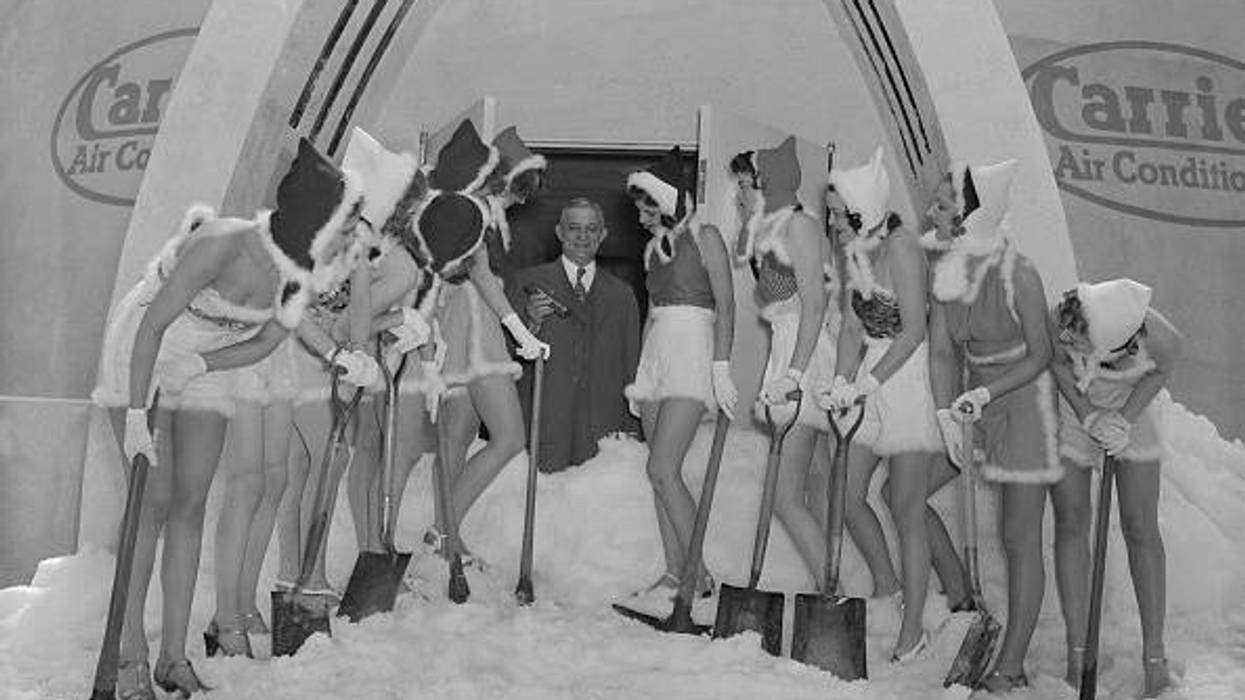
"He and some of his other colleagues from Buffalo Forge take their own money, separate, they go start their own company that's based in New Jersey, and they begin focusing now solely on, at that point, industrial air conditioning," Kohler detailed. "It becomes air handling for things like movie theaters, and that was a huge, huge innovation. Movie theaters often would shutter during the summers, they just were too hot. So Carrier is able to create this large scale air conditioning system for theaters, and then businesses, eventually for the Capitol in D.C., the White House. But they've got elements all over the Northeast from New Jersey scattered around.
Eventually in the 1930s, Carrier decided to centralize his company in Syracuse, rather than make his return to Western New York and Buffalo.
"There had been an automobile manufacturer, H.H. Franklin Car Company in Syracuse, and they had gone under, much like, unfortunately, Pierce Arrow here in Buffalo. It was kind of that Depression era when a lot of the early car companies had begun to struggle and to fade, and so Syracuse has this huge industrial plant sitting empty. Carrier is looking to kind of bring all of the components of Carrier Corporation into one central location," Kohler explained. "Central Syracuse, at that point, in Central New York has the [Erie] Canal, it's got railroads, it's got the beginnings of road transportation. So that's why he winds up there and not back here in Buffalo, because it gave them a central hub, and there was this facility just sitting empty. And the city of Syracuse was willing to work with him financially."
Carrier continued his innovation in the air conditioning business until is death in 1950, shortly before his 74th birthday. And like many notable figures in Western New York who have since passed away, Carrier is buried, along with his wives, at Forest Lawn Cemetery.
"When we talk about local history, Forest Lawn is one of those underrated resources for us. Everybody's buried in Forest Lawn, but if you're doing Buffalo history, if you're doing Western New York history, there's a pretty good chance if whoever you're talking about or the story that you're telling isn't in Forest Lawn, that's the outlier," Kohler said.
So why does Kohler feel it's important to learn about this tidbit in local history?
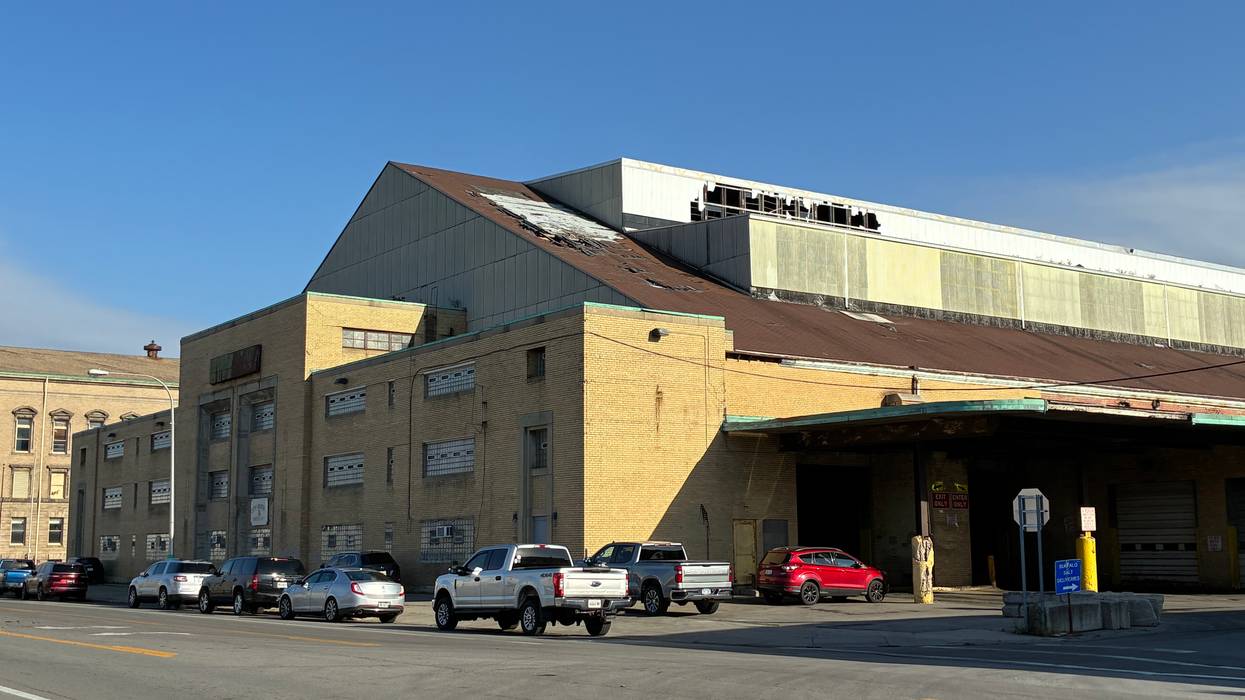
"Certainly [air conditioning] allows us a comfort in our lives, but when you look at what Carrier does for places like Florida, Texas, Arizona, other parts of the world, it's not just a United States story - clearly in our 250th year, it's an important story - but it's a story that changes the world," he said. "I know in the '40s or '50s, Carrier did work in Japan. I mean, it isn't just an us story, but it's a story that allows people to live comfortably in far hotter climates than we have. And it all began right here at the Buffalo Forge factory on Broadway.
"It's a story that starts here in Buffalo and spirals around the world, and makes parts of the world, literally, habitable because of the work of Willis Carrier."
While Buffalo Forge is no longer located on Broadway after being torn down in the early 2000s, there's an apartment complex called "The Forge" that stands in the location of the old factory today.