

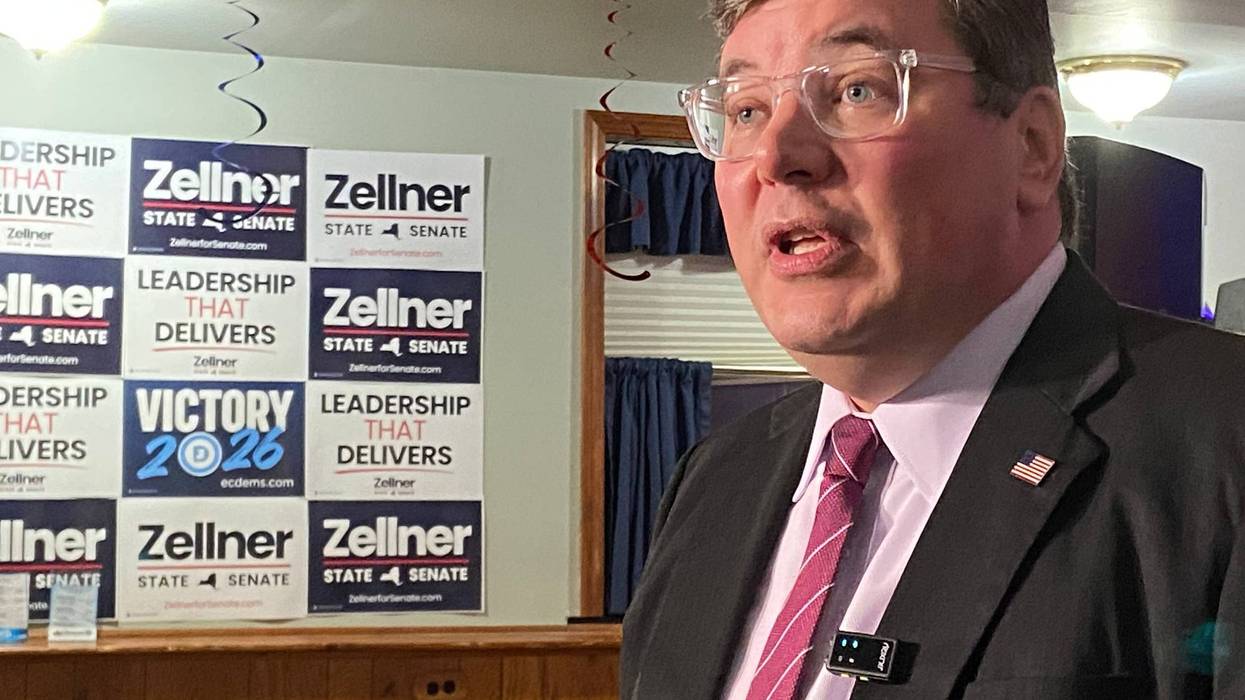

Buffalo, N.Y. (WBEN) - Despite already holding the 61st State Senate District seat in Albany, Jeremy Zellner ended up on the losing end of Tuesday's Democratic primary election to State Assemblyman Jon Rivera. The 61st district includes portions of the Town of Amherst and City of Buffalo, along with all of the City of Tonawanda, Towns of Tonawanda and Grand Island and the Villages of Kenmore and Williamsville.
Leading up to election night Tuesday, Zellner had received many public endorsements from names like New York Gov. Kathy Hochul and Erie County Executive Mark Poloncarz. Despite that, Rivera managed to garner 10,076 votes (54.84%) to Zellner's 8,270 votes or (45.01%) mainly with the endorsements of several local labor unions.
What kind of weight do endorsements carry for candidates running for elected office? Jacob Neiheisel, assistant professor of political science at the University at Buffalo says normally, endorsements are not thought of as having an outsized effect.
"I think it is something that can matter at the margins, and it's not always something that's positive," said Neiheisel in an interview with WBEN. "We've seen instances where an endorsement comes along and a candidate, if not being pressured to outright disavow the endorsement, has to deal with it in a somewhat negative light. So it's not pure political profit, but it's something that, under the right circumstances, can matter."
There are a couple of ways endorsements can positively effect a candidate in a given election.
"One of those ways would be when that endorsement comes with it, the promise of some kind of organizational or institutional help, which we typically think of this as kind of a union endorsement. In addition to saying that a certain union is behind a candidate, they oftentimes bring resources to bear behind that candidate as well. So it's not just the mere act of saying, 'We support this person,' it's also putting something behind that," Neiheisel explained.
Another way endorsements can have a positive impact for a candidate is the fact it's a news cycle item.
"It brings attention to the candidate, and under certain circumstances, if somebody's on the fence and they're wavering, if an endorsement comes from an unexpected place, that can be something that pushes them over the line to then support that candidate," Neiheisel added.
Neiheisel does feel it's possible that the endorsements from Hochul and Poloncarz, among others, may have hurt Zellner in his campaign.
"It's unclear to me whether that's, in fact, the case, but I think what is probably more what happened is those endorsements didn't, and probably couldn't bring with it a lot of organizational capacity," he explained. "You're not going to bring to bear the resources of the Democratic Party in a primary, and that's just not something that's typically done. So I think by having those kinds of endorsements, it didn't bring the same kind of weight that, say, having the unions on your side might have done."
He adds it's circumstances like this one with the endorsement of multiple local labor unions and the promise of actual resources that helped Rivera earn the majority of the votes in the end.