


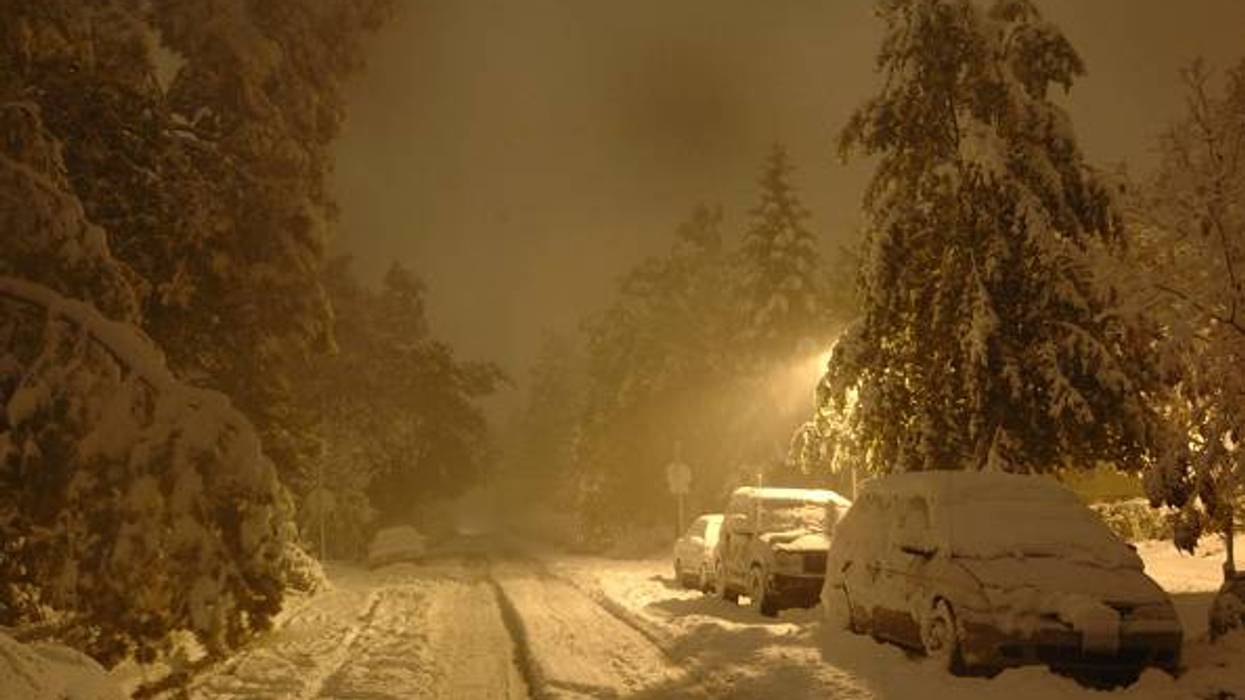

Buffalo, N.Y. (WBEN) - It was 20 years ago when a sudden and localized lake effect snowstorm struck the City of Buffalo and the surrounding communities, dumping 2 feet of heavy, wet snow in some of the hardest-hit areas.
While the snow was here and gone in a matter of days, the damage left in its wake was extensive with thousands of trees left downed and destroyed, and thousands locally left without power. In fact, 265,000 National Grid customers found themselves without power., while storm restoration lasted around 11 days.
The 2006 "October Surprise" ended up being still, to this day, the No. 3 storm, based on customer count, in National Grid New York history in the last 25 years.
"The storm hit on Oct. 12, and everybody came to work like it was a normal day. I came to work thinking I was going to leave early and take my kids to hockey, and I tried to do that, but quickly got turned around to come back in," said Glen Aichinger, vice president of emergency services with National Grid. "I did not go home until Sunday around 2 in the morning, after getting everything in place, logistics-wise, from the staging sites, the hotels, the meals, securing all the crews, and basically getting ready for what we saw ahead of us, as a very long journey, which was 11 days."
Aichinger says the "October Surprise" was one of the beginning storms that initiated the way National Grid has changed the way the utility company approach storms, especially in Western New York.
"That storm, we did so many things for the first time," Aichinger said during an event at the utility's garage on Kensington Avenue on Monday. "We had the staging site over at the Eastern Hills Mall, where we parked nearly 2,000 vehicles. We did the banquet facility at one of the open anchor stores at the old Burlington Coat Factory, where we served 4,000 meals, every meal, so 12,000 meals a day. We had our mobile command centers parked out there. We had a materials area set up. We were doing fueling at night. We worked with the Niagara Frontier Transportation Authority [NFTA], where we were able to coordinate about 55 buses to take all of the linemen from the staging site to get them to the hotels efficiently, back to the staging site efficiently, and then out to work quickly the next day."
While National Grid did have some agreements in place with hotels for storm response in the region, it was nothing to the magnitude that the utility wound up with for this particular event. That led to Aichinger and others at National Grid to get creative with hotels.
"We had line crews and support resources in every hotel, basically from Rochester to Erie," Aichinger said. "And then came the weekend with the University at Buffalo Parent Weekend, the Buffalo Sabres were playing, and the Buffalo Bills were playing the Patriots. All of the hotels were basically occupied for two or three days in the middle of the storm, so we had to move all of our folks out of the hotels and find alternate housing. So we took gymnasiums for local schools, we moved into - I remember very clearly - the Darien Lake Lodge. We were able to work with the owners to open that lodge, to put crews in that space. We had people up at Niagara-on-the-Lake, banquet halls turned into sleeping arrangements. It was really quite an effort, and all this happened just to cover two or three nights of hotels so we could get back to normal after that weekend."
Another first for National Grid because of the "October Surprise" was the municipal engagement with the media and other local leaders in the region.
"They're called community leader conference calls, where we bring all the local community leaders, emergency management personnel, and key stakeholders in for daily updates, in terms of what we're doing," Aichinger noted. "We had the staging site where we were able to do press conferences live with the media. Our president was here in town and able to provide briefings. So many of the things that we did during that storm were things that we did for the first time, which are still part of the framework that we do today that are considered best practices, in terms of communication, setting expectations, and really working together with the community as we go through these storms."
This also led to the coordination and meetings with all first responders, emergency management directors, as well as leaders in New York State to help set up an appropriate response plan in the event of a major storm.
"We work continuously with the State of New York, Homeland Security, all of the different emergency management partners constantly throughout the year so we know how each other operates, how we plan for things," Aichinger said. "In fact, we're going to a DOT staging site drill later this month. It just has improved the ability for us to respond by doing things more out of muscle memory, and because we have been preparing over the year, as opposed to getting caught by surprise - the 'October Surprise' - and doing it from the start."
Not only did the storm 20 years ago generate a massive response from utility crews around the country, but it also generated a plan and strengthened communication for storm response several years later. That's attributed to the mutual assistance network National Grid is part of with the Edison Electric Institute.
"The way the mutual assistance process works is there's regional mutual assistance groups set up around the country. There's five of them - we're in the North Atlantic... there's the North Atlantic, the Southeast Electric Exchange, Great Lakes, Midwest, and Western. We all work together as a regional mutual assistance community, where if we need help and we can't get the crews that we need from the 46 operating companies in the North Atlantic, we can put out a request to the Great Lakes, to the Midwest, to the Southeast Electric Exchange through a comprehensive and very structured program to get our request out. And then that's where we can start to extend the reach of where we can pull crews from," Aichinger explained.
"We also have the contracts with over 150 contractors around the country and up into Canada, so our reach for contractors is all the way to, at least, Colorado and up into Canada. And then through the mutual assistance network, it's really anywhere in the country. And we have brought in crews - evidence of Superstorm Sandy - of just about, I think, 48 states, to support when we were managing the electric system down on Long Island. So it goes pretty far, pretty deep, and pretty quick."
With the services even extending into Canada, Aichinger says that process at the border has to be expedited to generate a quicker response for customers.
"For some of the storms that we've had recently, we're always pulling crews from probably within a 500-to-700-mile radius of Western New York, and we have a great partnership with a lot of the big Canadian companies. And we have a process that we've worked out with the State of New York, with Border Protection Services, and the Public Service Commission to orchestrate movement of crews from Canada to the U.S. very easily. And we pull tons of resources in from Canada to support a lot of our storms here, largely because we're so close to the border. It works out very well," he said.