


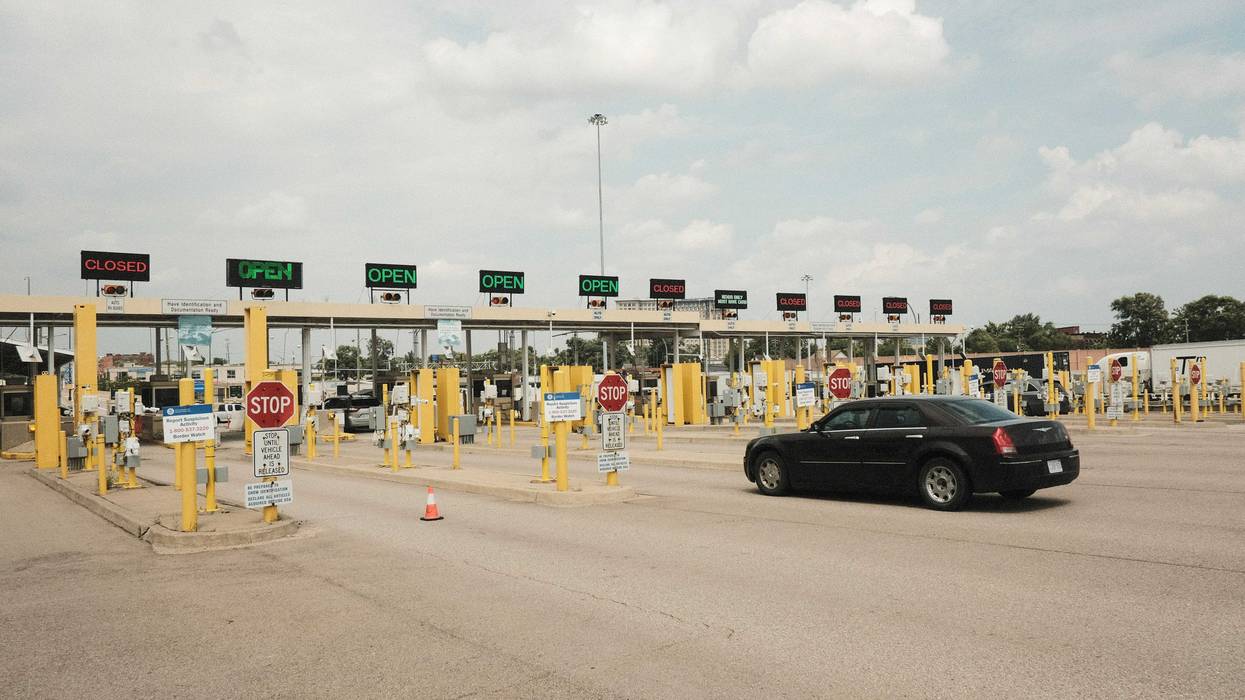

After a few weeks of loosened border measures for Canadian travelers entering the United States, the Canadian government has announced it is re-tightening its measures to prepare for the Omicron variant of COVID-19.
With this change, it will, once again, require all travelers returning to Canada who spend less than 72 hours outside of the country to produce a negative PCR COVID-19 test result.
This measure will officially take shape once again for returning travelers as of Tuesday.
For local groups in Western New York that had been fighting for the Canadian government to loosen its restrictions for travelers entering the United States, the recent news of the re-enforced measures is discouraging.
"I think that we were on a right track, but at the same time, I'm not surprised because of how long it took for the Canadian government to get to the place where we were in November with people being able to come back-and-forth without having to have the PCR test. I'm disappointed, but not surprised," said President and CEO of Visit Buffalo Niagara, Patrick Kaler.
"It's disappointing, because I know this has been such a fluid time. It's unfortunate," echoed President and CEO of Destination Niagara USA, John Percy. "We were hoping this whole holiday season and holiday shopping our Canadian market would be able to take advantage of this full month and get back to some normalcy, as far as being some of our best shoppers. They flood our malls and really help the Western New York economy. So it is disappointing, because that's going to hold them back if there are restrictions in place."
With Canadian travelers now having to require a negative PCR test to re-enter Canada once again, some people would have to shell out up to $250 per-person just for the PCR test. When you add that to the potential costs of a weekend of traveling in Western New York, it starts to add up for those coming across the border.
"It's another expense, especially during the holidays, when we were hoping for many more Canadians to be making those trips across the border to do some holiday shopping, maybe go to a show, go to a cultural institution in Erie County," Kaler said. "It's just going to be another factor that Canadians will have to think about when they cross the border and how much time they spend in Erie County."
So just how much of an economic impact will the loss of many Canadian travelers have in the Western New York region?
For Erie County alone, Kaler says it will skew things quite a bit.
"That's what we were looking at over the previous 20 months prior to November when they were able to start coming back more freely," Kaler said. "We estimated that it probably cost Erie County [a loss of just under $1 billion in economic impact from Canadian visitation]."
Meanwhile, the loss in projected money brought in for the local economy of Niagara County will also be substantial with border measures coming back for Canadian travelers.
"What I have is a collective number from 2019, pre-COVID, where I have one little piece of information," Percy explained. "I get international data on [spending] of international visitors on Visa credit cards, Visa credit cards only. It's only one form of payment, but on that one form of payment, Canadians spent $59 million on goods and services in Niagara County alone. That's a large of number, and that's just one form of payment. When you add in other forms of payment and cash and other things, it could be well-over $100 million. That's significant to a small county like Niagara County. Retail is their No. 1 activity, and so when we have that, it's a huge loss.
"It's just difficult on this community alone. Western New York in its entirety, for sure, but Niagara County even more so, because they really, truly impact that local economy."
However, given the ever-changing circumstances with border measures, restrictions, etc., Percy says it is hard to forecast just how much these decisions will affect the amount of Canadian dollars coming into the local region in 2022.
"I said this earlier to someone else that I think our crystal ball going in 2021 was certainly cloudy. We thought it would be clearer by now, but it keeps getting a little cloudier by the day," he said. "It's hard to forecast any time when things aren't moving, and now we have a new variant and things continue to evolve. We have to keep it fluid, and try to keep our projections and everything very conservative. If things turn around, then it's a plus for everyone."
So what's the hope going forward to try and get the Canadian government to, once again, loosen border measures and get people back and contributing to the Western New York economy? Kaler believes it's going to be up to the public to do everything in its power to mitigate the upward trend of COVID-19 cases.
"I think it's really going to be up to our public to get vaccinated, get boosted, wear a mask," Kaler said. "That's not something that the government officials are going to change their mind on. We have the power to do that. I just feel that it all comes down to the overall health and safety of our visitors, our residents and our work force. So that's what we need to focus on - getting those numbers down so there is a comfort level [for] the Canadian government to have their residents come back-and-forth over the Canadian border."
Many had thought and hoped that we'd be past the many hurdles that have come with COVID-19 for nearly two years now. Percy is hopeful that eventually those restrictions will become less and less worrisome over time, and making travel easier for everyone will become more of a focus.
"Our hope is not just with Canadians, but with all travelers, that we don't want restrictions," Percy said. "I know they're necessary, at times, and governments make these decisions and sometimes impacts our tourism economy at many levels. So our hope in the tourism world and the hospitality world is we can get by those, and find the proper ways to make sure that people are kept safe. That's first-and-foremost, you want people to be kept safe, but you also want people to be able to travel, people to experience things, to shop, to eat, to dine - to do all the many wonderful things of travel."


