



Buffalo, N.Y. (WBEN) - With the winter months bringing the cold weather and snowy conditions, people in Western New York have been active enjoying a number of outdoor activities. This includes activities out on the waters of the region, such as ice fishing, ice hockey and much more.
Another popular activity this time of year in Western New York is snowmobiling, with many hitting the local trails to get in a fun ride through the woods.
However, with temperatures starting to warm up just a bit in the Northeast, this can create some hazardous conditions on the ice, which includes Lake Erie and the other Great Lakes.
It was just on Sunday when the United States Coast Guard was forced to rescue a number of people on Lake Erie after they were riding snowmobiles and ATVs and ended up getting stranded on an ice floe. All together, 18 people were brought back to shore safely off the coast of Catawba Island, Ohio.
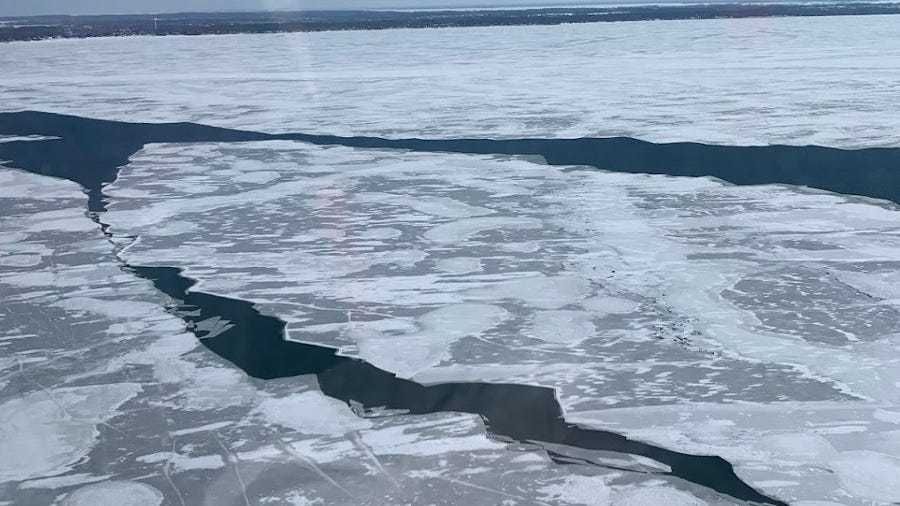
As temperatures are expected to fluctuate over the course of the next week-and-a-half, people are being advised to take extra caution before heading out on the ice in any instance.
"I think the main message is just to always remember that no ice is 100% safe," said chief petty officer of the U.S. Coast Guard, John Masson. "Ice is something we come back to a lot. For people who are going to go out and do recreation on the ice, whatever kind it may be, they should always be aware of changing conditions, because they change rapidly on the Great Lakes. A wind shift can cause the ice you're on to break away and drift off, and that, obviously, is a problem."
"The biggest concern we have as it starts to warm up is ice safety," said Chief Scott Patronik of the Erie County Sheriff's Office. "Particularly with ice fishing, what we'd like to see is to make sure you know the thickness of the ice, if you're going out on the ice for any reason at all. We'd like it, at least, four inches thick to support somebody's body weight, and if there's a group of people, we want it to be even thicker than that. Five, six inches to support a snowmobile, ATV, a few people. We recommend you check that, and that really is for clear, solid ice.
"If we get the thaw, re-freeze, thaw, re-freeze cycles, we even want it thicker than that, because the ice is going to be weaker. If you're in an area that has any sort of flow underneath it, you want the ice to be thicker. You could be walking on thick ice, there could be an area where there's discharge, either manmade from a pipe or there's a creek being discharged under the ice. That significantly can be weak or ice. So you have to know the area that you're actually going to be in with the ice, and to be careful."
Anyone going out on the ice at this time of year needs to be aware of the conditions potentially changing in a matter of feet while on the ice. Officials warn fishermen, snowmobilers and others that may head out on the ice that conditions of the ice can be completely different depending on where you go, or how far out you venture. Certain conditions will make it tougher to gauge whether it is safe to be on the ice or not.
When it comes to the instance of people taking their snowmobiles or ATVs onto the ice, it is legal to drive on the lake, but many would not recommend heading out given the unknown circumstances with the ice conditions on a day-by-day basis. According to the Erie County Sheriff's Office, the only actual regulation people must follow with their snowmobile or ATV on the ice is if you're within 100 feet of a person or fishing shanty, a driver must be going just fast enough to keep forward motion going.
However, if a fisherman or snowmobiler does end up stranded and in need of further rescue from the Erie County Sheriffs or the U.S. Coast Guard, they are reminded that there's no guarantee they can be rescued with any of their equipment they can bring along, as well.
"If we do get someone that's stranded on the ice, typically, we're doing that as an air operation," said Chief Patronik. "We're typically going to hoist them off the ice that they're stranded on, and bring them back to safety. That typically, a lot of times, does that include their gear or any ancillary equipment, but we'd like it not to get that far. Turn around early enough that you're not in the dark coming back, and again, talk to people, don't go where you're the furthest person out, you're isolated, you don't have a cell phone signal. Have a plan in place, let people know where you are, where you're going, and play it smart."
So how dangerous is a rescue mission for anyone that finds themselves stranded, and in need of assistance out on an ice floe?
"It's inherently dangerous," Masson said from a Coast Guard perspective. "We have the advantage of proper equipment, proper clothing, dry suits that'll keep us warm if we go in the water. A lot of people who are on the ice don't have that advantage, so it's inherently dangerous to be on the ice. It's more dangerous if you don't have all the proper equipment."
"We have specialized equipment that helps us with these kinds of rescues. We have airboats that can travel on the ice and in the water, and, in this case, we had a helicopter, which was able to hoist people safely from the ice. There's inherent risks in operations, of course, but we mitigate those risks very carefully."
"Especially if it's a slab of ice that's broken away, anytime you're doing a rescue over any type of open water, thin ice, there's a danger to the rescuers as well," Chief Patronik added from the Sheriffs' perspective. "It's not something that if the ice can't support a person that we're going to be landing helicopter on. So it's going to be a hoist operation, which has its own inherent risks. So anytime you're doing any type of high angle rescue or rescue from a piece of ice out on the lake, there's obviously a lot of risk to the rescuers, as well as to the individual that's being rescued."
Another important aspect for the Sheriffs when determining how safe the ice is at this time of year is simply by talking to people heading out on the ice.
"Typically when we see busier days with ice fishermen, we are doing patrols in the evening as the sun sets to make sure that you know no pieces of ice have broken away with someone on them and they're adrift. But we also have to take responsibility for knowing the sport that we're involved in and the safety of the ice. It's talking to other ice fishermen, other people that are out on the ice about the thickness, any cracks that they've seen, any issues that they've had out there, as well." Patronik said. "But it's like any sport you're involved in - play it safe, have safety gear with you. If you go too far out, if you grab some sort of snowmobile, UTV and you go too far out, you might not have cell signal. That's something you're going to need to know. If the time comes in an emergency and then you realize you don't have a cell signal, obviously it's a problem. So know the limitations of your gear, your equipment, yourself and be prepared for an emergency."
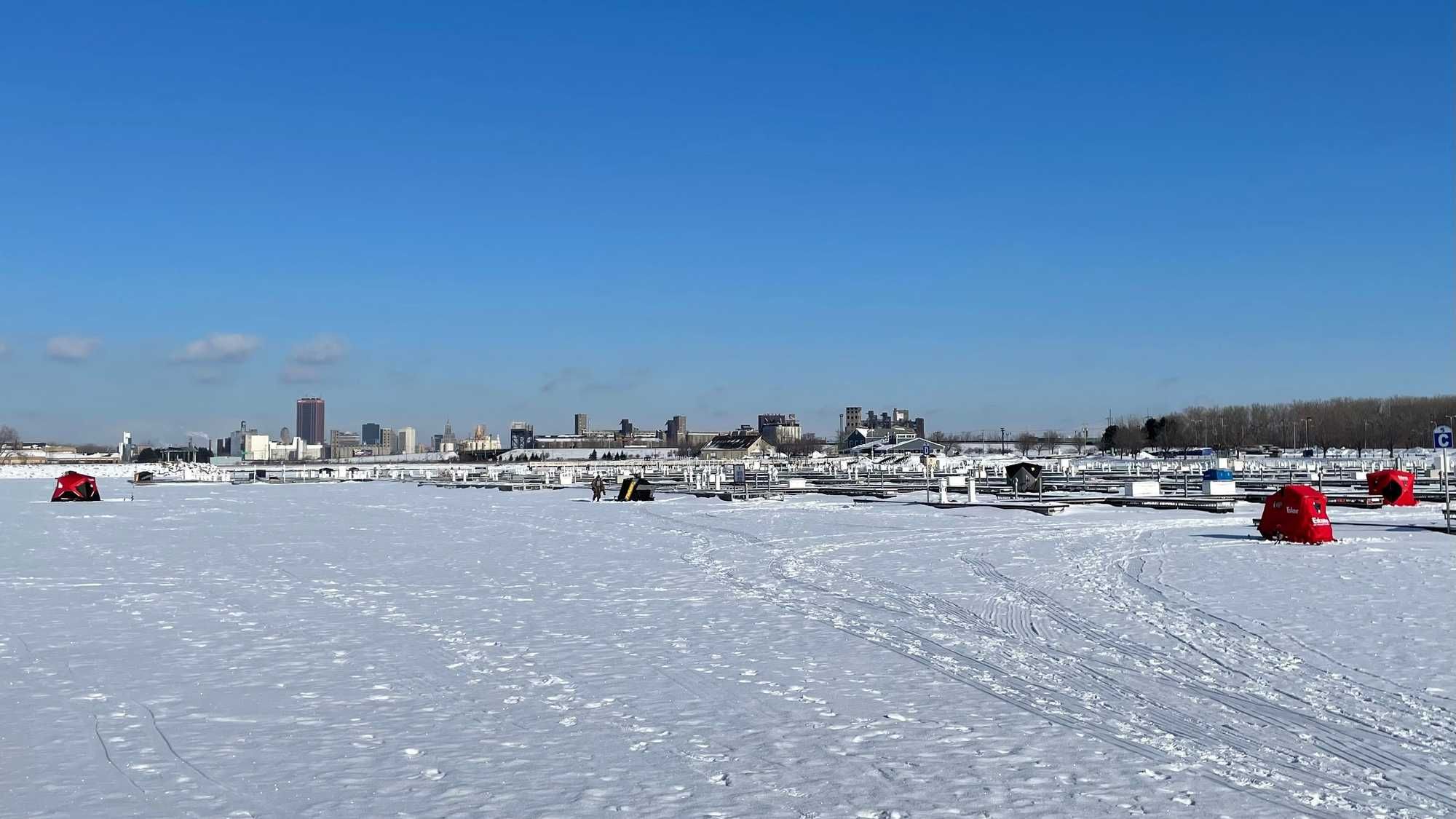
What else may you need before heading out on the ice, no matter how far out you happen to venture?
"We stress carrying a reliable form of communication, so that you can call for help. Typically, the best way is a VHF Marine radio," Masson said. "We urge people to wear clothing that will protect them not from the air temperature, but from the water temperature. And just to treat ice; I think our natural tendency is to treat it like it's land, like it's an extension of the land, but it's not. It's the water, it's just in a hard form right now. That's why we recommend people wear life jackets, they wear protective clothing, they carry ice picks or even screwdrivers that can help them to self-rescue, if they do go through."
While there's not really any central clearinghouse for people to look for conditions of the ice before heading out for the day, the U.S. Coast Guard advises people to follow the National Weather Service for specific updates available via Twitter. Any message they send out on social media regarding conditions on the ice will often get retweeted by the Coast Guard.
Otherwise, the Coast Guard's message is simple this time of year:
"Use the information that's available, and just be cautious and be smart about recreational choices on the Great Lakes. And that's true all year long," Masson said.