


Buffalo, N.Y. (WBEN) - According to AAA's Gas Prices map, the Buffalo-Niagara Falls region was averaging $3.35 for a gallon of gas on Wednesday. Just overnight, the average price of gas in the region is already at $3.38 per-gallon.
In Erie County, Thursday's average for a gallon of gas is listed at $3.40, according to AAA. That's compared to the national average for a gallon of regular gas, which is $3.49.
However, a large number of WBEN listeners have stated drastic price hikes in gas just overnight, with some gas stations jumping as much as 30 cents compared to Wednesday. Just outside the WBEN studios in Amherst, one gas station jumped as high as 15 cents per-gallon from Wednesday, while another gas station just across the street did not adjust their gas prices at all.
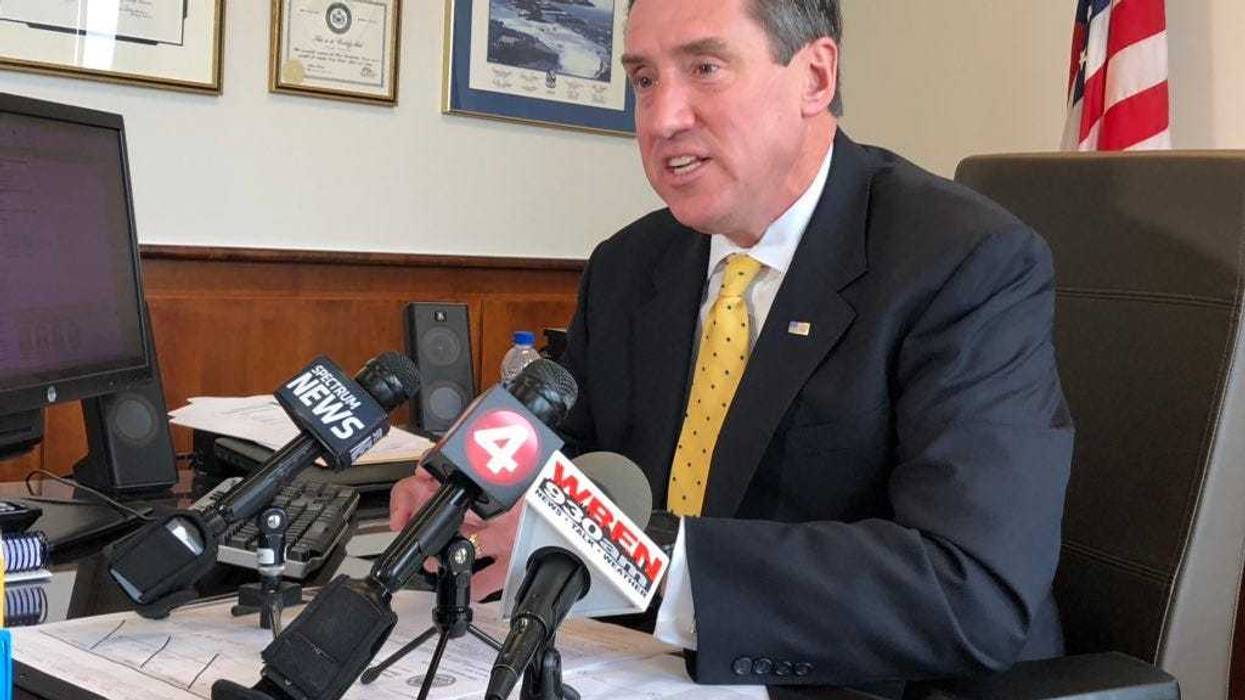
Communications specialist with AAA, Mark Gruba has also noticed a notable spike in gas prices for a large number of stations in different areas of Western New York.
"I didn't get a chance to look at every zip code in Erie County, but I can tell you I did pinpoint a couple, and there's no question there's something to this," said Gruba on Thursday. "Specifically, 14210 and 14220 (South Buffalo), gas prices in those zip codes were consistently in the upper $3.20s, low-to-mid $3.30s. [Thursday] morning, in those same zip codes, prices ranging, again, low $3.30s all the way up to $3.70. So there's no question what your listeners are saying is true. Some stations have really bumped their prices up in the last 24 hours."
Gruba says there are a few reasons that factor into the spike in gas prices, especially at the national level that may be trickling into the Western New York region.
"In this particular situation, demand is on the rise. Demand for gas is on the rise," Gruba said. "We've seen it in recent weeks, and we're seeing it ahead of Easter break travel, this weekend into next week. The other thing that's factoring in here, and these are kind of macro issues, is the supply in our region is a little bit tighter than it is, say, normally, especially here in the Northeast. There's a massive oil refinery in New Jersey (Baywater Refinery) that is offline right now for maintenance, and that is affecting supply throughout the region, not just the Buffalo area. The other thing, sort of the third leg of this stool, is oil prices are starting to creep back up again. In the last couple of weeks, we saw prices around $65 a barrel. Now they're in the low-to-mid $70s, so they're creeping up. That explains sort of the average scenario, how the average price is moving up."
"This comes as oil prices over the last 10 days have jumped $8 a barrel," added energy analysis expert with GasBuddy, Patrick De Haan. "A lot of the jump in oil really is traced back to an improving situation when it comes to the banking sector. We've seen markets sell off on concerns that the financial fallout from Sillicon Valley Bank and Signature Bank would potentially undermine the economy. But we have seen the Federal Reserve stepping in, central banks globally, even countries like Switzerland stepping in to shore up banking across the globe. That has caused oil prices to start jumping on optimism that there won't be financial fallout from the banking situation. That has pushed oil up on the hopes that instead of a recession related to the banking sector that we can avoid it, and demand is going up for gasoline. All of that is really pushing gas prices up."
So how may that factor in from one gas station on one street and another gas station four blocks away being 30 cents more expensive for a gallon of gas? Gruba says there's no easy answer for that one.
"I would tell you that retail gas prices operate the same way any other business operates. They've got the right to set their own price based on supply and demand," he said. "Some people will see a high price at $3.60 or $3.70, scoff, keep driving around until they find a much lower price. Other people, maybe they're on empty, they don't have a choice. They pull in, they pay that price and they get on with their day. Obviously, that's gonna have a direct impact on demand, and where those stations are able to set their price day-to-day."
At the national level, there was a three-cent bump from Wednesday in gas prices, while there's been a five-cent bump from a week ago, and 12 cents from a month ago. As Gruba points out, Western New York has been a bit different from the national average, but it is expected for gas prices to continue to rise.
"Prices are up two cents from a week ago, no change in the price from a month ago, and about $1 difference from a year ago at this time," Gruba said. "I think it's reasonable, given what we're seeing in terms of demand and the bump now in oil prices again, that we will continue to see incremental rises in the gas price, certainly through the Easter holiday. Beyond that, we'll just have to wait and see."
As for De Haan, he can seen gas prices continue to rise steadily through Memorial Day, but hopes prices at the pump do not exceed more than $4 per-gallon.
"I'm hopeful that if everything at refineries goes well, and as the economy continues to kind of be in this holding pattern, we may be able to avoid the dreaded $4 a gallon mark for the price of average gasoline. But all it would take is one or two refinery outages that is unexpected to push us up to those $4 levels," De Haan said. "But like I said, I do not believe we're going to head back to the territory we saw last year when gas prices nearly hit $5 in Buffalo. I think we should remain well below the record level."
A fourth factor that could be factoring into the rise in gas prices nationally and in Western New York is the switch over from the winter blend of gasoline now to the summer blend.
There's no question there's something to it. It's simply more expensive to refine that summer blend," Gruba said. "Usually, you're looking at like a 10-to-20-cent bump in the price for a gallon of gasoline from winter to summer blend. That changeover has already begun. In some parts of the country, it's coming to our area of the world now. So there's no question that that's being baked into what we're seeing over the last four weeks. And again, I think it's one more factor why you can anticipate prices going up incrementally, on average, in the weeks to come."