


(WBEN) - On a day that was cause for celebration turned into a day of tragedy for the people of Kansas City, Missouri.
Shortly after the Super Bowl champion Kansas City Chiefs addressed members of "Chiefs Kingdom" at their Super Bowl parade and rally outside of Union Station, gunfire was heard amongst the music and the large crowd gathered in the area.
In a matter of moments, 22 people were hit by gunfire, including eight children, with one of those victims - a Radio DJ with KKFI - being killed just outside of the historic train station in the heart of Downtown Kansas City.
Three people were apprehended by police, and all taken into custody for questioning.
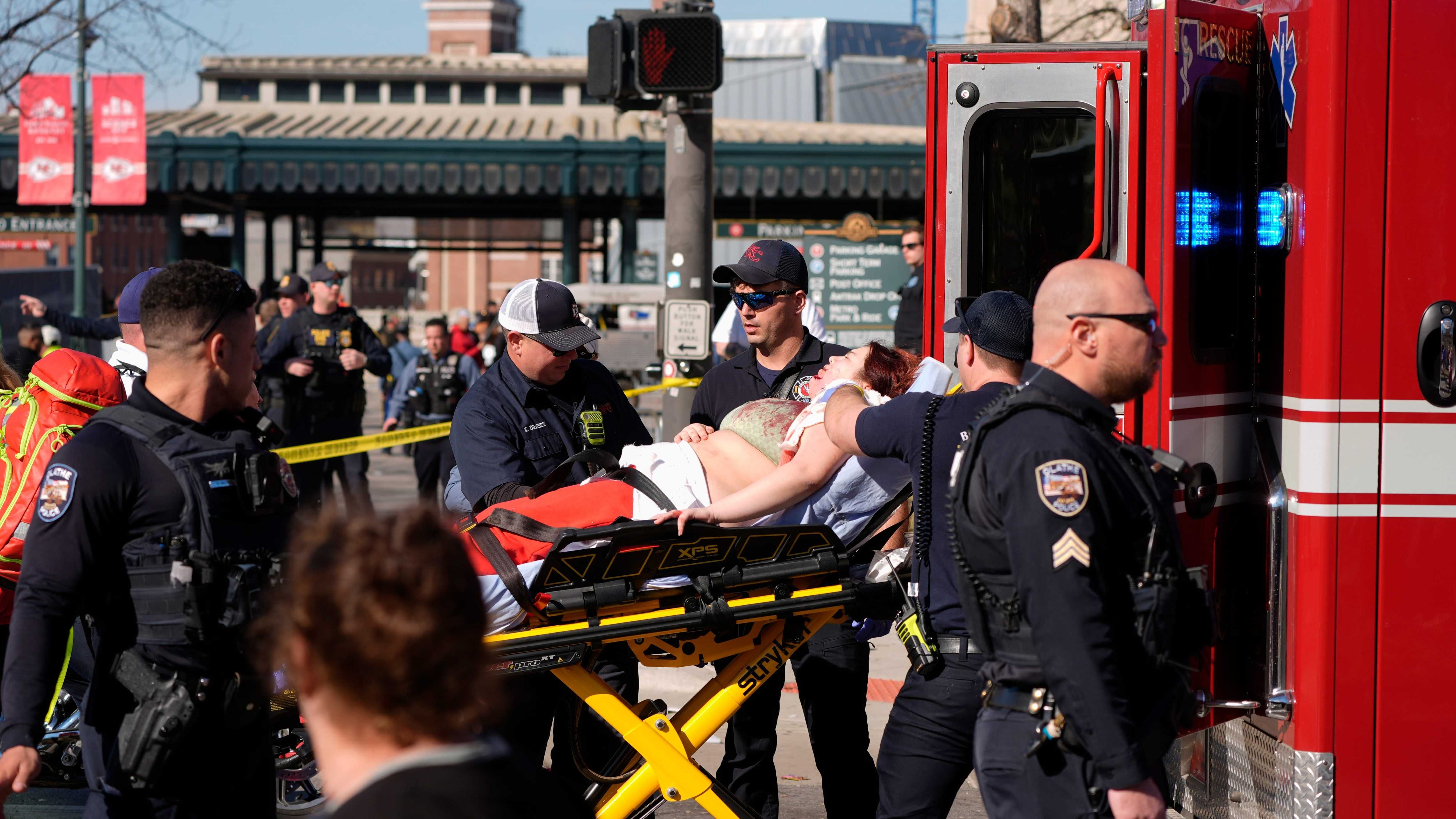
Upon hearing of the shooting that took place Wednesday in Kansas City, local security and law enforcement experts were disgusted, but sadly not surprised by what transpired.
"It's the nightmare that law enforcement hopes never happens when you have these types of events in your city," said former Buffalo Police Cpt. Jeff Rinaldo, now with Vista Security Group. "You have a large crowd of people, it's in an open, uncontrolled space, and unfortunately, somebody - or somebodies - produces a handgun, and this is the result."
Dr. Steven MacMartin, director for the cybersecurity program at Hilbert College, says incidents like this are occurring more-and-more with large crowd gatherings.
While what transpired was not surprising for Dr. MacMartin, he was also not surprised by how quickly the shooters were brought under control.
"Events like this are so well-planned and so well-coordinated by law enforcement, there's such a large presence - I think somebody said, somewhere in the area of 600-800 law enforcement officers, and that's uniformed officers. Remember, there's lots of non-uniform personnel in those crowds. So I wasn't surprised that it was contained as quickly as it was," said MacMartin in an interview with WBEN.
Both Rinaldo and MacMartin understand the type of planning from law enforcement that goes into ensuring the safety of people attending such large gatherings like a Super Bowl parade. Most of these events get planned months, and even a full year ahead of the possibility it happens.
"Whenever you're going to have one of these events, you have a large security meeting with the people that are planning it - generally, the security company or companies that are involved, the law enforcement agencies," Rinaldo explained during an appearance on "Bauerle" on Wednesday. "Depending on the size of the crowd, a police department will determine if they need to bring in mutual aid, which consists of asking your state police, your sheriffs, your adjoining jurisdictions to assist. And then you come up with an operations plan - establish a command post, determine where you're going to have your officers stationed, assign them posts and call numbers so that as they're needed, you know where they are when they're calling out.
"You're basically putting officers on the ground, and they can only see what's right immediately in front of them. And then you have what's called an Overwatch, which is officers on elevated position - generally on rooftops or buildings - or utilizing Skywatch, those elevated observation platforms, and they have the bird's eye view. So the goal is they can see something brewing, or if something, God forbid, does happen, they can direct the officers on the ground to that area to respond quickly."
Then the most important component of security at large events like a Super Bowl parade will be intelligence, whether or not there's any indication that something will occur.
However, it has been reported that Wednesday's shooting was more of a criminal incident that was off the cuff, rather than a pre-planned attack by the gunmen.
"Those things are accounted for, they're planned for, they're anticipated in the planning for an event like this, and law enforcement is ready for it. But the the real preparation for an event like this is the intelligence and the preparation, prior to setting out the actual day of the event," Dr. MacMartin explained.
But no matter how many officers or personnel that may be set in place for a specific event, the full security effect is never always perfect.
"Anytime you're having these parades or open-air events, you cannot conduct screening, you can't really do bag checks, you're not using weapons detectors. You're really relying on a heavy police presence to deter any type of criminal activity. But unfortunately, it doesn't appear as if it worked today," Rinaldo said.
"You're planning always in these events for a mass shooter-type situation, somebody that's going to come into this space carrying a rifle, heavily armed in attempt to cause as much damage as possible. But then you have this variable as well, where a dispute breaks out, somebody pulls a gun, and unfortunately, innocent people are struck and killed."
"There's no way these things can be stopped, and you saw it here today. All the planning, all the preparation, all of the uniformed and uninformed, plainclothes policemen in the world can't stop an event like this. But the preparation can, in effect, reduce and mitigate what can happen due to an event like this," echoed Dr. MacMartin.
So what can be learned from an incident like this going forward? Both Rinaldo and MacMartin feel some of it has already been learned, while some of it will be learned after further review.
"I think law enforcement, for quite some time now, has been aware of the possibility of things like this happening at these events," Rinaldo said. "In my time with the police department, the amount of planning that we would do anytime we were having a parade or Fourth of July, or any other large scale public event, the planning was massive. The amount of resources that the department has to expend to properly protect these events is massive, it's expensive. And really, at the end of the day, no matter the best job the police can do to try to protect us, things like this can happen. Today is the sad reality of what every cop's nightmare is when it comes to these large scale public events."
"Law enforcement is always like an elastic band. You're going to look at the after report, the after investigation of this, and say, 'This maybe could have tightened up. Maybe we could have had a magnetometer at this place. Maybe we could have created smaller number of entry points, and funneled people down.' In that case, though, [it] creates additional problems, so then you have to look at the additional problems it creates," Dr. MacMartin added. "Can things be improved? Possibly, but there'll never be 100% certainty. There will always be the possibility that something will happen. The best we can do is improve our response to mitigate the harm from these things that are going to happen."