



BUFFALO, N.Y. (WBEN) - The New York State Assembly's "marihuana regulation and taxation act" prohibits the ability for people to drive a car, snowmobile, or boat while high on marijuana.
READ THE MARIHUANA REGULATION AND TAXATION ACT HERE
However, anyone who is high while driving these vehicles would only face a violation rather than a misdemeanor. This means someone who is convicted of driving while high would be fined between $300 and $500, spend a maximum of 15 days in jail, or both. A second DWAI conviction within five years face a fine between $500 and $750 plus 30 days in jail.
It takes three convictions before it is finally considered a misdemeanor. A third offense within ten years includes a fine of up to $1,500 and six months in jail.
Lawmakers in Albany are on the cusp of passing bill which would legalize the adult use of recreational marijuana. The bill is expected to pass by the end of the month.
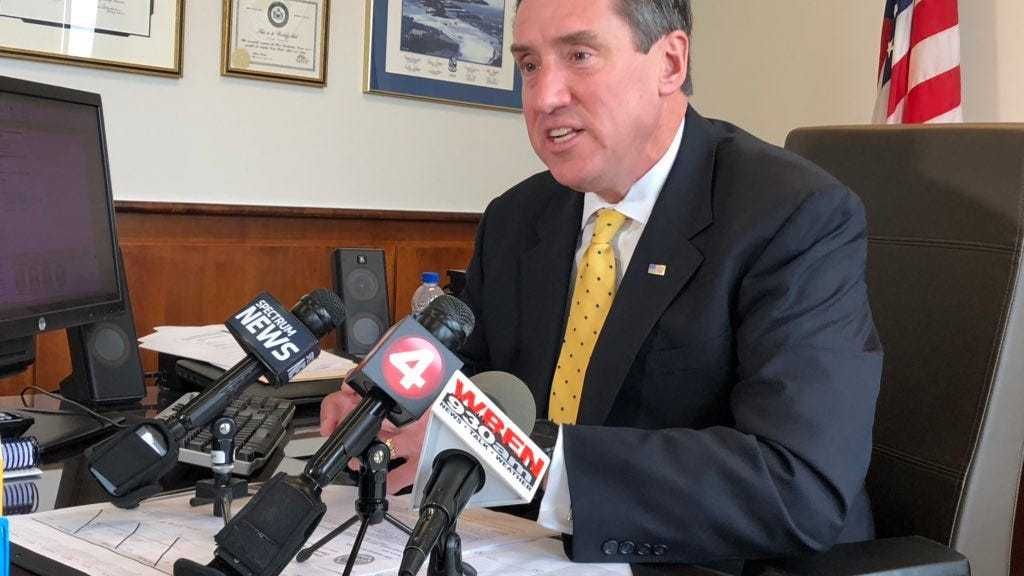
Erie County District Attorney John Flynn is pleading for lawmakers in Albany to keep marijuana as a misdemeanor for those who drive while high.
"You just need to add a provision in the statute that says that you can still prosecute marijuana or the effects of marijuana as a crime under the Vehicle and Traffic Law Section 1192," Flynn said. "That's all you've got to do. Just add one blurb at the bottom of the statute and you're covered. It's simple."
His criticism of the bill are that prosecutors will be unable to charge anyone for a marijuana-related driving offense if the drug is removed from the list of the state's controlled substances. This, even if someone injured or kills someone in a car because they were high on the drug.
When asked about impaired driving prior to Flynn's remarks, Assembly Majority Leader Crystal Peoples-Stokes, the sponsor of the bill, said lawmakers are still negotiating how to best handle impaired driving.
"We're still negotiating it with my colleagues in the senate," she said. "I need to let them have their positions and I'm going to keep working towards mine. I believe we're going to get through it at the end of the day."
She said she was "not interested" in changing impaired driving from a misdemeanor and encouraged us to look at the law. The law says it is a violation, not a misdemeanor.
Because the burden of proof lies in the hands of prosecutors, DWI defense attorney Mike Taheri of the Law Firm of Taheri and Todaro in Williamsville explained why this scenario will make it difficult for prosecutors.
"If they can't prove (DWAI), then they're going to lose their lawsuit and the defendant would not be convicted," Taheri said. "How does New York State want to proceed by statute? Are they going to give people a specific number that they have to prove - a number of nanograms - before they allow a prosecution? Or are they going to just make it a free-for-all?"
In states like Colorado, the threshold for drivers to be convicted of a marijuana DUI is 5 nanograms of delta-9-THC, the main psychoactive chemical in Cannabis. A first conviction ranges anywhere from a fine of up to $1,000 and a year in jail, license suspension, and community service.
Determining exactly how much THC is in one's system remains one of the trickiest elements to marijuana enforcement.
"You can never tell from the amount of marijuana in a person's system when they ingested it," Taheri said. "Marijuana tends to stay in the system from 2 to 30 days. That's a difficulty for the prosecution to prove. The lab report has to come out and show us the nanograms or have some measured amount of marijuana in the system. Again, that's up to the prosecution to get that lab report."
Prosecutors are largely reliant on "drug recognition experts", who are police officers trained to detect whether a person is high while driving.
"That is a burden for the prosecution," he said. "It is not easy to do. It can be a challenge for there to be a successful prosecution and it's not going to get easier with the new legislation."
Flynn acknowledged the challenges with relying on drug recognition efforts because very few officers locally are trained in detecting marijuana.
"We have suburban police departments in this county who have none," Flynn said. "That don't have any DREs qualified at all. We need funding to get these officers the training they need to qualify as DREs."
Taheri said there can be instances where two of those experts can reach a different conclusion on a person suspected of driving while high. He said sometimes a poor performance from a suspected high driver is the result of a nervousness or a physical disability.
"It's by no means exact," Taheri said. "It's an effort but often times there are a lot of land mines in those DRE guys that we can highlight to a judge or jury."
DWAI cases on marijuana only. are rare in Taheri's office. He said he sees two or three DWAI cases a year solely on marijuana use. Usually, the DWAI cases with marijuana are also accompanied by other drugs like cocaine and fentanyl.
Taheri anticipates Albany will modify their bill to allow prosecution of those who are high while driving, saying there won't be a "safe harbor for people to party and kill people."


