



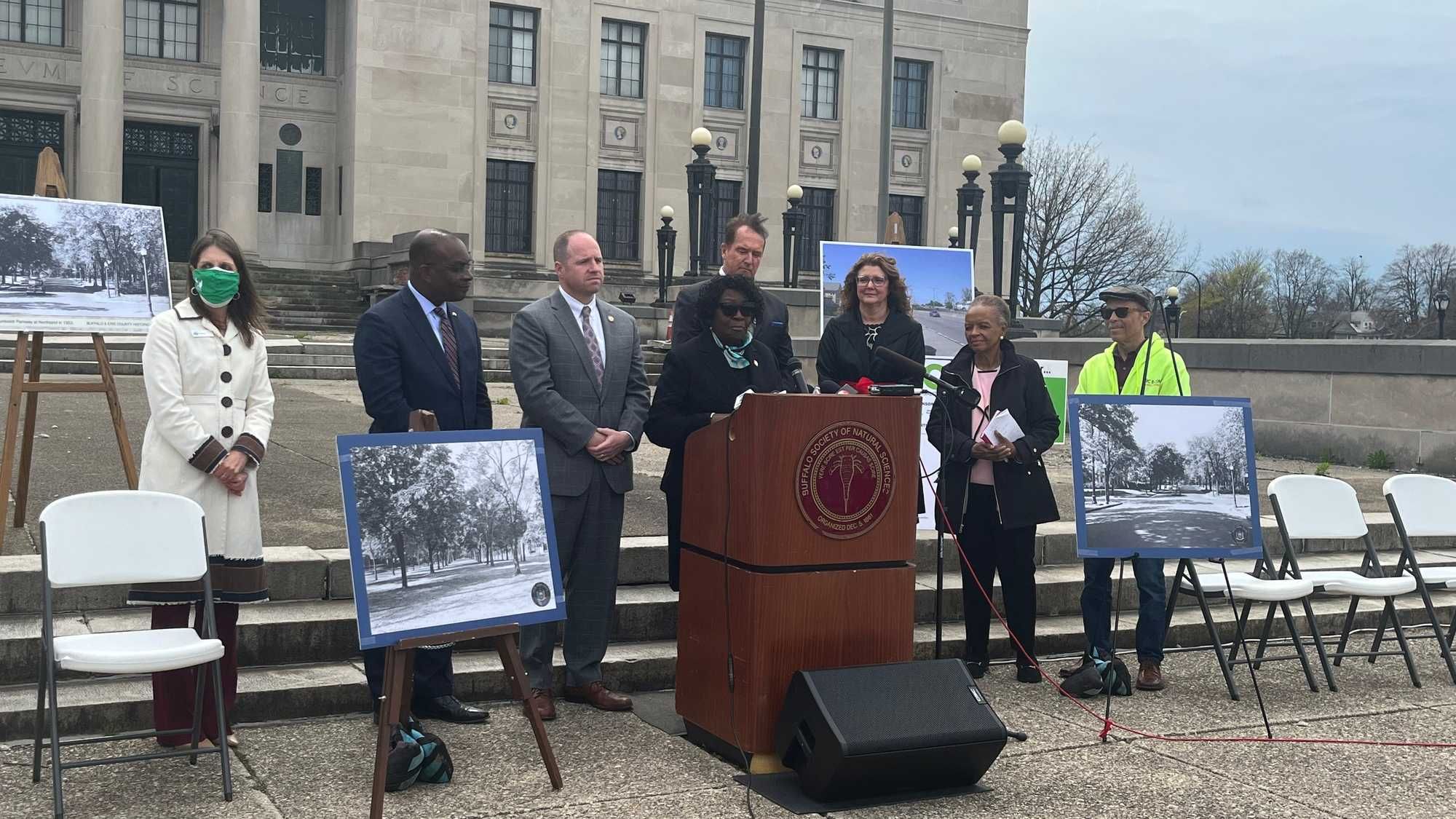
Buffalo, N.Y. (WBEN) - The New York State Department of Transportation held two public scoping sessions at the Buffalo Museum of Science Thursday in regards to the $1 billion dollar Kensington Expressway project, where they plan to cover the expressway from East Ferry to Best Street as well as providing room for ample greenspace.
This project includes a $30 million dollar environmental impact study which will commence in early 2024.
"On the engineering and environmental side, my team at the New York State Department of Transportation is doing everything we can to move this project along as quickly as possible," said New York State Department of Transportation Commissioner Marie Therese Dominguez. "We expect the environmental assessment to be completed in early 2024."
This means that the Department of Transportation could break ground on this project in late 2024. "The environmental process Governor Hochul has outlined for us with an environmental assessment will open the door for DOT (Department of Transportation) to break ground in late 2024," said Dominguez.
Once the shovels hit the ground, the DOT predict that the project itself will take three to four years to complete, "For the construction duration we're estimating at this stage three to four years of constructing the tunnel or whatever alternative is selected as the preferred alternative moving forward," said Nicolas Choubah, New York State Department of Transportation's Chief Engineer.
"Based on the traffic volume we envision the tunnel to build be built one barrel at a time, so to speak. So yes, we'll put them on one side. If we have to widen temporarily or use some of the shoulder that exists today, that will be the case but the intent is to minimize the construction impact on the traveling public during the construction," Choubah added.
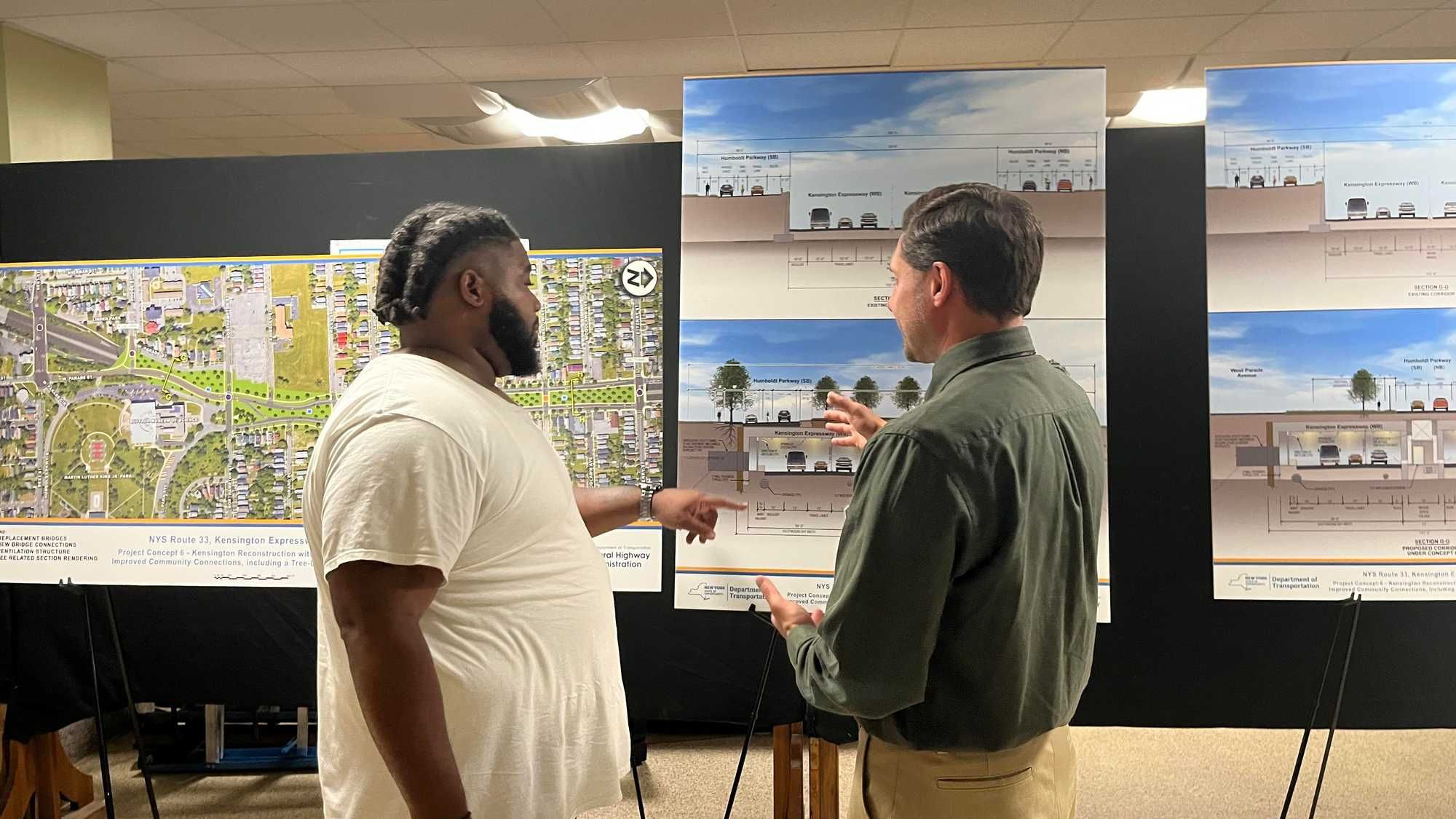
There are various alternatives or routes for the redesign as the DOT have observed and studied over the last couple years and the operation costs are projected to be around $675 million to $725 million.
"As we move forward, those concepts can get narrowed to what we call alternatives and as we go through the alternative, we develop all of the benefits, advantages and disadvantages of each alternative. We study each alternative on the environmental impact to the community to the surrounding area and we come up with a final decision, in coordination and full partnership with the Federal Highway Administration," said Choubah.
Community engagement and the hearing process will continue for thirty days.
Click here for reactions from New York's elected officials.
To hear more from NYSDOT, see the player below:


