

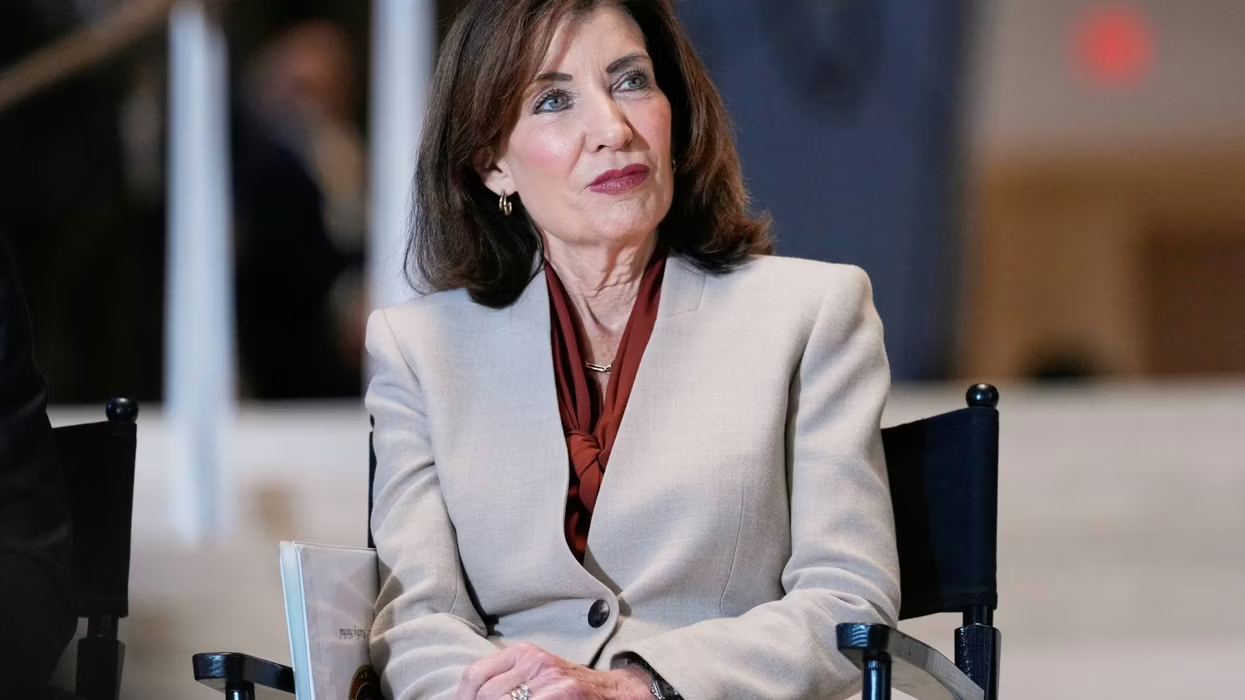

Buffalo, NY (WBEN) There is mixed reaction among state lawmakers to Governor Hochul's signing of an executive order putting a one year moratorium on new data centers in New York.
"I think it's curious that instead of signing the law that was passed in Albany, that she's done this as an executive order," says State Senator George Borrello.
"I think that's to give herself flexibility, quite frankly, because she could change this executive order at will if she would like to exempt certain projects, for example, for political donors or special interest groups. This is a campaign year, so to me, this is a political move on her part."
Borrello detects this is a backroom deal. "We all know that the trade unions are opposed to this moratorium. And if she knows if she signed the bill that was passed in Albany on the last day of session, that she would be handcuffed by that...This is just a red herring to appease those folks that are opposed to data centers, but giving her the flexibility to change this at a moment's notice when it serves her politically. I suspect that that's what she will do."
However, Borrello is not in favor of the bipartisan bill the Assembly and Senate passed because the law takes away local control. "I'm opposed to the the moratorium because this is just another example of of how Albany is taking away local control from local elected officials and local communities. They've done the same thing with the disastrous energy policies where we have our beautiful rural areas and farmland being covered with wind and solar because of Albany's ability to override local opposition, local zoning, and even statewide environmental regulations," contends Borrello.
Assemblymember Bill Conrad says the executive order mirrors most of the passed bill with some exceptions. "(One of them is) the size of the hyperscale data centers. Our bill had 20 megawatts or more being in the moratorium. Hers is 50 megawatts or more. There, the executive order puts a little bit more peace on the trigger for lifting the ban. Ours was a flat year moratorium. Hers ties into the state regulators finalized what they call a generic environmental impact statement or a GEIS. And then there's some long term things about what we called hard statutory energy targets. The governor's does not have those. We had some renewable components and some other things tied into it, and tax and financial subsidies. She's saying that you know she's going to work with us to repeal the sales tax exemptions for these projects. Ours essentially forces the utilities to create separate independent service classifications for them. So there's some stark differences," says Conrad. He says it's a step in the right direction, but the bill was stricter.
Conrad doesn't think Hochul is averse to signing the bill. "I think she wanted to get something in the works now because, as you well know, we are in a bit of an energy crunch here, and some of those concerns. But you know, this is all happening very quickly. I was just literally on a briefing to get the minor details, so I can kind of come back and speak to the public about what is the actual thing. But you know, for me, I haven't really kind of formulated an opinion yet, other than obviously I supported the bill and and was encouraged to see movement and momentum in both houses on it. Very much a concern about energy consumption, demand, and local prices for our consumers. That's that's my bottom line concern."
Borrello thinks there's a back door deal, Conrad thinks order mirrors what was in bill governor did not sign
Borrello thinks there's a back door deal, Conrad thinks order mirrors what was in bill governor did not sign