


BUFFALO, N.Y. (WBEN) – There is optimism that schools in Western New York will return to a normal, in-person schedule before the end of the school year thanks to the fast drop in COVID-positivity rate.
But when exactly that could happen remains to be seen.
On Sunday, the Erie County Department of Health reported there were 118 new positive cases per 100,000 residents in the last week. The CDC reports higher rates for the adjacent Niagara and Cattaraugus counties.
Getting a rate below 100 new cases per 100,000 residents will open the door for schools to welcome back all students in full capacity. Having a rate above 100 effectively means children in middle school and high school cannot come back.
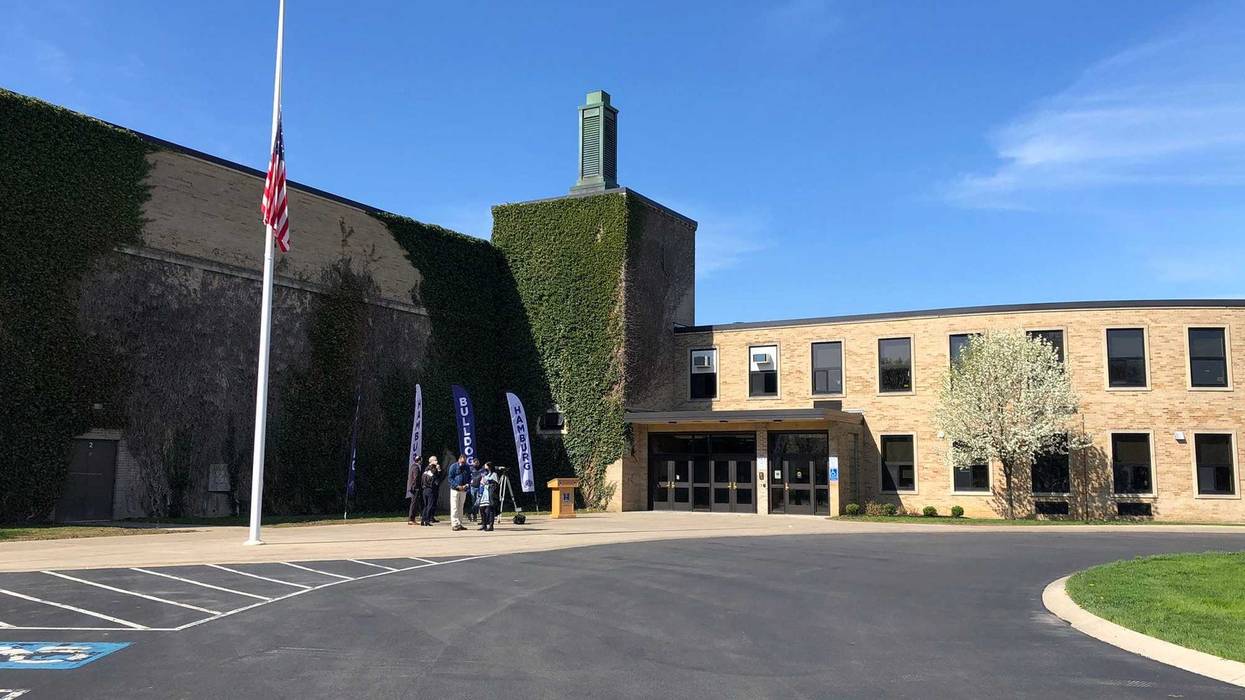
"Our hope is that some time during the week of the 17th, we'll be able to welcome all of our secondary kids back to fully, in-person learning," Hamburg Superintendent Michael Cornell said.
Preparation work is already underway in Hamburg, including training bus drivers on new routes. They're also preparing lunch rooms by having tables replaced by desks and chairs and there will be lunches eaten outdoors and in other spaces at the school.
Districts will have to wrestle with another challenge: Remote learners. While the overwhelming majority of students would return to in-person learning for five days a week, some families may opt to continue virtual learning from home. How districts will respond to remote learners will depend largely on whether they have the resources to accommodate both.
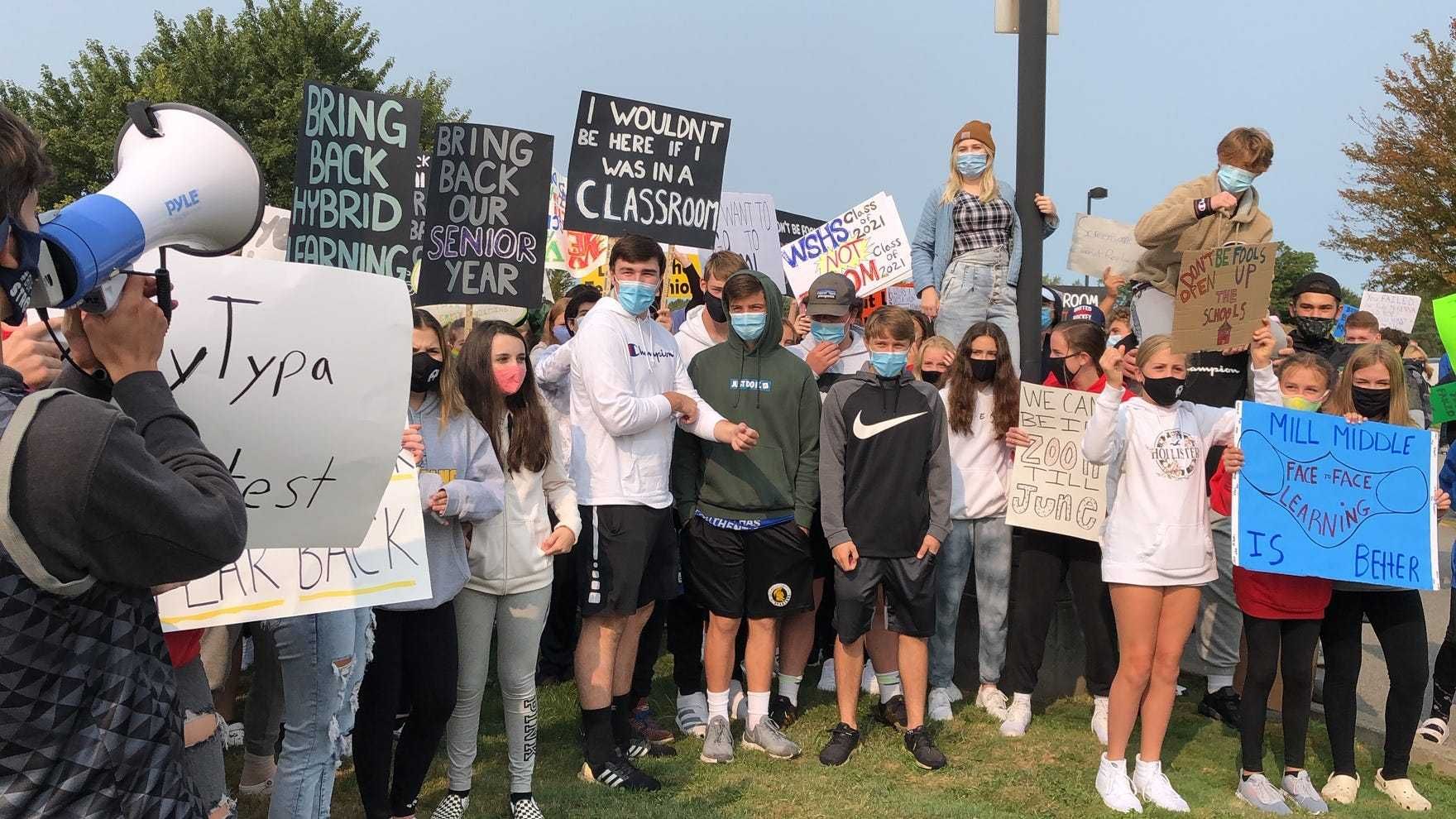
"The 28% of students who signed to be fully remote would finish the year fully remote," Niagara Falls Superintendent Mark Laurrie said. "We would, in essence, be only bringing in Niagara Falls 72% of students, which would allow us to do things like ensure 3-feet (of social distancing) and have room for lunches. Those students will need to remain with remote learning through the end of the year, even if we had the opportunity to bring them back."
Students at both Hamburg and Niagara Falls would have access to teachers who teach remote learners, rather than remote learners joining a classroom with those who are in-person.
There also may be a reluctance for some kids to come back to full-time learning if they will still be confined to one classroom and at their desk for an entire school day. While it will look like traditional schooling at Niagara Falls and Hamburg, districts that limit where kids can be at the school will likely need to re-evaluate if full-time, in-person learning is appropriate.
"(Cohorting) is not necessary once the rate is below 100 cases per 100,000," Cornell said. "At that point, you can run the school the way you'd run your school. You would just do so with 3 feet of spacing in the academic areas and they would wear a mask all the time."
The potential return of kids also begs the question: Is it worth it? Both superintendents were adamant that in-person schooling is wholly beneficial.
"Every day of school is a gift," Cornell said. "I'll always believe that as an educator and a teacher…We want our kids as school as often as it's safe and responsible to have them in. If it's safe and responsible for us to have them in class and in-person five days per week for the last 6-7 weeks of the school year, I think that's an opportunity that the vast majority of school districts are going to jump at."
"I think it's worth doing because it starts to set the tone for summer programs and September," Laurrie said. "It gets kids back into the acclimation on how it will be in September. It gets kids back in a routine and ritual. It's more about those social-emotional learning factors per se, than it is about academics. But it is worth doing, even if it's for 5 weeks."
Both Laurrie and Cornell are optimistic about a return to normal learning in September. Cornell said the New York State Education Department and Health Department need to immediately prioritize a plan get kids back into the classroom this fall and said they need to do it soon.
"We have prioritized lots of other things over the last 14 months and we have not prioritized having fully, in-person learning for the kids until recently when we got our elementary kids in," Cornell said. "Frankly, other states have done a better job of prioritizing fully, in-person learning for all kids. The research says it's safe…It would certainly be advantageous for school districts to do some planning before the end of June."