



Lush green grass, the vibrant blooming of magnolia, and the best golfers in the world. Every April for 90 years, the world turns its eyes to Augusta, Georgia, a relatively small town near the South Carolina border where one of the best sporting events takes place over 72 holes filled with drama, excitement, and "tradition." And yes, those pimento cheese sandwiches too.
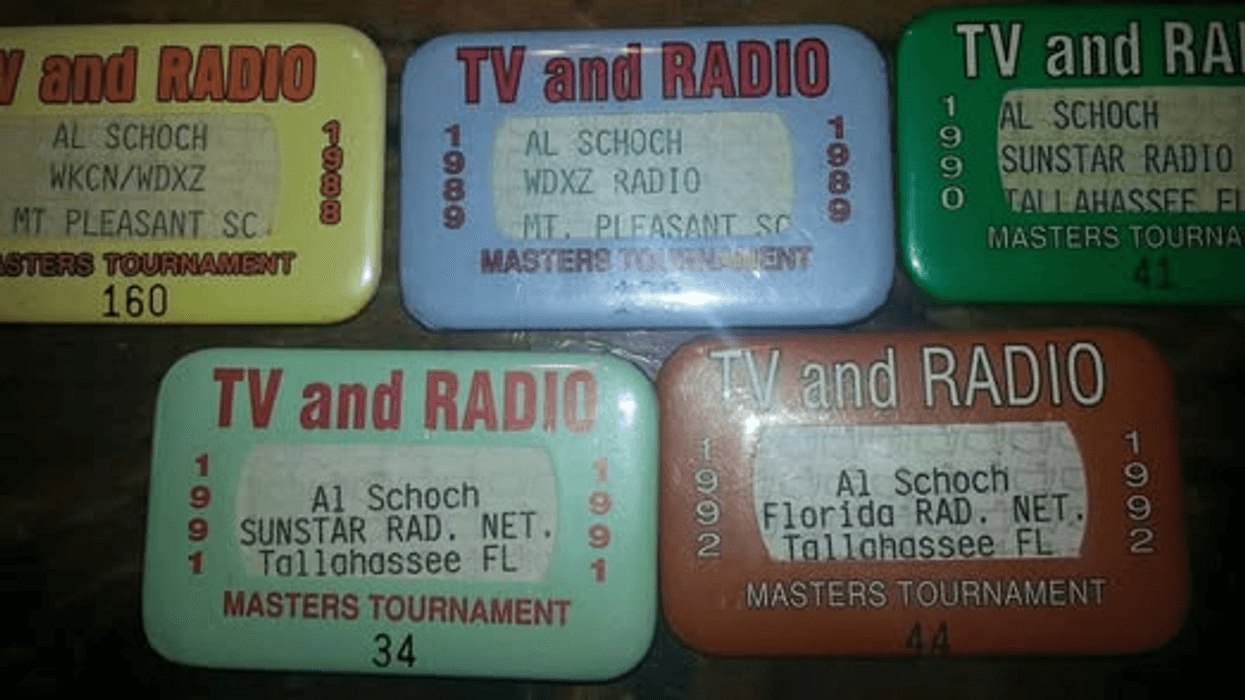
In 1984, a young reporter less than a year into a new job in Augusta, Georgia found himself in covering the Masters for the first time, something he would do over 9 years for various news organizations, 8 years of those with ABC Radio. He now resides in the WCCO Newsroom, and his name is Al Schoch.
Schoch spoke to WCCO's Laura Oakes Friday, as the Masters began day two heading into what is sure to be another amazing weekend for golf fans, and said that pristine and exclusive golf course is all you can imagine - and more.
But it began much earlier.
"I still remember as a little kid thinking, hey, the local newspaper guy is going to cover the Masters. Maybe you'll cover it someday, Al. No, I'll never cover that," Schoch jokes.
In 1984, Schoch got the chance, and in those days reporters did their live hits via the telephone, a moment he remembers distinctly. He may be 69-years-old, but during Masters week, Schoch is that 26-year old southern small town radio man getting his big break.
"The first report they threw it to me," he says. "I was on the telephone, and I'm looking at the phone and it's like there are 600 radio stations right now waiting for me to say something."
1984 was the first Masters win for Ben Crenshaw, who to this day is involved in Masters week serving as a kind of master of ceremony for the annual "Champions Dinner," this year in honor of Rory McIlroy, another example of tradition being the foundation of the tournament.
It was also the moment where a career in broadcasting seemed real for Schoch, making it to a place like Augusta which was the pinnacle for a sports reporter then - and still to this day.
"That first Masters, it was the first time I thought to myself, maybe I can make something out of myself in this business," Schoch adds.
Things were very different in 1984 and the years Schoch was at the Masters. Being on the radio and TV didn't mean as much. Most of the Masters Tournament wasn't even on television in those days. Now, you can find it from early in the morning until the last golfer leaves the course on your TV, your phone, your tablet, etc. Not in the 80s when you had to "read" what happened.
"Now, working press is always the newspaper writers, magazine writers, periodicals, people that wrote," Schoch explained. "TV, radio, no - you're not a working media. You're not working media. The working media, the newspaper guys, asked the questions, got into the press conferences. We were behind, the radio and TV guys were behind a piece of glass in a separate booth taping it."
A very famous "perk" for reporters at the Masters is a lottery to see who gets to actually play the most famous course in the world, that is notoriously difficult to get on with their limited and exclusive membership.
Schoch admits he is not a golfer. Still, he said he was picked - and passed (gasp) on the chance, doing something most of us can't even fathom: he skipped on a shot to tee it up at Augusta.
"You put your name in, and there's 800, 1,000 reporters there," says Schoch. "(You) never think you're gonna get it. But one year I got it, and I don't play golf. And I said to the people down in the the front desk, having me play this golf course is like my sister playing shortstop for the Yankees. It just is not going to be done. I will - I would disgrace this course. And there was a man there from Michigan, from Detroit, Larry Henry, who was on the motor racing network at Indy. He was there. And I said, I'm going to turn this in and give it to you. And he says, great, great, wonderful. He brought his clubs and everything. So I went down to the front desk, I said I want to give this to Larry, and they said, oh no, we can't do that. We got to pick over, we got to pick from the jar all over again. I picked Larry Henry. I got the pick and I got Larry's name. I won the humanitarian award that year for the press corps."
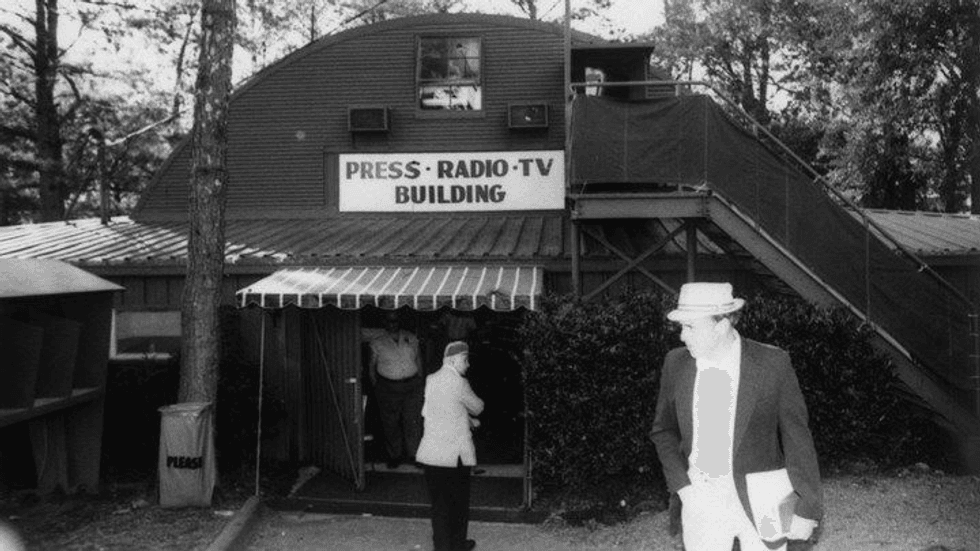
The original press building from the 1930s, which WCCO's Al Schoch says they were still using in the 1990s. Augusta National has spent millions to improve press accommodations now.
(Masters / Augusta National)
The Masters is notoriously slow to change. Things tend to remain the same year in, year out, something Schoch says makes it special.
"I think it's because it's one of the great sporting events of the entire world because it's held in the same place every year," he says. "And by the time I was there, it was like the 50th anniversary of the first Masters and things really hadn't changed much. A lot of stuff was there from the 1930s that I worked within, in the press facility. Now, they've really put a lot of money into the place and it's really spectacular, but it was still spectacular back in the 1980s when I would drive down Magnolia Lane in my little car from Charleston, South Carolina and waving to people."
Now 90 years in, the Masters still has that special something that draws fans from all over the world to tune in, enter into lotteries to get tickets, and see who gets to slip on that priceless green jacket in Butler Cabin.


