

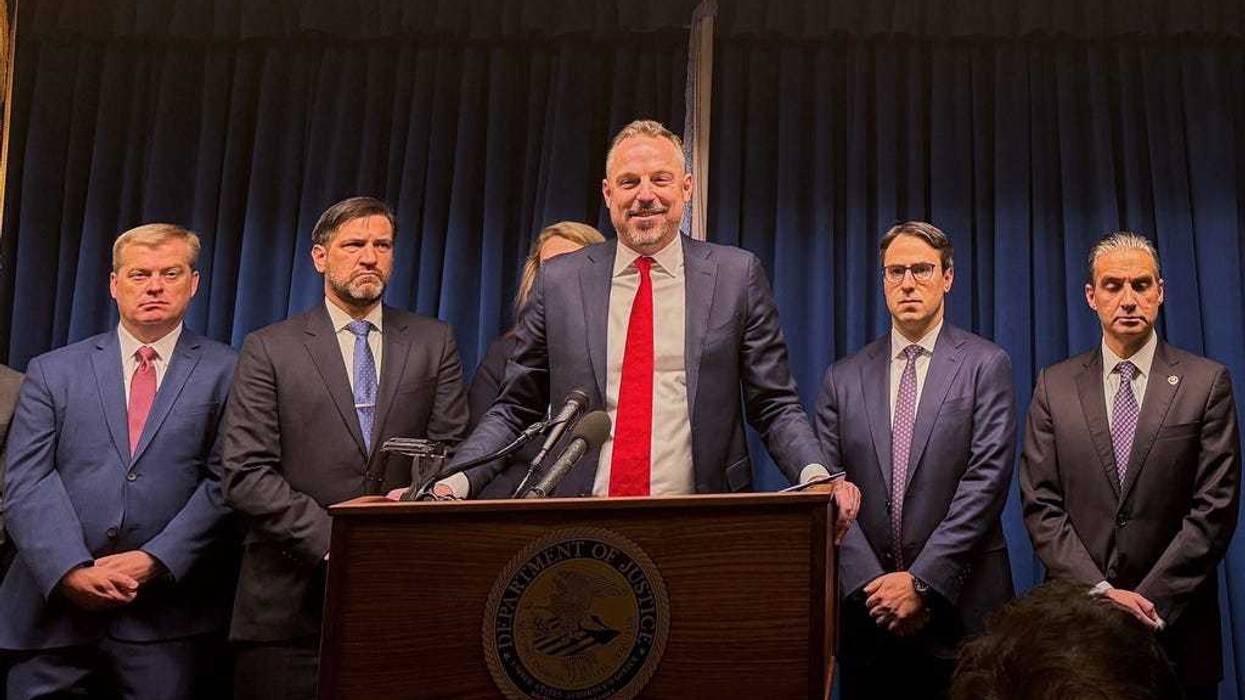
At least 14 state-run programs in Minnesota have been flagged for fraud, a prosecutor said Thursday as he announced new charges in several schemes. Federal prosecutors announced new indictments in the widening Minnesota fraud scandal on Thursday in Minneapolis.
First Assistant U.S. Attorney Joe Thompson said that federal officials suspect about half or more of the roughly $18 billion in claims paid out by Medicaid to 14 Minnesota-run programs since 2018 may have been fraudulent.
“It’s swamping Minnesota. The magnitude cannot be overstated,” Thompson said. “What we see in Minnesota is not a handful of bad actors committing crimes. It’s staggering, industrial-scale fraud.”
Thompson says it's gotten to the point where people came to Minnesota from other states to "get in on the action," naming Anthony Jefferson, and Lester Brown.
"Mr. Jefferson and Brown were residents of Philadelphia who had no connection to Minnesota," said Thompson. "Except for they heard that Minnesota and its housing stabilization services program was easy money. And so they traveled to Minnesota, enrolled their companies Chosen Runner LLC and Retzel Real Estate LLC in the housing stabilization Services Medicaid program here in Minnesota. They then returned to Philadelphia and began submitting fraudulent claims to Minnesota Medicaid here."
Thompson says the two are believed to have submitted up to $3.5 million in "fake and inflated bills" for Medicaid reimbursements after they set up a fake organization.
Thompson says these levels of fraud should have been stopped far earlier.
"Our state has done not a good job of mining these programs in terms of responsibility," added Thompson. "There's lots of levels of responsibility. There's criminal culpability, obviously, and then there's other accountability. And then obviously, I think all of us as a state have to grapple with that."
Investigators’ new findings may bolster President Donald Trump in his claims that Minnesota is a “hub of fraudulent money laundering activity” under Gov. Tim Walz, who was the Democrats’ vice presidential nominee in last year’s presidential election.
Trump has capitalized on the fraud cases to target the Somalian diaspora in Minnesota, calling them “garbage” and saying he doesn’t want immigrants from the East African country in the U.S.
Governor Tim Walz released a statement late Thursday afternoon applauding the fraud charges. He says the charges emphasized that the developments validate Minnesota’s earlier decision to audit and pause payments for 14 high-risk Medicaid programs tied to the federal investigation and shut down Housing Stabilization Services (HSS) entirely.
“This is exactly the type of strong action we need from prosecutors to ensure fraudsters are put behind bars,” Governor Walz said. “This infuriating greed and criminal activity is why we took action earlier this year to shut down Housing Stabilization Services and hired an outside firm to audit these programs and stop payments to fraudulent providers. We will not tolerate fraud, and we will continue to work with federal partners to ensure fraud is stopped and fraudsters are caught.”
Last Friday, Walz announced the appointment of Tim O’Malley as Director of Program Integrity and a partnership with WayPoint to implement a statewide fraud prevention program.
Some on the Republican side including House Speaker Lisa Demuth, who is running against Walz for governor, called it too little, too late.
Thompson said 14 state-run programs have been flagged as having significant fraud problems, and many of the defendants were getting money from multiple Medicaid programs.
“What we’re seeing is programs that are entirely fraudulent,” he said.
Five new defendants have been charged in connection with a Minnesota housing services fraud, Thompson said. Two defendants pocketed $750,000 instead of helping Medicaid recipients find stable housing, he said. Prosecutors allege they used the proceeds to travel to international destinations, including London, Istanbul and Dubai.
One defendant submitted $1.4 million in fraudulent claims, using some to purchase cryptocurrency, Thompson said. Federal officials say he fled the country after receiving a subpoena.
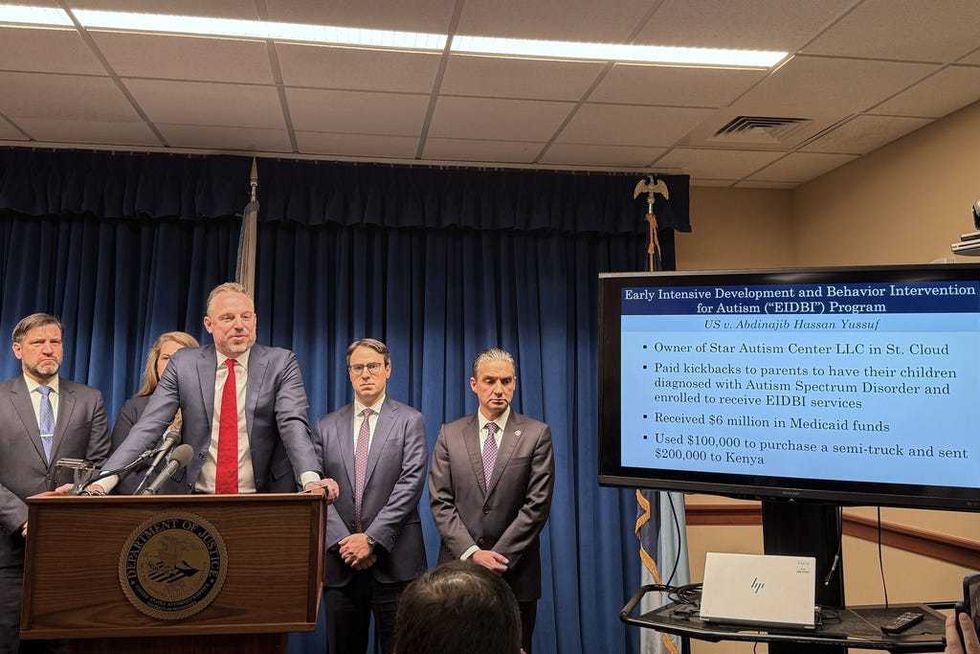 First Assistant U.S. Attorney Joe Thompson describes a sprawling fraud investigation involving state-run programs in Minnesota at a news conference Thursday, Dec. 18, 2025, in Minneapolis.(AP Photo/Giovanna Dell
The five new defendants join eight others charged in September for their alleged roles in the scheme to defraud the Minnesota Housing Stability Services Program.
Prosecutors also named a new defendant accused of defrauding another state-run, federally funded program that provides services for children with autism, alleging he submitted millions of dollars worth of claims for Medicaid reimbursement. One woman previously charged for exploiting that program pleaded guilty Thursday morning, officials said.
He called Minnesota an outlier, saying that the scale of fraud outpaces that of other states and that he sees more red flags than legitimate business in the claims providers are submitting. Asked who is to blame, Thompson said the state “has not done a good job.”
The fraud puts government-run services at risk for people who really need them, Thompson said.
“There’s real patients, real clients, real people who need services and aren’t getting them,” he said.
Money sent abroad but no evidence it has purposefully funded terrorism
Trump’s rhetoric against Somalis in Minnesota has intensified since a conservative news outlet, City Journal, claimed last month that taxpayer dollars from defrauded government programs have flowed to the Somali militant group al-Shabab, an affiliate of al-Qaida.
Trump has referred to the Somali community as “garbage” and said he doesn’t want immigrants from the East African country in the U.S.
Thompson said a significant amount of the fraudulently obtained funds have been sent abroad, and much of it has been used to purchase real estate in Nairobi, Kenya’s capital, which has a large Somali diaspora.
While Thompson said money might have indirectly gotten into the hands of al-Shabab, he emphasized that there was no evidence that defendants were sending money to or otherwise supporting terrorist organizations.
“There’s no indication that the defendants that we’ve charged were radicalized or seeking to fund al-Shabab or other terrorist groups,” Thompson said.
Instead, one Feeding Our Future defendant spent hundreds of thousands of dollars on an aircraft in Nairobi. Another wired $1.5 million to China and Kenya, prosecutors said, and sent a text message claiming to have invested $6 million in Kenya. And one man bought Mediterranean coastal property in Alanya, Turkey.
Fraud has eroded statewide confidence
Thompson said the massive scale of fraud that seems to be unique to Minnesota has eroded a statewide sense of confidence, allowed to go on for “far too long,” he said.
“Our state has not done a good job of mining these programs," Thompson said, adding that leaders across the state have to grapple with accountability.
The governor has initiated a third-party audit, due for completion by late January, that he says should give a better picture on the extent of the fraud. Walz said in a Dec. 12 op-ed that the state has made significant progress in detecting fraud, but “we have much more to do."
Walz also appointed a director of program integrity, who is tasked with finding and preventing fraud statewide. It's not stopped his Republican counterparts from criticizing his administration for failure to protect Minnesota's taxpayer dollars.
A spokesperson for Walz did not respond to requests seeking comment Thursday.
The Associated Press contributed to this story.