

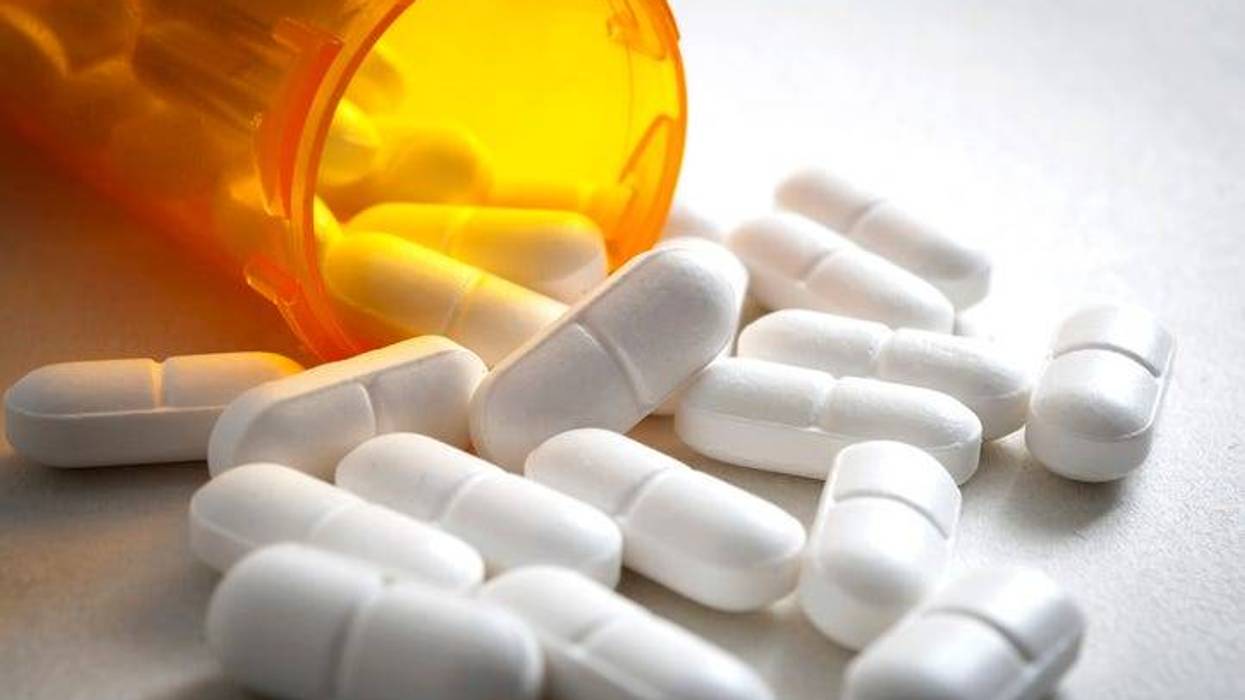

Washington County is now accepting applications for its Opioid Settlement Council, which provides leadership and guidance on how the county will spend its opioid settlement funds. Washington County expects to receive approximately $11.5 million in opioid settlement funds over 18 years, spanning from 2022 to 2038. Up to $700,000 in settlement funding is available for community-based projects in 2025 and 2026.
“We’re really allowing community members to be the people at the table making important decisions about how this money is spent, because it needs to be spent supporting people that have been impacted by the opioid crisis,” said Sean Young-Stephens, program coordinator for Washington County Public Health and Environment.
Projects supported by the settlement funds fall into one of thirteen categories, including treating opioid use disorder (OUD), addressing the needs of criminal justice-involved persons, and preventing overdose deaths and other harm reduction. Diversity and underserved communities will be prioritized across all funding categories.
The council helps decide which organizations get funding, and that’s why Young-Stephens said the idea is to fill the council with people who understand the threat opioids pose to Washington County. A perfect example is Jamie Steber.
“I am in long-term recovery,” Steber said. “My clean date is August 1, 2017,” Steber said she used drugs for 23 years, but hit a breaking point at the age of 37. “Washington County Corrections saved my life by holding me accountable and locking me up.”
Steber has been sober for 8 years, and a couple of years ago, got an opportunity to put her past to use for others. “My old probation officer called me and said, ‘Jamie, there’s this opportunity to apply for this Opioid Settlement Council, and I think you’d be a great fit.’ I knew I wanted to give back to Washington County for helping save my life.”
Stuber is finishing up her two-year term on the council and wants interested individuals to consider applying. “It’s not an intimidating environment whatsoever. Everyone made it so amazing. We have expectations and council rules and requirements, but it’s been such a positive, uplifting experience even though we’re talking about such a heavy topic.”
The Washington County Opioid Settlement Council’s work has been recognized for its innovation and effectiveness. Already, the county’s grant process has been recognized with three awards: the Promising Practice Award from the National Association of County and City Health Officials (NACCHO), an Achievement Award from the National Association of Counties (NACo), and the Award for Excellence in the Application of the Opioid Litigation Principles from Johns Hopkins Bloomberg School of Public Health.
Applicants interested in joining this award-winning team need to live in Washington County or have a professional connection to the community. Those with lived experience, like Steber, or professional experience are prioritized. “So, an individual who works in an area like treatment, harm reduction, health care, education, or any other sphere of the opioid crisis,” explained Young-Stephens.
The application is short, as Young-Stephens said, “should take only 5 minutes.”
Interested parties can learn more about the council’s commitment, qualifications, and more here. Applications are being accepted through April 10.


