

Federal and state authorities have agreed to openly share evidence related to multiple ‘Operation Metro Surge’ shootings.
The Hennepin County Attorney's Office, the Minnesota Bureau of Criminal Apprehension, and the state's Attorney General's office obtained hard drives of previously withheld federal evidence over the last two weeks, following a tense six-month push for transparency.
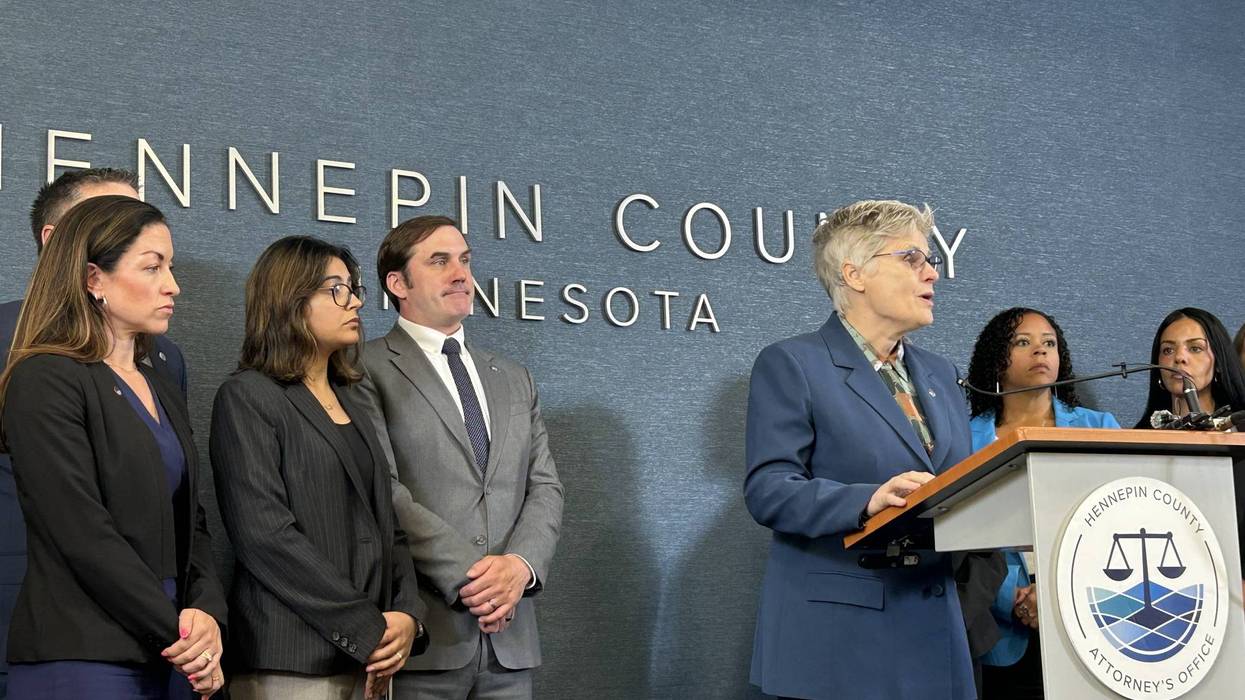
"We have obtained the hard drives of previously withheld evidence in the killings of Renee Good and Alex Pretti, and the shooting of Julio Sosa Solis," announced Hennepin County Attorney Mary Moriarty. "We have also obtained some of the physical evidence that was previously withheld, including Renee Good's car."
Prosecutors will now comb through the massive amount of new evidence to decide whether any further criminal charges will be filed against the involved federal officers.
"I want to emphasize too, any time you are looking at a case for potential charges or not, you want to be as thorough as you possibly can," Moriarty added. "So, obviously we wanted absolutely every piece of evidence that they have because it's really important to a lot of people that we get this right. And so, now that we have that evidence we have begun the process of looking through it to see where we may land."
Moriarty was joined by Attorney General Keith Ellison. Along with the BCA, they were the three agencies who sued the federal government to get access to evidence in the deaths of Good and Pretti, plus the shooting of Sosa Solis, who was injured but survived.
Good, a 37-year-old mother of three, was shot and killed in her car while leaving an anti-immigration enforcement protest in Minneapolis on Jan. 7 as U.S. Immigration and Customs Enforcement agents surged through the region. Her death and that of Pretti, another protester, just weeks later sparked outrage across the country and calls to rein in immigration enforcement.
“The wonderful thing now is we have all the evidence,” Moriarty said.
Investigators are going through all the evidence, including hard drives with statements, hours of video recorded by body-worn cameras and the physical car Good was driving, Moriarty said.
“We need transparency. We need cooperation. Our community needs it,” she said. “Our democracy requires it.”
At the end of June, Minnesota Attorney General Keith Ellison and Moriarty asked a federal judge to push out the deadlines in their lawsuit against the U.S. Department of Justice because they said they were in the midst of recently reinitiated “ongoing discussions” with the FBI about information sharing.
Those ongoing discussions with the FBI about information sharing are likely to affect Minnesota’s request for summary judgment in the case, Ellison and Moriarty wrote in their motion to the court.
The attorneys representing the federal government signed onto the motion.
Ellison said he remains “deeply troubled that the federal government spent more than half a year attempting to conceal this evidence from state investigators.”
“It should never have taken this long for Minnesota law enforcement to gain access to the federal government’s evidence,” he said in a statement. “I hope that this is the beginning of a major course correction on the part of the federal government.”
Associated Press journalists Philip Marcelo and Rebecca Boone contributed to this story.