
Local and national economists and thought leaders are discussing Artificial Intelligence's impact on the global economy at the first annual Global Peace Forum in Minneapolis on Thursday.
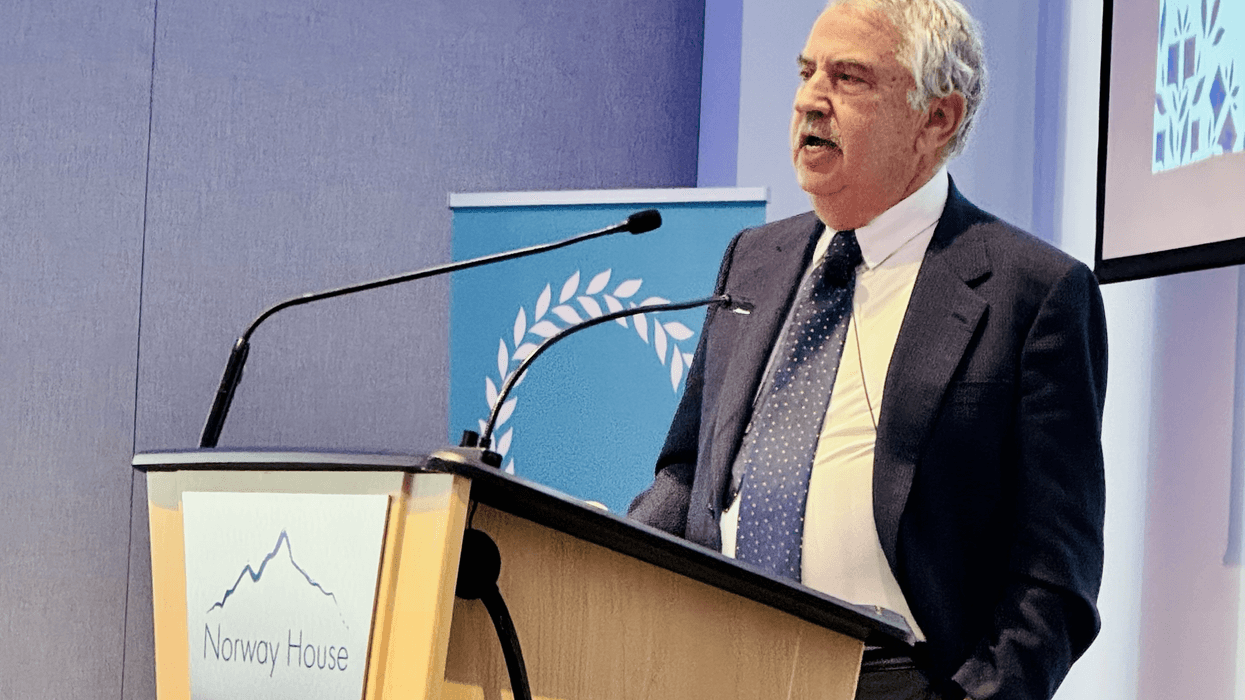
Speakers included Pulitzer Prize-winning New York Times columnist, and St. Louis Park, Minnesota native, Tom Friedman, who talked about the responsibility that comes with such a powerful technology.
"We have created powers of cognition, of connectivity, of energy," Friedman said. "That are reshaping the physics of the world. We have set off a second big bang."
The Great Disruption: AI and Global Insecurity in the 21st Century forum took place at Norway House in Minneapolis, and covered AI and shifting global power, which is rapidly reshaping economies, international relationships and security.
It's also raising urgent questions about prospects for peace. That's something Friedman recently wrote about in his New York Times column, noting it's being used in the war-torn and fragmented Middle East, enabling smaller groups to have an outsized influence in the region. And certainly in China, where U.S. President Donald Trump is this week.
"Half of Yemen is a country that has 50% illiteracy, and yet the Houthis have been able to download anthropic models to improve the rockets they use to attack Saudi Arabia," Friedman said Thursday on the WCCO Morning News with Vineeta Sawkar. "So, you know, the biggest change is that the small can now act really big."
And it is China that holds a significant amount of influence over the materials that supple this 'second big bang,' in Friedman's words. He says the only way this gets controlled is if the U.S. and China get together and create a system.
"And financial supply chains from rare earths, to the state of interest rates, that's a collective action problem," Friedman said Thursday during his keynote. "Your housing mortgage, your house mortgage will be set as much by what happens in Beijing as what happens in Boston."
Vice President of Research for the Federal Reserve Bank of Minneapolis Ben Malin says as the industry's buildout - including data centers- continues to grow, the likely impact on the economy can't be overstated. And he turned to some of recent history's biggest accomplishments to explain it.
"Bigger than the railroad build out, or the electrification of the U.S., or even the dot com bubble," says Malin. "So, if you look at historical investment booms, this would be bigger than that."
Malin says AI is poised to become at least a $10 trillion industry in the next several years. That was evident on Wall Street on Thursday, as the artificial intelligence giant Anthropic opened for trading in the biggest public stock offering ever, despite investor fears of a possible AI bubble and public anxiety that the technology threatens lives and livelihoods.
Anthropic shares began trading at $111.50, spiking more than 30% above the initial public offering price.
"AI and shifting global power are changing how people and nations understand security, prosperity and peace," said Janet Dolan, founder of the Global Peace Forum and former president and CEO of Tennant Company. "This forum will bring together different generations and international perspectives into the same conversation so we can better understand these forces and identify opportunities for collaboration."
Friedman has long written and spoken about a global economy, especially in is 2005 book, "The World Is Flat." He says there's an enormous need for countries to work together, not independently, and says with AI, it is crucial.
"Our fates have become fused. We will rise together," adds Friedman.
The Forum Thursday in Minneapolis featured NY Times columnist Tom Friedman, who calls it "the second big bang"
The Forum Thursday in Minneapolis featured NY Times columnist Tom Friedman, who calls it "the second big bang"