

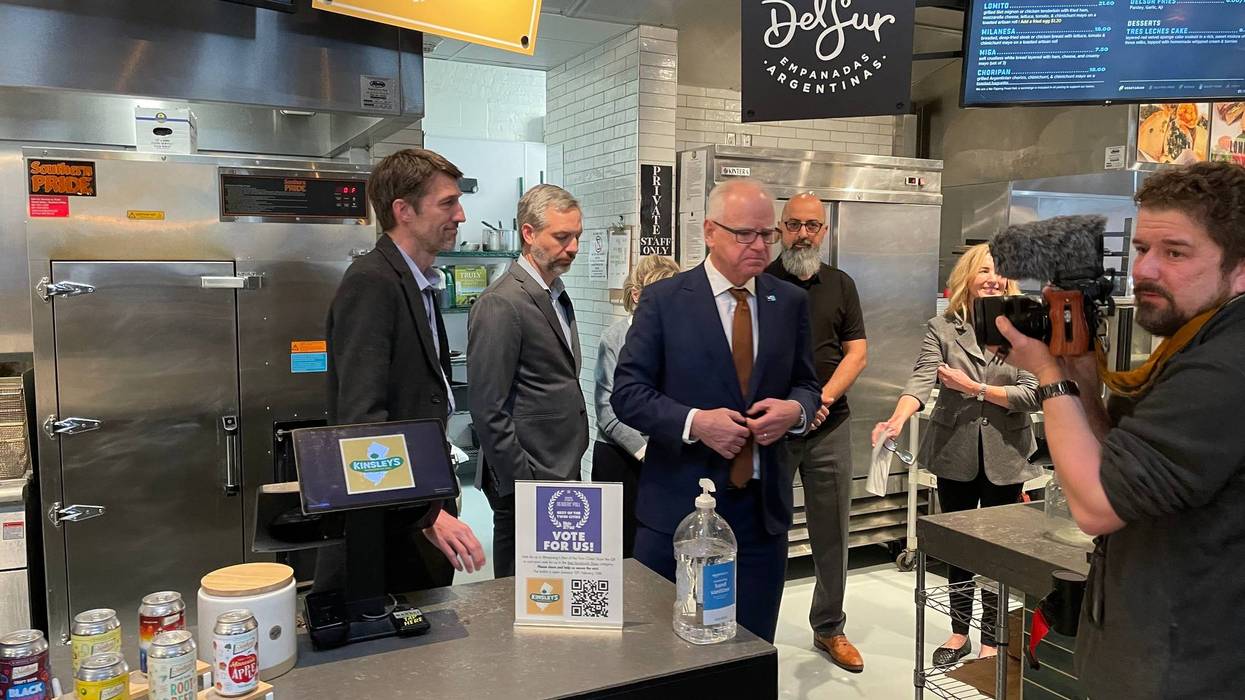

Governor Tim Walz addressing a potential catastrophic situation facing Minnesota small businesses Tuesday at The Market at Malcolm Yards.
Operation Metro Surge has had a significant impact on the state.
"Since the start of Operation Metro Surge, many restaurants have experienced sales declines of 50 to 80%," says Patty Wall who is the owner of The Market at Malcolm Yards.
World Street Kitchen Co-Founder Saed Wadi can attest to this.
"A lot of small businesses are out of cash," he said. "And to try to go and get a loan at this point, it's a long process."
So Wadi is asking the governor for some kind of relief.
"I think we have a responsibility to the business community across the state and others to look at every single one of those proposals," Walz explains. "What I'm able to do, if there's things I'm able to do through executive orders, through the executive branch, through DEED, we're going to try and do those immediately. But they have the legislative process."
Recent estimates are showing Minneapolis has lost $100 million in the last three months due to a downturn in spending in the community.
Walz added The Market at Malcolm Yards, where he spoke Tuesday, is a prime example.
"The impact is pretty clear right here. This place should be hopping," Walz noted. "This place should be full. We should have the four employees that would be working this kitchen be working here. They're not, which the trickle down effect of that is how do they make rent? How do they pay for food? How do they do the things they need to do?"
The governor said he hopes to release a relief package for businesses later this week, similar to what occurred during COVID.
As far as ICE operations in Minnesota, Walz indicated Tuesday that Operation Metro Surge could be days away from ending.
"I spoke with (border czar) Tom Homan yesterday. I spoke with Susie Wiles, the president's Chief of Staff, this morning," Walz said. "We're very much in a trust but verify mode. But it's my expectation, and we will hear more from them I think in the next day or so, that we are talking days, not weeks and months of this occupation."
The governor also says at some point, federal resources become a factor as well.
"They can't keep kicking this down the road, and you know I think some of it's operational here," Walz notes. "These folks go in rotations of 30 days. I think they're coming up on a 30 day rotation, and when this group rotates out instead of having a new group rotate in, that's where they'll end."