


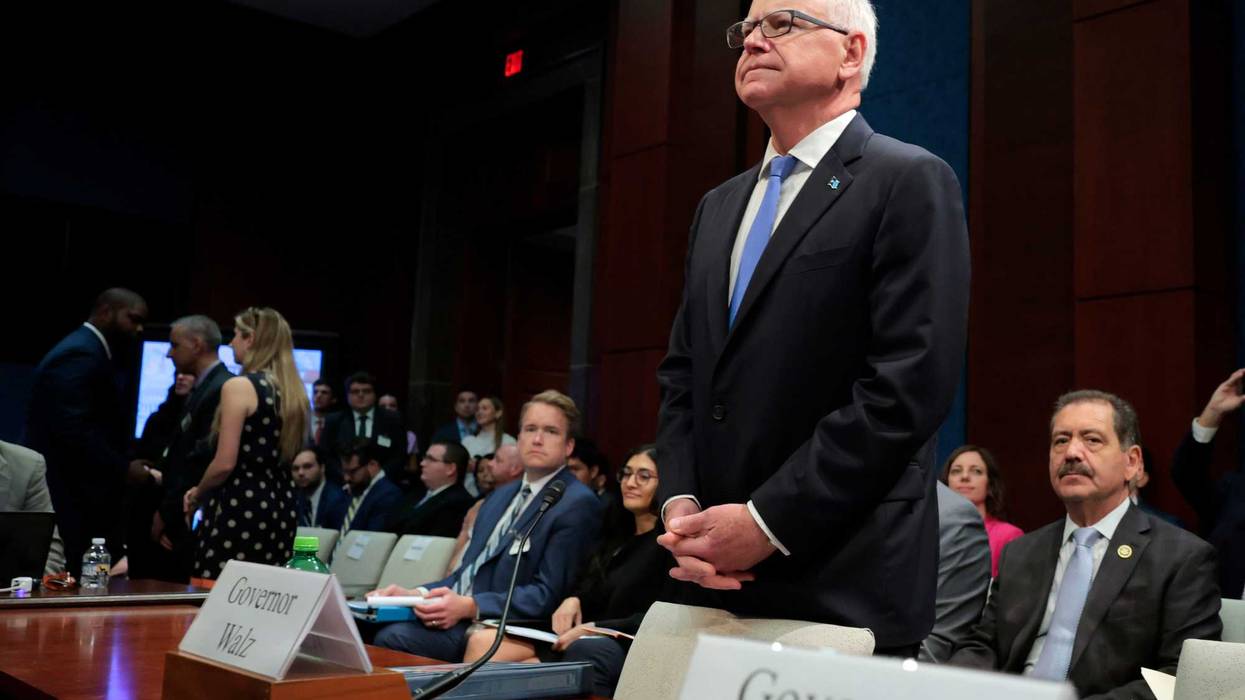
Governor Tim Walz is expected to sign a bill passed by both the House and Senate that would create a new Office of Inspector General.
The Senate already passed a version last year, but the House passed its version last week. The bill's authors worked to craft a bipartisan agreement without sacrificing the office’s independence or its law enforcement capabilities.
One year ago, the Senate overwhelmingly passed a bill concerning one of the highest-profile issues of this legislative biennium. But the House took no action in 2025.
It's a new position in state government, and comes after the discovery of potentially billions in money that was stolen from government social programs, and money set aside after the COVID-19 pandemic.
Prior to the 2026 legislation, "Office of Inspector General" functions existed within specific departments.
“This is a major accomplishment in our state’s fight against fraud and it’s a testament to Senator Gustafson’s leadership, dedication and resilience in finally getting it over the finish line,” said Senate DFL Leader Erin Murphy. “The Senate overwhelmingly passed Senator Gustafson’s OIG bill last year, and she has worked across the aisle and across the Capitol this year to get agreement with the House on a final bill. Her efforts will help us protect state tax dollars and protect important state programs for Minnesotans who rely on them.”
DFL State Senator Heather Gustafson said the office will be proactive and look for patterns.
"You know, whether it be inefficiencies in a state agency or whether it be a vendor who is taking advantage of one department," Gustafson says. "And then also another department, there isn't anybody who's sort of minding the store."
Fully operational by Sept. 1, 2027, the office would oversee current agency-based inspectors general and investigate credible allegations of fraud or misuse in state-administered programs.
"There is nobody who is sort of minding all of the agencies and all of the offices, and has the ability to move in between all of those agencies and offices and look for patterns," adds Gustafson.
Leaders in both bodies and parties call it the most significant piece of anti-fraud legislation to pass in a generation.
Here's what to know about how the role will function:
The office would be an independent entity in the executive branch “responsible for ensuring accountability, transparency, and integrity in the operation of state executive branch agencies and programs.” The inspector general would report directly to the governor.
And while the governor would appoint the inspector general to a five-year term, the goal for the position is remain nonpartisan. And to that end, it is subject to three-fifths majority Senate confirmation.
There is a cost to starting the new agency from scratch. Estimates are that it will cost anywhere from $3 million to $6 million to set up, and upwards of $12 million per year on an ongoing basis. The House bill calls for a price tag of $7.29 million in Fiscal Year 2027 before a combined $23.01 million would be needed in the 2028-29 biennium.
“Protecting, preventing $9 billion of fraud pays for 750 years of this office,” House Republican Floor Leader Harry Niska (R-Ramsey) said. “So it costs money, but that’s a cost well worth it to the hardworking taxpayers of Minnesota who have been stolen from for years and years and years.”
Gustafson says a bipartisan advisory committee will assemble a slate of candidates for the top role starting in August.
"The Office of Inspector General, at the heart of it, is an independent oversight authority, and it would be set up in the executive branch but would still have independent," Gustafson explains. "A bipartisan selection committee would interview vetted candidates and of course it'd be public hearing."
The office has broad responsibilities and powers.
They would conduct investigations, recommend changes to state law, and instruct agencies to withhold payments to providers for credible allegations of fraud.
In addition to investigating fraud in state programs, 10 specific inspector general duties are prescribed in the bill, including:
- establishing standards and best practices concerning the operation, investigations, and fraud prevention processes of agency inspectors general;
- alerting relevant state agencies when there is a credible allegation of fraud or misuse;
- facilitating information sharing between agencies and coordinating investigations involving multiple agencies;
- investigating a private entity or local unit of government administering a state program, or any private recipient of state funds or services, to ensure proper use of state funds;
- issuing public reports detailing completed investigations and corrective actions; and
- maintaining a list that includes each program and individual for which the inspector general has obtained a court order or made a recommendation to freeze or cease payment.
Initially, the office could work with the Bureau of Criminal Apprehension to determine if there is a need to create a separate law enforcement agency. The BCA Financial Crimes and Fraud Section now investigates state program fraud, insurance fraud, wage theft, and financial crimes related to identity theft.
Niska said Minnesotans do not trust the current law enforcement under the direction of the governor and the attorney general to arrest and prosecute fraudsters.
“We are fighting for an independent and empowered inspector general, fraud cops, fraud prosecutors independent of the governor to do this," Niska adds.
Minnesota Office of Inspector General
- Mission: Investigate and prevent fraud, waste, and abuse in any state-funded program or agency.
- Structure: It is designed to be nonpartisan and independent, reporting directly to the governor rather than an agency head.
- Leadership: The Inspector General will serve a five-year term and must be confirmed by a three-fifths majority in the Senate.
- Powers: The office can conduct investigations, freeze payments to fraudulent providers, and has the authority to eventually establish its own law enforcement division with powers to make arrests (slated for 2028).