

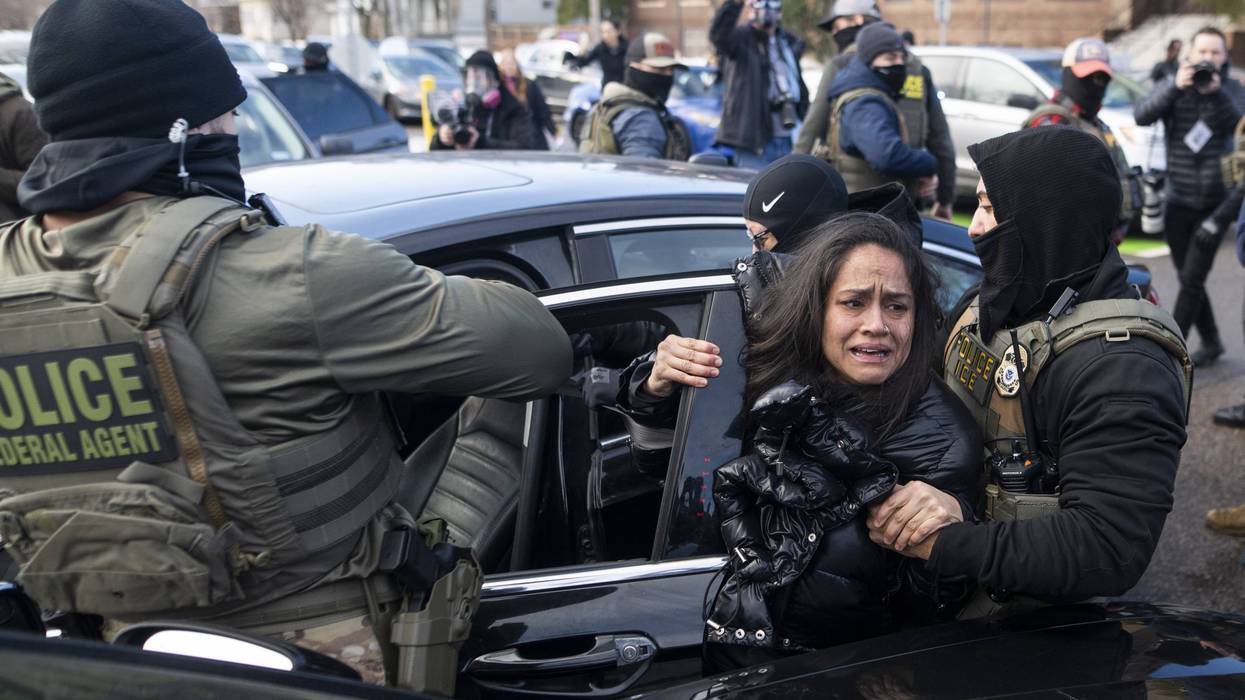
A Minneapolis woman with autism who was dragged from a car by Immigration and Customs Enforcement agents and detained is suing the federal government.
The video of Aliya Rahman's January encounter went viral and was used as an example of unnecessarily harsh tactics used by ICE during Operation Metro Surge.
ICE accused Rahman of impeding or interfering with federal officers when she refused to drive away from a blockade in south Minneapolis.
Rahman is alleging her constitutional rights were violated. She was never charged in the incident.
"Our country has a long history of violence in which the state is the aggressor toward Indigenous people, toward Black people, toward people called deviant or thugs by others looking to steal power," Rahman said Tuesday. "America remains a place of violent duality where some are hunted by the very thing their neighbors think keeps them safe."
Rahman also alleges she was held at the Whipple Federal Building for "no reason," and was poorly treated while in custody. While in custody, Rahman said she repeatedly asked for a doctor, but was instead taken to the detention center.
She also alleges she was left unconscious on the floor of her jail cell, according to the suit, saying the U.S. has a long history of violence where the state is the aggressor.
"When people at the grocery store expressed disbelief that this happened to me in America, I think of people I love deeply for whom this has happened in every generation of their family in America," she added.
Rahman said that she was on her way to a routine appointment at the Traumatic Brain Injury Center when she encountered federal immigration agents at an intersection. Video appears to show federal immigration agents shouting commands over a cacophony of whistles, car horns and screams from protesters.
In the video, one masked agent smashes Rahman’s passenger side window while others cut her seatbelt and drag her out of the car through the driver’s side door. Numerous guards then carried her by her arms and legs towards an ICE vehicle.
“I’m disabled trying to go to the doctor up there, that’s why I didn’t move,” Rahman said, gesturing down the street as officers pulled her arms behind her back.

Rahman was caught in a “terrible and confusing position” and had “no where to go,” according to Alexa Van Brunt, Rahman’s attorney and director of the MacArthur Justice Center.
“Her only options were to move her car forward in the direction of ICE officers and risk being accused of trying to harm them—which led to Renee Good’s death—or stay stationary, which in the end led to physical violence and abuse,” Van Brunt wrote in a statement.
A spokesperson for the Department of Homeland Security disputed that account in an emailed statement on Thursday, saying that Rahman was an agitator who “ignored multiple commands by an officer to move her vehicle away from the scene.” She was arrested along with six other people the department called agitators, one of whom was accused of jumping on an officer’s back.
The department did not specify if Rahman was charged or respond to questions about her assertion that she was denied medical treatment.