


As we approach the 250th Birthday of the United States this July, WCCO takes a looks back through the eyes of Minnesota over those same 250 years.
This month we focus on Split Rock Light House along the North Shore of Lake Superior, the most photographed spot in the state and an iconic image to be sure. But do you know the actual history behind the North Shore landmark?
The Lighthouse was built due to a nasty November storm in 1905 that sunk or damages 29 ships and killed nearly 30 men.
"There was a call from the Ship Carriers Association in 1907 to Congress to build a light station and fog signal somewhere near the vicinity of Split Rock Creek," explains Split Rock Site Manager Hayes Scriven. "And then in 1909 they started construction, and it was completed by July 30th, 1910 when the beacon was first turned on."
The lighthouse, which Congress appropriated $75,000 to build, performed exceptionally well, and for half a century it oversaw the safe passage of freighters carrying freshly mined ore from Minnesota’s Iron Range - until it was no longer needed.
"With improvements to technology, and GPS, and other things that kind of rendered the lighthouse obsolete," Scriven adds. "Because it wasn't marking shoals or reefs in the lake, it was just a navigational aid , they decommissioned the station in 1969."
There are only five staffed light stations in operation today. All other lighthouses in the United States are either automated or decommissioned.
The lighthouse helped ships traverse the notoriously dangerous Lake Superior waters, where rogue waves could appear out of anywhere, rocks jutted out of the icy waters, and fog would show up almost out of nowhere.
"It was kind of a quick response to a storm that happened on the lake, but in the years that followed all the way up till 1969 when the lighthouse was an activated navigation, there was no shipping incidences within the vicinity of the lighthouse."
Just last year, record crowds marked the 50th anniversary of the tragic sinking of the SS Edmund Fitzgerald at Split Rock. On Nov. 10, 1975, the iron ore freighter Edmund Fitzgerald sank, taking 29 lives down with it off the coast of northern Michigan after leaving the port of Duluth-Superior.
While it was well after Split Rock stopped operations, it once more highlighted the dangers of the big lake and why the lighthouse was necessary in the first half of the 20th century.
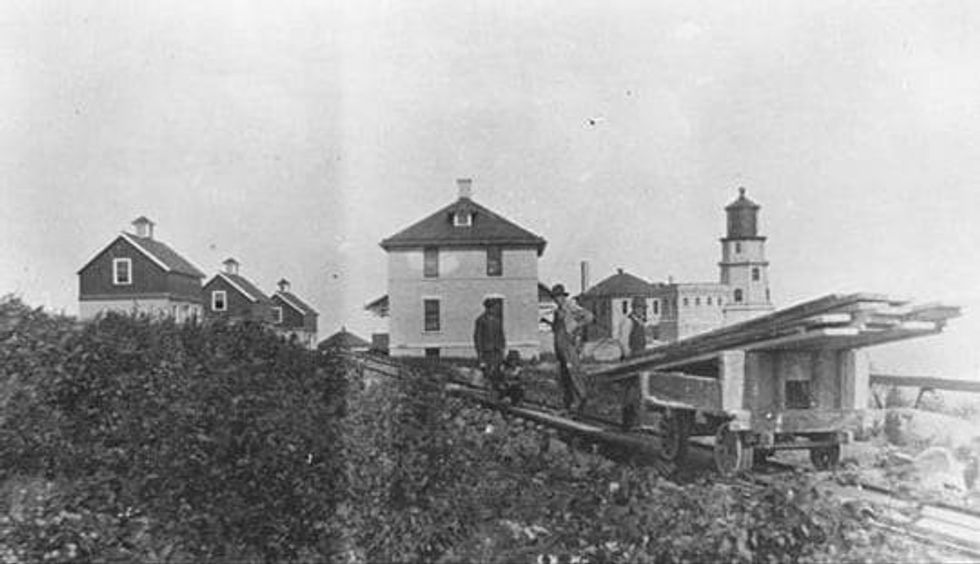
This photo shows Split Rock (to the right) and a tram car circa 1916.
(Minnesota Historical Society)
For the first 15 years, the lighthouse was only accessible by water. That changed in 1924 when the Lake Superior International Highway was completed, making the lighthouse more easily reachable for the lighthouse keepers and their families. Tourists also took advantage of the new roadway, and Split Rock Lighthouse swiftly became one of the most popular destinations in Minnesota.
When the Coast Guard absorbed the Lighthouse Service in 1939, it publicized Split Rock Lighthouse as "probably the most visited lighthouse in the United States."
The State of Minnesota obtained the historic and scenic landmark in 1971 and transferred administrative responsibility for the 25-acre Split Rock Lighthouse historic site to the Minnesota Historical Society in 1976. The historic site has been restored to its early 1920s appearance, a time when the isolated light station was accessible only by water.
The Lighthouse remains an iconic monument to commercial shipping on the lake, and open for tours. It's also surrounded by an extremely popular and scenic state park.
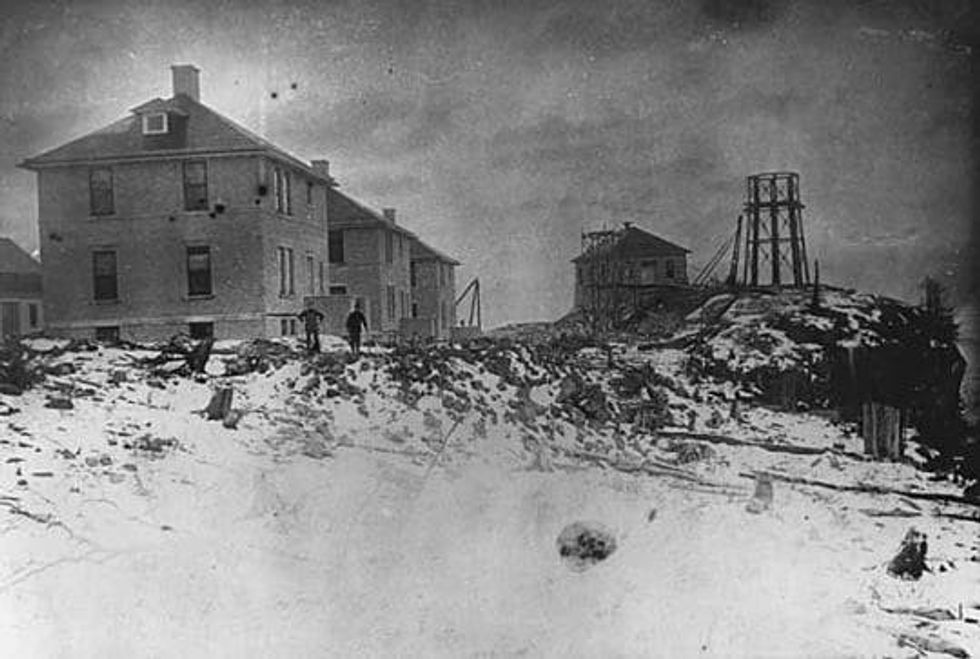
Split Rock under construction along Lake Superior in 1909.
(Minnesota Historical Society)