

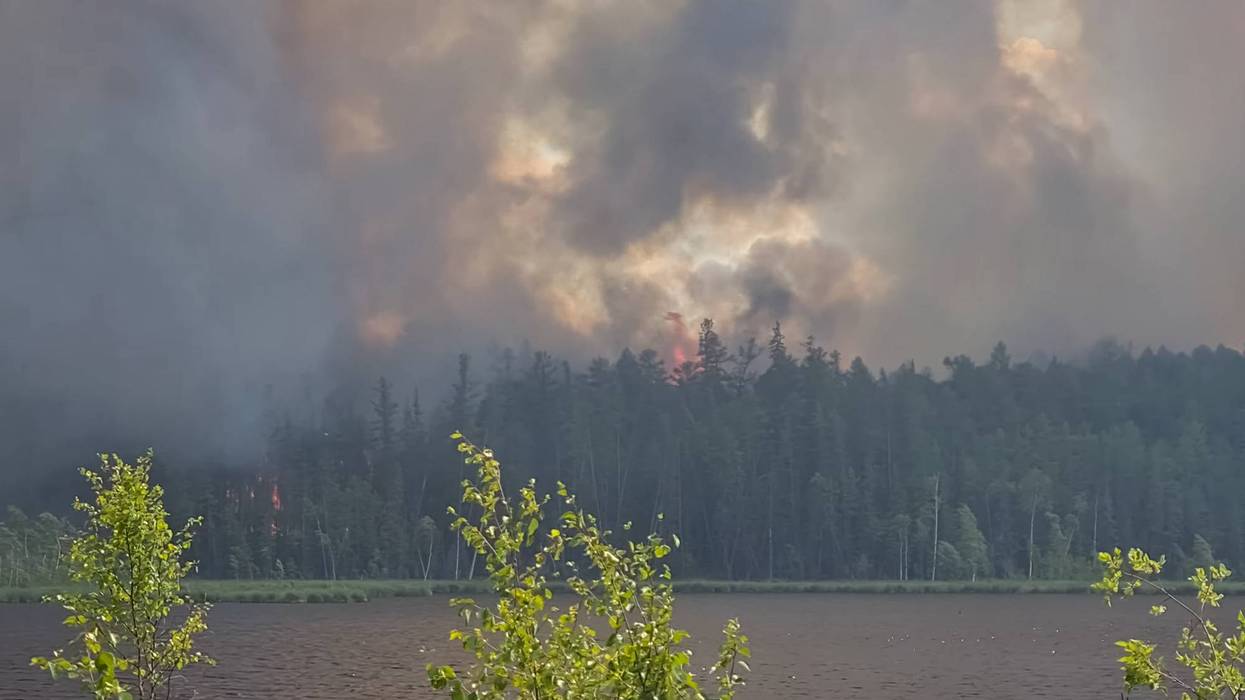
The U.S. Forest Service is extending Boundary Waters Canoe Area Wilderness permit cancellations to Friday, July 24, as wildfires continue to threaten the region.
This decision gives visitors, outfitters and local businesses more reliable planning time while ensuring decisions continue to prioritize public health and safety.
While the area received between a half-inch to one inch of rain Friday morning, conditions are already dry, and hot. Dry weather is also expected to return this week.
Phil Manuel is an incident meteorologist for the National Weather Service in Minnesota.
"The Weather dictates everything that happens," he said this weekend. "It dictated the start of these fires. It dictates how we suppress these fires and how the team reacts and manages what's on the ground out there."
77,000 acres have burned so far.
Wildfire smoke continues to plague northern states
Meanwhile, millions of people in the Great Lakes, Northeast and Mid-Atlantic states muddled through another day of unhealthy air from uncontrolled wildfires on Friday, with more smoke over the weekend.
The Minnesota Pollution Control Agency (MPCA) has issued an air quality alert for east central, southeast, south central, and northeast Minnesota. The alert took effect 9 a.m. on Sunday, July 19, and runs until 11:00 a.m. on Monday, July 20.
The affected area includes the Twin Cities metro area, Albert Lea, Rochester, Winona, Mankato, Two Harbors, Hibbing, Ely, Duluth, and the Tribal Nations of Prairie Island, Grand Portage, and Fond du Lac.
The thick smoke enveloped the nation’s capital in a gloomy, eerie haze and prompted Major League Baseball's Cleveland Guardians to postpone their game against Pittsburgh Pirates in Ohio.
Warnings of dangerous conditions were expected to remain in effect through Saturday across a wide swath of the U.S., though there's potential for temporary improvement with storms forecast in some affected areas during the weekend.
D.C. resident Stewart Verdery awoke Friday to take in his usual sunrise view of the city's famous landmarks from a rooftop, only to be greeted by a darkened horizon and no monuments in sight.
“It’s pretty crazy to wake up at sunrise and not see the sun when it’s not even raining,” he said by phone after posting a video of the surreal scene on X. “And it smells like somebody’s having the world’s largest cookout.”
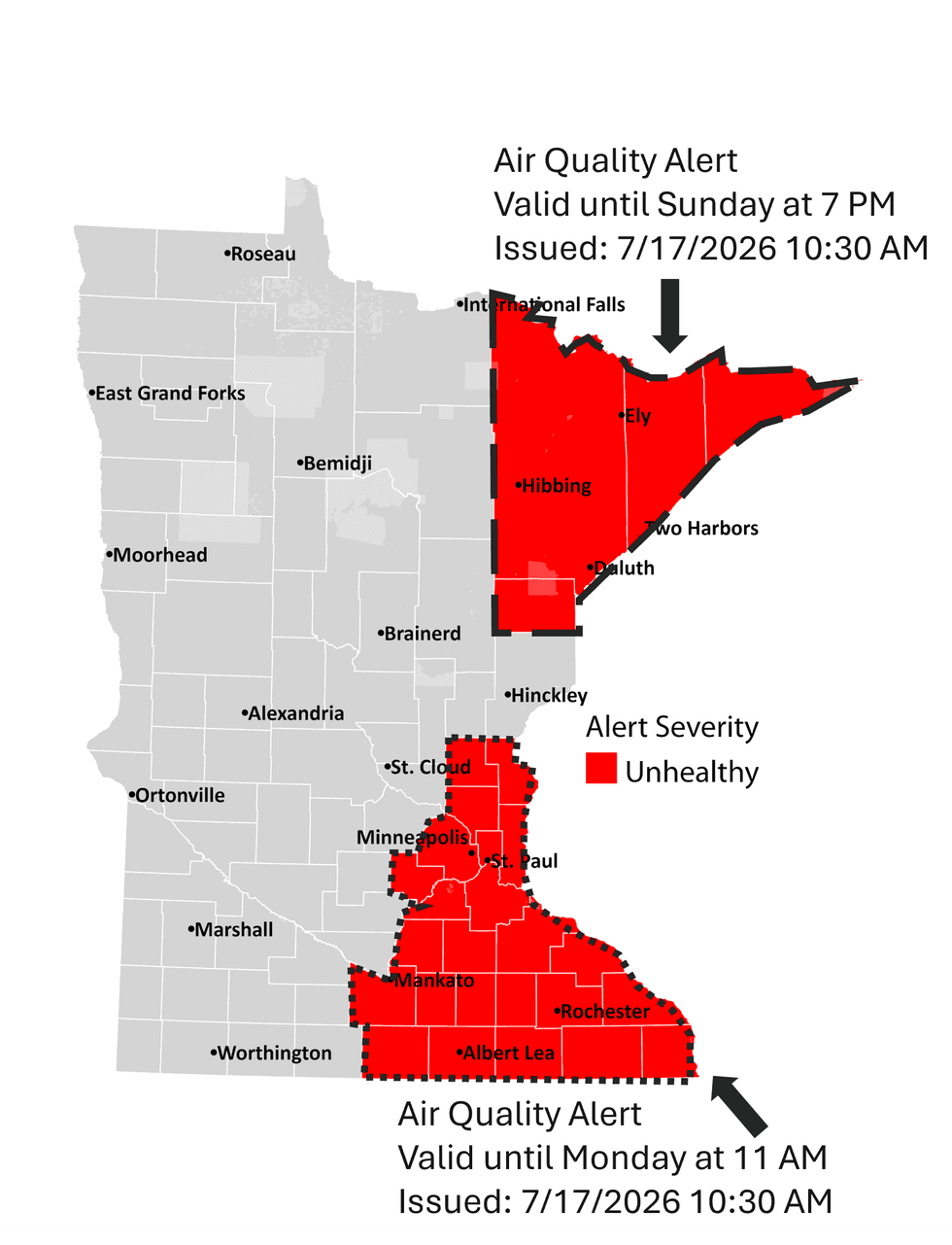
Air Quality Alert issued on Sunday by the MPCA.
(Minnesota Pollution Control Agency)
No end in sight for smoky conditions
There may be pockets of relief at times, such as this past weekend, but the smoky conditions won't be gone anytime soon as the fires continue to burn largely unchecked, cautioned Bob Oravec, a lead forecaster at the National Weather Service based in Maryland.
Wildfires are burning in the Ontario area of Canada as well as the Boundary Waters Canoe Area Wilderness in Minnesota.
“The source of the smoke is going to continue on for certainly a week, probably,” Oravec said. “It’s just going to depend upon which way the wind’s blowing as to where the smoke is going to affect the most.”
On Friday, communities in Minnesota, Illinois and Michigan, including Detroit, again registered some of the worst air quality in the world, according to IQAir, an air quality monitoring website.
Not far behind Detroit was Washington, D.C., where the smoke created eerie scenes. The Washington Monument, the Lincoln Memorial and other national landmarks were enveloped in an orange-hued haze throughout much of the day.
People, particularly those with heart or lung disease, older adults and children, were urged to limit or avoid going outside until air quality improved.
Long-term exposure to smoky conditions can complicate existing health problems and lead to chronic and deadly issues, including respiratory illness, cardiovascular and neurological diseases and premature death, officials warned.
For Maria Travela, Friday was her first day outside since after smoke from the wildfires blanketed the Chicago area early Thursday.
“Now it’s better. This morning, it was bad,” said Travela, who has asthma and wore a mask as she crossed a bridge over the Chicago River downtown. “They were saying that, for people like me, with asthma, any kind of issues like that, it would be bad for your lungs.”