


Minnesota has one of the worst measles vaccination rates among young children in the country.
The state has seen a big drop compared with its pre-pandemic level, from 92.5% to 86.5%. Those numbers are well below the U.S. average. The average measles vaccination rate for U.S. children entering kindergarten was 92.5% for the 2024–2025 school year. 95% is the number set by the CDC for for community herd immunity.
"Anytime you see the immunization coverage levels decline for whatever reason, if it's just missed opportunities or concerns about safety or access issues, anytime we see that coverage rate decline, we see these diseases pop back up," says State Epidemiologist Ben Christianson.
New measles cases have been reported in Dakota and Olmsted counties since the beginning of the school year, raising Minnesota’s total to 24 confirmed cases in 2025. It’s one of the highest totals in two decades.
Christianson says there are a number of reasons for that.
"So, part of it has to do with families missing their routine well child visits during those pandemic years, and so they're working to get caught up," Christianson adds. "They've maybe been partially vaccinated but don't have all of the required doses and all the doses they need to be fully protected."
Christianson says other concerns are about the safety of vaccines, and access.
Meanwhile, a statewide pilot project is expanding wastewater surveillance to help detect the measles. During the pandemic, it was a valuable tracking tool, testing the wastewater for the COVID-19 virus.
State epidemiologist Stephanie Meyer says since then, people have taken to testing at home.
"The data that we get at the health department right now is really dependent on people going to the doctor and getting tested," says Meyer. "And that being recorded and reported out to the public."
She says they will now expand testing to include other illnesses like measles.
"And for a disease that's as contagious as measles, the sooner and the earlier we know about anything circulating in the community, the better," Meyer explains. "The more we can get information out to physicians and to people in the community that something is going on."
According to Meyer, it's important to know what is circulating in your community.
"So, if you could see data in wastewater that shows you that respiratory diseases are really on the rise, maybe you intend to go visit your grandmother in the nursing home, and you know that levels of flu or COVID or anything else are on the rise in your community, that gives you data to be able to make decisions," she adds.
The Minnesota Department of Health says they will have this information on a public website in the coming weeks.
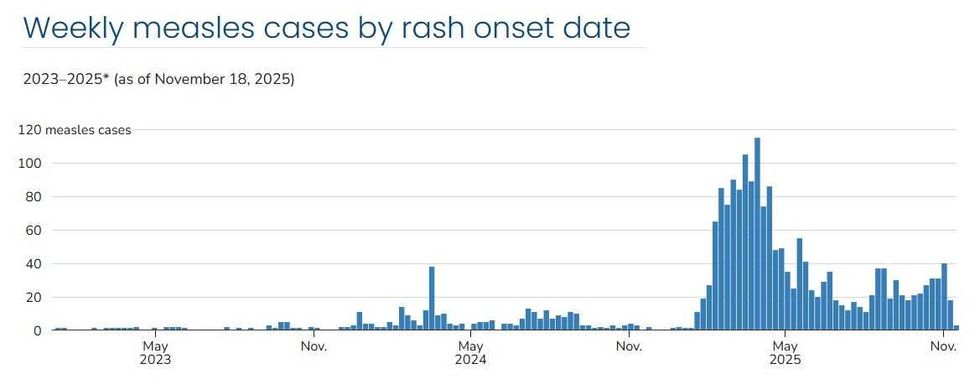 Weekly cases of measles has seen a dramatic increase in the last three years across the country.(Centers for Disease Control and Prevention)