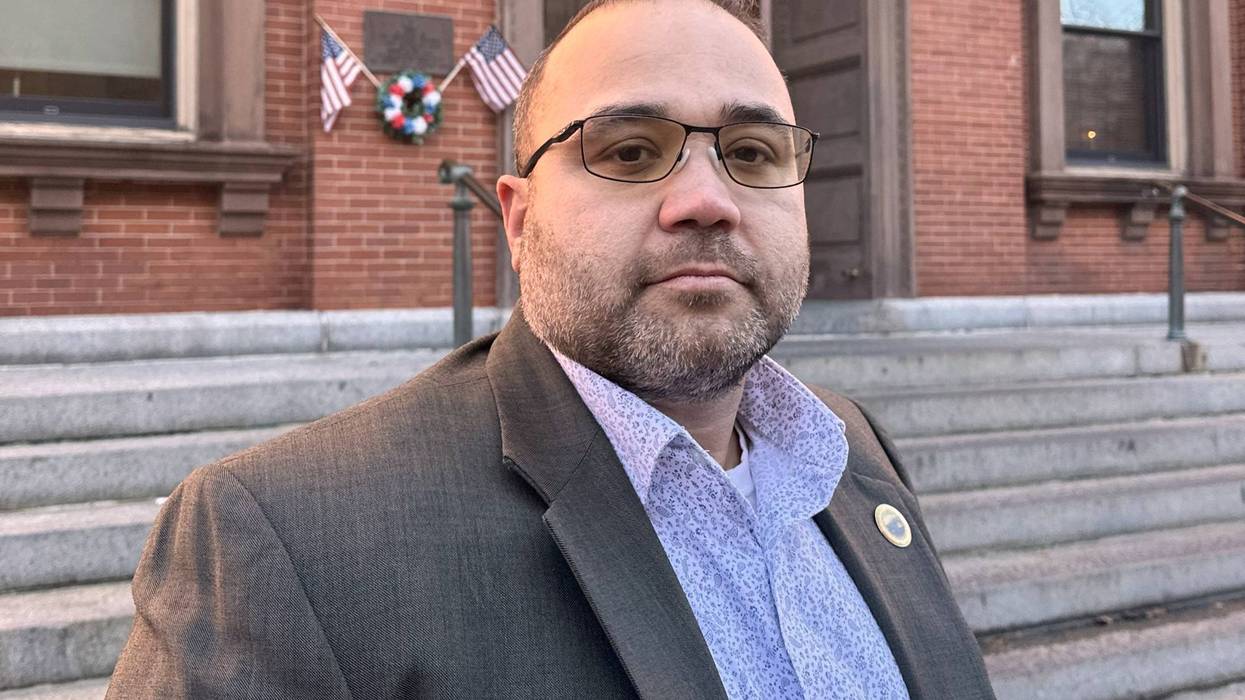


James Burroughs is working tirelessly to advance diversity and inclusion in his new role at Children's Minnesota.
"For me, as I think about the work that I do, I encourage people to celebrate Black History throughout the 12 months of the year, rather than just a one month."
He was recently promoted to Vice President of Diversity and Inclusion at the hospital, where more than 50% of patients are from families of color, with many speaking different languages.
"We don't reflect fully that diversity in our workforce so one of my goals is to do more to get a more diverse candidate pool from entry-level role all the way up to CEO ."
Part of the challenge is in retention.
"Once we hire folks we need to make sure that we have an environment that encourages them to stay and be a part of the work, and then also to eventually be promoted like myself recently, and making sure that they have a great experience of being at Children's."
It's also about creating a pipeline with various colleges and universities and creating more internships for racially diverse students.

In addition to creating a more diverse workforce, Burroughs says its mission is to bring diversity and equity into the neighborhoods where the hospitals are located.
"We're almost a billion-dollar organization. And our hospitals are in St. Paul, and Minneapolis in the heart of neighborhoods that could use some more investment and may have high poverty rates," he said. "As we invest in those communities, we require our contractors to use 30% diverse subcontractors 20% of those the minority of people of color, and then another 10% women, and we also require them to hire an intern with students of color as well."
Another effort he's spearheading is health equity.
"We want to make sure that we're giving them the highest quality service we can. We want to make sure that systemic racism, structural racism is not getting in the way of that service."
He said that it could be looking at the impact COVID has had on communities of color in Minnesota, and how they can better serve patients, and looking more closely at health disparities.
On this Black History Month, Burroughs says he wrote a blog post on how he sees it as an “action” rather than a “reflection” month.
"What are you going to do differently? Are you going to spend money with black-owned businesses during this month and make sure to help the black community? Are you making sure that when you're doing hiring and leadership roles in your company that you're intentionally identifying black candidates in order to be in that pool ?"
Facing the illusion of Minnesota Nice.
Burroughs came here from Detroit, Michigan and found it strange at first.
"You know, the joke is people will say “Hey, welcome to Minnesota. Welcome to your great job here that company X, but, you know, I want to make you feel included but you're not gonna come to my house and hang out there, we're not going to have a social connection," he said. "It's a passive-aggressive way of saying “hey you're welcome here but you're not fully valued and included like I'm not gonna fully have you over to my house, hanging out with my kids getting to know my family. I'm not gonna fully let you into all of the events and social clubs."
He said “Minnesota Nice” can actually get in the way of dealing with systemic racism because it does not allow for authentic relationships that are needed to deal with difficult and uncomfortable issues, like white supremacy.