


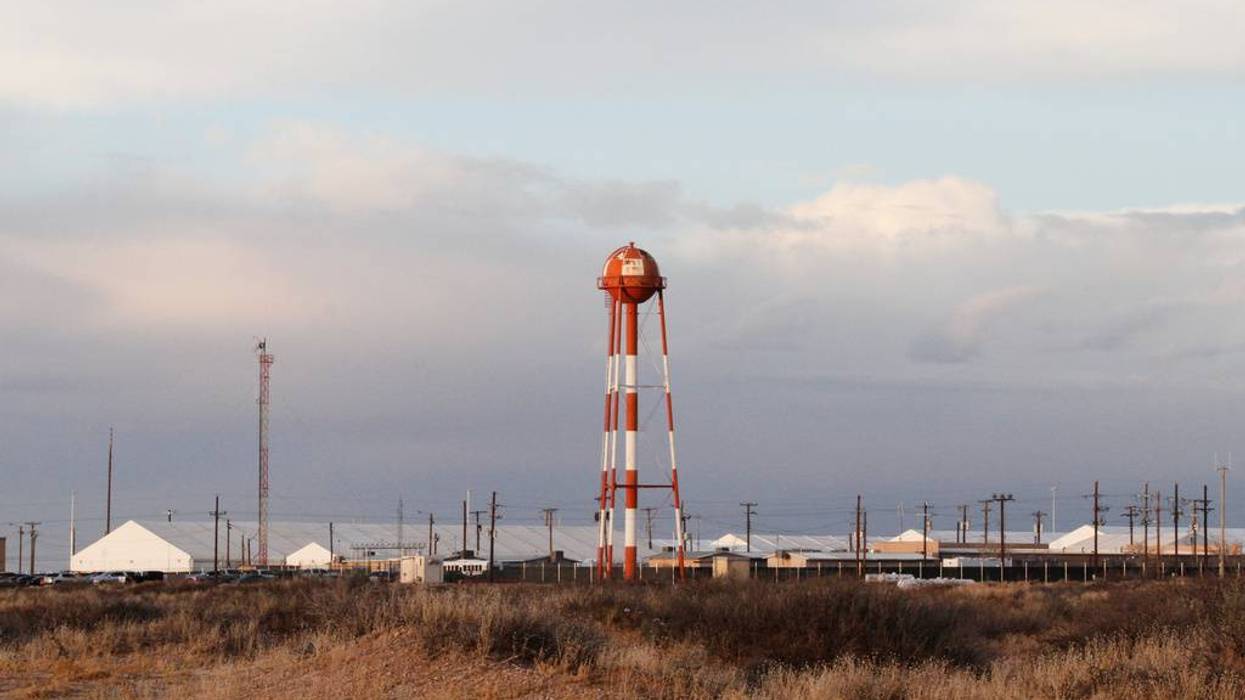

Minnesota 6th District Rep. Kelly Morrison is reporting on conditions inside an immigration facility in Texas, where many of those arrested during Operation Metro Surge in the Twin Cities are being housed.
Morrison conducted an unannounced, oversight visit of the Camp East Montana immigration detention facility in El Paso, Texas. She was initially denied access.
That, despite a ruling from a federal judge saying members of Congress have the legal right to make unannounced visits to ICE immigration detention facilities, blocking a Trump-Vance administration policy that required a seven-day notice period.
"I went to the Whipple building in Minnesota when my constituents and Minnesotans were detained there," Morrison said. "Many of them were sent here. I demanded to see my constituents here at Camp East Montana, and I was denied access to them."
She was eventually let in, and described the conditions as "horrific."
"It is a gigantic complex," Morrison describes. "There are five huge buildings that can hold up to 5,000 detainees. I was allowed to see one pod that would house between 64 and 72 people. It is full of metal bunk beds that are crammed together. There are metal tables in the middle of this structure. And that is where people spend almost all day, every day."
Camp East Montana is currently the largest detention facility in the nation, holding 3,000 people a day on average, in a makeshift tent encampment.
911 calls reveal misery at ICE’s largest detention facility
The calls to 911 poured in from staff at Camp East Montana in Texas, the nation's largest U.S. Immigration and Customs Enforcement detention facility, at a rate of nearly one a day for five months, each its own tale of pain and despair.
A man sobs after being assaulted by another detainee. Another bangs his head against the wall after expressing suicidal thoughts. A pregnant woman complained of severe back pain and also had coronavirus.
“Every day felt like a week. Every week felt like a month. Every month felt like a year,” said Owen Ramsingh, a former property manager in Columbia, Missouri, who spent several weeks in the camp before his deportation in February to the Netherlands. “Camp East Montana was 1,000% worse than a prison.”
Fueled by billions of dollars in new funding, ICE operations across the nation have roiled communities, separated families and created a culture of fear in pursuit of President Donald Trump's vow to rid the country of unauthorized migrants.
The mass arrests have swelled detention centers and set ICE off on a national chase for space to warehouse those who have been apprehended. Far from the “worst of the worst” that Trump vowed to deport, the data from ICE show that 80% at the camp had no criminal record and were instead caught up in a far-reaching dragnet.
Camp East Montana looks like a pop-up village, with six long tents along a stretch of the Chihuahuan Desert outside El Paso at the U.S. Army base Fort Bliss, once the site of an internment camp for Japanese Americans during World War II. Inside the hastily constructed camp, a series of communal living pods shelter thousands of immigrants in color-coded uniforms and Croc-style shoes.
But the stories of the conditions at the facility, revealed in data and recordings from more than a hundred 911 calls obtained by The Associated Press — in addition to follow-up interviews and court filings — offer a disturbing portrait of overcrowding, medical neglect, malnutrition and emotional distress.
The detainees describe a camp where an average of about 3,000 people have lived per day in loud and unsanitary quarters, diseases spread easily and sleep is a luxury. The center will be closed to visitors until at least March 19 because of a measles outbreak, according to U.S. Rep. Veronica Escobar.
Detainees struggle to obtain medication and health care, lose concerning amounts of weight because of a lack of food, and live in fear of private security guards known to use force to put down disturbances. The ceilings in the windowless tents leak when it rains, and detainees only see sunlight during brief outings once or twice a week to a cramped recreation yard.
In an email, a Department of Homeland Security spokesperson who did not provide their name rejected claims of subprime conditions, saying Camp East Montana detainees receive food, water and medical treatment in a facility that is regularly cleaned.
The agency said earlier in March that normal operations continue at the camp. The Washington Post reported that ICE is considering a plan to close it.
MORGAN LEE, RYAN J. FOLEY AND MICHAEL BIESECKER FROM THE ASSOCIATED PRESS CONTRIBUTED TO THIS STORY.